















Close
SATEXPO 2026
Thursday, February 19, 2026
CABSAT 2026

Telus, TerreStar, and Skylo Successfully Trial Satellite Connectivity for Smartphones, IoT Devices

Note* - All images used are for editorial and illustrative purposes only and may not originate from the original news provider or associated company.

Subscribe

- Never miss a story with notifications

- Gain full access to our premium content

- Browse free from any location or device.

Media Packs

Expand Your Reach With Our Customized Solutions Empowering Your Campaigns To Maximize Your Reach & Drive Real Results!

– Access the Media Pack Now

– Book a Conference Call

Leave Message for Us to Get Back

Related stories

Enterprise IT Infrastructure for the AI Economy

The rapid ascent of artificial intelligence as the primary driver of corporate value is placing unprecedented demands on traditional data center and computing models. To thrive in the AI-centric economy, organizations must modernize their IT foundations, moving toward high-performance computing architectures and scalable cloud platforms that can handle the massive data volumes and intense processing requirements of modern machine learning workloads.

5G Advanced Networks Accelerating Enterprise IoT

The evolution of 5G into its "Advanced" phase represents a critical milestone for industrial connectivity, offering the reliability and precision required for mission-critical operations. By combining dedicated private networks with edge computing and high-density sensor arrays, enterprises can create a seamless digital nervous system that drives the next wave of smart factory innovation and autonomous logistics.

Cybersecurity Strategies for Hyperconnected Enterprises

As organizations expand their digital footprint across remote networks, cloud services, and thousands of IoT devices, the traditional concept of a secure perimeter has become entirely obsolete. To survive in this new era of hyperconnectivity, enterprises must adopt a holistic security posture that prioritizes continuous verification, AI-driven threat intelligence, and a culture of resilience that can withstand even the most sophisticated cyber attacks.

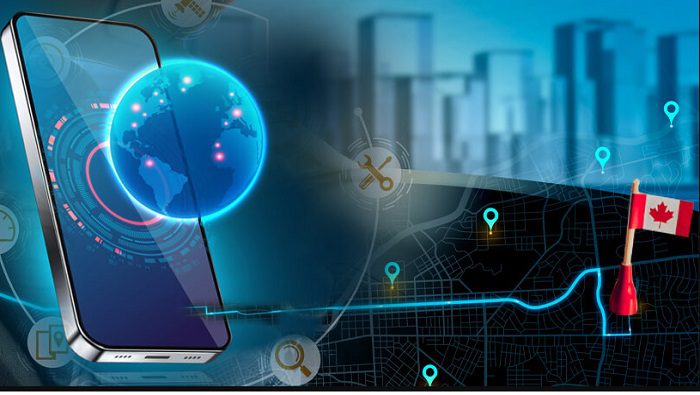
Canadian operator Telus and TerreStar Solutions, operating under the Strigo brand, have successfully conducted voice calls using satellite connectivity. Further, in partnership with Skylo, Telus has also been able to send text messages between smartphones and connect to Internet of Things (IoT) devices. With this achievement, Telus, TerreStar, and Skylo claim to have demonstrated Canada’s first two-way communication between smartphones and satellites.

Skylo and TerreStar Partnership
Skylo and TerreStar announced last month that they were collaborating on non-terrestrial network (NTN) 5G services. This partnership paves the way for the introduction of direct-to-device satellite communication for Canadians.

Benefits Provided by the Technology
The joint statement noted that in the future, this technology could fill existing gaps in mobile networks and transform the world. Universal mobile-to-satellite and IoT-to-Satellite connectivity can ensure that customers in remote areas, such as hikers or campers, have mobile access no matter where they are.

It can provide backup connectivity in emergency services, improve employee safety, reduce costs for industries that require remote field work and monitoring, enable uninterrupted fleet tracking, and deliver real-time data visibility, among other benefits.

Collaboration and Technology Integration
The trial, which took place in October, combined the technology platform of non-terrestrial network (NTN) service provider Skylo, TerreStar’s spectrum and service platform, and Telus’s expertise in building networks. All of these resulted in the direct connections using TerreStar’s existing geostationary satellite.

The technology reportedly utilises dedicated satellite spectrum in areas where traditional mobile coverage is unavailable, enabling two-way texting between smartphones, voice calling, and connections to IoT devices.

Next-Generation Smartphones
Telus says that as chipset manufacturers are working to equip the next generation of smartphones with 5G satellite capabilities, the company is exploring these solutions with the hope of introducing these devices to customers in 2024. “This is a bold step toward a future without mobile no-coverage zones, one where all Canadians can feel safe and connected,” the release said.

Latest stories

Related stories

Enterprise IT Infrastructure for the AI Economy

The rapid ascent of artificial intelligence as the primary driver of corporate value is placing unprecedented demands on traditional data center and computing models. To thrive in the AI-centric economy, organizations must modernize their IT foundations, moving toward high-performance computing architectures and scalable cloud platforms that can handle the massive data volumes and intense processing requirements of modern machine learning workloads.

5G Advanced Networks Accelerating Enterprise IoT

The evolution of 5G into its "Advanced" phase represents a critical milestone for industrial connectivity, offering the reliability and precision required for mission-critical operations. By combining dedicated private networks with edge computing and high-density sensor arrays, enterprises can create a seamless digital nervous system that drives the next wave of smart factory innovation and autonomous logistics.

Cybersecurity Strategies for Hyperconnected Enterprises

As organizations expand their digital footprint across remote networks, cloud services, and thousands of IoT devices, the traditional concept of a secure perimeter has become entirely obsolete. To survive in this new era of hyperconnectivity, enterprises must adopt a holistic security posture that prioritizes continuous verification, AI-driven threat intelligence, and a culture of resilience that can withstand even the most sophisticated cyber attacks.

Big Data Analytics Powering Smart Infrastructure

The transformation of our cities into intelligent, responsive environments is being driven by the marriage of physical engineering and massive-scale data processing. By harnessing the power of predictive analytics and real-time monitoring, urban planners can create resilient systems that optimize energy use, reduce traffic congestion, and ensure the structural longevity of public assets in an increasingly crowded world.

Subscribe

- Never miss a story with notifications

- Gain full access to our premium content

- Browse free from any location or device.

Media Packs

Expand Your Reach With Our Customized Solutions Empowering Your Campaigns To Maximize Your Reach & Drive Real Results!

– Access the Media Pack Now

– Book a Conference Call

Leave Message for Us to Get Back

Translate »