


















Close
SATEXPO 2026
Friday, May 15, 2026
CIOE 2026

China keen to establish BRICS innovation base focussing on 5G

Note* - All images used are for editorial and illustrative purposes only and may not originate from the original news provider or associated company.

Subscribe

- Never miss a story with notifications

- Gain full access to our premium content

- Browse free from any location or device.

Media Packs

Expand Your Reach With Our Customized Solutions Empowering Your Campaigns To Maximize Your Reach & Drive Real Results!

– Access the Media Pack Now

– Book a Conference Call

Leave Message for Us to Get Back

Related stories

Photonics Packaging Advancing Telecom Device Efficiency

The evolution of high-speed telecommunications is increasingly dependent on the physical housing and interconnection of optical components. Advanced packaging techniques are now central to achieving the compact integration and thermal stability required for the next generation of global networks, ensuring that signal performance remains optimal as device density increases.

Smart Broadband Infrastructure Supporting Digital Expansion

The global demand for high-speed internet is no longer just about entertainment; it is a foundational requirement for economic growth and social inclusion. Smart broadband infrastructure provides the scalable and resilient foundation needed to support digital expansion, ensuring that modern telecom growth reaches every corner of the globe with faster and more reliable connectivity solutions.

Cloud and Edge Networks Accelerated by Optical Links

The synergy between centralized data centers and decentralized edge nodes is critical for the next wave of digital transformation. By utilizing high-capacity optical links, operators are achieving the ultra-low latency and massive data transfer speeds required to support real-time applications and seamless global connectivity across diverse industries.

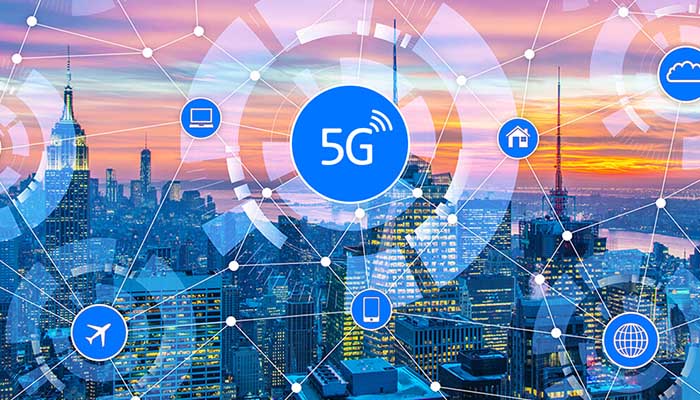
China is considering establishing a BRICS innovation base to strengthen cooperation among the five-country bloc including India in sectors like 5G, AI and digital economy, industry and information technology minister Xiao Yaqing has said.

Xiao said Beijing is actively considering setting up the base in China in order to strengthen practical cooperation among the members, which include Brazil, Russia, India, China, and South Africa (BRICS).

Monday’s video meeting comes ahead of the likely summit of the BRICS foreign ministers’ early September.

The coronavirus pandemic has badly impacted the economies of all five countries in the bloc with Brazil, India, Russia, and South Africa in the top five, after the US, in terms of infected people.

Addressing a video meeting of the bloc’s industry ministers on Monday, Xiao urged members to boost cooperation in new technology areas, according to Chinese state media.

According to the state media report, Xiao urged BRICS countries to strengthen their cooperation on “…digital transformation, especially in 5G, AI, the digital economy and others, to promote the digital transformation of enterprises and their innovation capabilities, and to promote sustainable economic and social development”.

China’s interest in promoting 5G within the BRICS bloc could be part of its interest in pushing tech giant Huawei internationally – Huawei’s name has come up as a contender to build the network in Brazil and South Africa even as it is embroiled in controversies in other countries.

Interestingly, a Financial Times report says that India is gradually phasing out Chinese vendors from its telecom networks including Huawei following the deadly Galwan Valley clash on June 15.

Xiao added that China is vigorously promoting the resumption of work across the entire industry chain and is keen to see more development in new industries such as 5G, AI and the industrial Internet during the Covid-19 pandemic.

“At present, growth in China’s industrial economy is gaining momentum, in turn supporting the steady recovery of China’s overall economy, and contributing to a new impetus and stability in the global industrial chain and supply chain,” said Xiao.

The minister added that the pandemic has brought both challenges to the BRICS’ industrial anti-risk capabilities, but also opportunities for industry transformation and development.

“BRICS countries should cooperate to promote economic recovery, strengthen communication and sharing their experiences in epidemic prevention and control, guarantee medical supplies, resume work and production, and promote economic development during Covid-19,” Xiao added.

The BRICS multilateral bank, the New Development Bank (NDB) has loaned $4 billion to China, India, South Africa and Brazil to fight the pandemic under the emergency assistance programme.

Never miss a telecoms headline

The telecoms industry moves fast — stay on top of it with our must-read briefings.

  • The top telecoms and technology stories, straight to your inbox
  • The biggest news, features, interviews, and analysis
  • Dedicated coverage of the key developments driving global telecoms and digital connectivity

Latest stories

Related stories

Photonics Packaging Advancing Telecom Device Efficiency

The evolution of high-speed telecommunications is increasingly dependent on the physical housing and interconnection of optical components. Advanced packaging techniques are now central to achieving the compact integration and thermal stability required for the next generation of global networks, ensuring that signal performance remains optimal as device density increases.

Smart Broadband Infrastructure Supporting Digital Expansion

The global demand for high-speed internet is no longer just about entertainment; it is a foundational requirement for economic growth and social inclusion. Smart broadband infrastructure provides the scalable and resilient foundation needed to support digital expansion, ensuring that modern telecom growth reaches every corner of the globe with faster and more reliable connectivity solutions.

Cloud and Edge Networks Accelerated by Optical Links

The synergy between centralized data centers and decentralized edge nodes is critical for the next wave of digital transformation. By utilizing high-capacity optical links, operators are achieving the ultra-low latency and massive data transfer speeds required to support real-time applications and seamless global connectivity across diverse industries.

High Speed Data Centers Leveraging Optical Interconnects

The rapid expansion of cloud computing and artificial intelligence has pushed traditional data center architectures to their physical limits. By replacing copper-based connections with high-performance optical interconnects, modern facilities are achieving the throughput and efficiency required to handle massive workloads while maintaining the scalability necessary for future enterprise IT growth.

Subscribe

- Never miss a story with notifications

- Gain full access to our premium content

- Browse free from any location or device.

Media Packs

Expand Your Reach With Our Customized Solutions Empowering Your Campaigns To Maximize Your Reach & Drive Real Results!

– Access the Media Pack Now

– Book a Conference Call

Leave Message for Us to Get Back

Translate »