
















Close
SATEXPO 2026
Wednesday, April 8, 2026
CIOE 2026

5G Rollout to Drive Revenue Growth for Telecommunication Service Firms

Note* - All images used are for editorial and illustrative purposes only and may not originate from the original news provider or associated company.

Subscribe

- Never miss a story with notifications

- Gain full access to our premium content

- Browse free from any location or device.

Media Packs

Expand Your Reach With Our Customized Solutions Empowering Your Campaigns To Maximize Your Reach & Drive Real Results!

– Access the Media Pack Now

– Book a Conference Call

Leave Message for Us to Get Back

Related stories

Non-Terrestrial Networks Expanding Telecom Infrastructure

Non-terrestrial networks are redefining the boundaries of global connectivity by incorporating satellites, high-altitude platforms, and drones into the existing cellular framework. This expansion addresses the inherent limitations of ground-based towers, offering a resilient and comprehensive solution for rural coverage, emergency communications, and disaster recovery on a worldwide scale.

Satellite Integration Accelerating 5G and 6G Networks

Modern telecommunications are undergoing a profound shift as space-based assets merge with terrestrial cellular infrastructure to deliver ubiquitous high-speed connectivity. This evolution addresses the geographical limitations of traditional base stations, creating a unified global network capable of supporting the next generation of mobile technology and massive machine-type communications.

Satellite Backhaul Enabling Scalable Telecom Operations

Satellite backhaul has emerged as a cornerstone of modern network design, providing a flexible and cost-effective alternative to terrestrial fiber and microwave links. This technology allows telecom operators to bypass the physical constraints of ground-based infrastructure, facilitating rapid expansion into rural and underserved markets while maintaining a high standard of data transmission and service reliability.

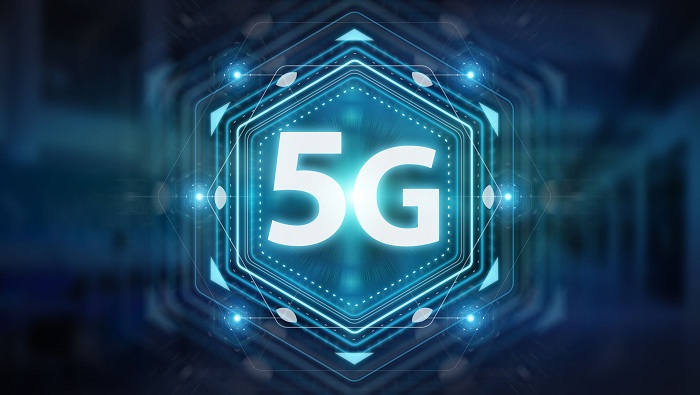
US telecommunication service revenues are forecast to rise 1.4% annually in nominal dollars through 2024, according to Telecommunication Services: United States, a report recently released by Freedonia Focus Reports. Gains will stem from the rollout of 5G services and the desire for faster internet connection speeds at home. The ongoing consumer shift from cable and satellite television service to internet service with separate video streaming service, such as Netflix, will constrain further growth. Though they are increasingly rare, service bundles can provide a significant boost to telecommunication revenues, luring customers to sign up for service that they otherwise would not have purchased. Bundling can also influence customers to keep services that they might have otherwise canceled. This comes at a cost, however, as it suppresses the price of services. In addition, contraction in the number of landline telephone and cable television connections and falling profit margins, particularly in the wireless segment, will prevent further gains. Furthermore, the availability of free over-the-air television and radio programming constrains higher demand.

Revenues from telecommunication resellers are expected to see annual increases of 3.2% to 2024, the fastest growth among discrete segments. Advances will be driven by the competitive pricing of cell phone plans from resellers compared with plans from major service providers.

These and other key insights are featured in Telecommunication Services: United States. This report forecasts to 2024 US telecommunication service revenues in nominal US dollars. Total revenues are segmented by mode of service in terms of:

Wired
wireless
resellers
satellite
other modes, such as non-broadband internet

To illustrate historical trends, total revenues and the various segments, and the number of firms, establishments, and employment are provided in annual series from 2009 to 2019.

Telecommunications services consist primarily of revenues generated by the provision of voice and text messaging, internet access, cable television transmission, and other information services (e.g., voicemail).


Latest stories

Related stories

Non-Terrestrial Networks Expanding Telecom Infrastructure

Non-terrestrial networks are redefining the boundaries of global connectivity by incorporating satellites, high-altitude platforms, and drones into the existing cellular framework. This expansion addresses the inherent limitations of ground-based towers, offering a resilient and comprehensive solution for rural coverage, emergency communications, and disaster recovery on a worldwide scale.

Satellite Integration Accelerating 5G and 6G Networks

Modern telecommunications are undergoing a profound shift as space-based assets merge with terrestrial cellular infrastructure to deliver ubiquitous high-speed connectivity. This evolution addresses the geographical limitations of traditional base stations, creating a unified global network capable of supporting the next generation of mobile technology and massive machine-type communications.

Satellite Backhaul Enabling Scalable Telecom Operations

Satellite backhaul has emerged as a cornerstone of modern network design, providing a flexible and cost-effective alternative to terrestrial fiber and microwave links. This technology allows telecom operators to bypass the physical constraints of ground-based infrastructure, facilitating rapid expansion into rural and underserved markets while maintaining a high standard of data transmission and service reliability.

Türk Telekom & Ericsson Partner on 6G Innovation...

Türk Telekom and Ericsson have signed a strategic research...

Subscribe

- Never miss a story with notifications

- Gain full access to our premium content

- Browse free from any location or device.

Media Packs

Expand Your Reach With Our Customized Solutions Empowering Your Campaigns To Maximize Your Reach & Drive Real Results!

– Access the Media Pack Now

– Book a Conference Call

Leave Message for Us to Get Back

Translate »