






















The digital world is currently facing a fundamental law of physics: the speed of light. In the early days of the internet, a delay of a few hundred milliseconds was an acceptable trade-off for the convenience of accessing remote data. However, as we move into an era of augmented reality, autonomous vehicles, and precision industrial robotics, these “micro-delays” have become the primary obstacle to progress. The solution lies in a radical decentralization of our digital infrastructure. The rise of edge data centers low latency networks is transforming the cloud from a distant destination into an omnipresent environment. By bringing computational power as close to the end-user as possible, we are enabling a level of real-time responsiveness that is fundamentally altering how we interact with technology and with each other.
The Structural Shift from Centralized to Distributed Cloud Networks
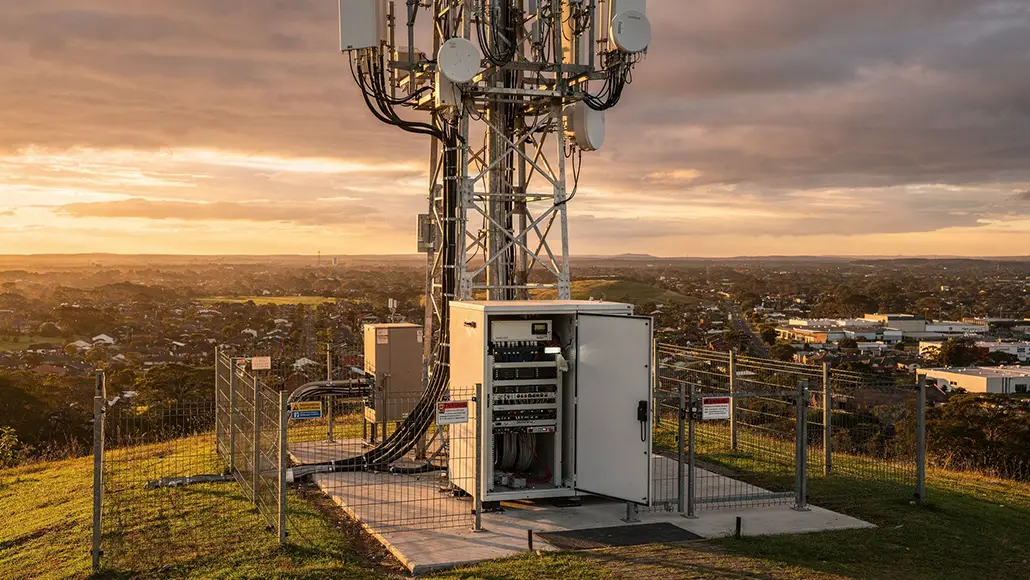
For the past two decades, the dominant model of the internet has been centralization. Huge “hyperscale” data centers, often located in remote areas with cheap land and power, handled the vast majority of the world’s processing needs. While efficient for bulk data storage and non-time-sensitive tasks, this model is inherently flawed for the modern era. The physical distance between the user and the data center creates a “latency floor” that cannot be overcome by simply increasing bandwidth. Edge data centers low latency networks address this by creating a distributed cloud architecture. These smaller, localized facilities are placed in urban centers, at the base of cell towers, or even within office buildings. This proximity allows for real time data processing that occurs in milliseconds rather than seconds, providing the “instant” feedback that modern applications require.
Enabling Real-Time Applications and the Internet of Things
The primary driver for the deployment of edge computing infrastructure is the explosion of the Internet of Things (IoT). In a smart factory or a modern hospital, thousands of sensors generate a continuous stream of data that must be analyzed and acted upon immediately. Sending this data to a central cloud and waiting for a response is not an option when a robot needs to adjust its grip or a heart monitor needs to alert a surgeon. Edge data centers low latency networks provide the localized “brain” required for these mission critical services. By filtering and processing data locally, these edge nodes reduce the load on the central network and ensure that critical decisions are made with zero perceptible delay, paving the way for a more efficient and safer industrial landscape.
Telecom Edge Architecture and the Integration with 5G
The rollout of 5G networks and the expansion of edge computing are two sides of the same coin. While 5G provides the high-bandwidth “pipes,” edge data centers low latency networks provide the “engine” that powers the content moving through them. Telecom edge architecture involves integrating small-scale data centers directly into the telecommunications network. This allows mobile operators to offer “Edge as a Service” (EaaS) to businesses and developers. For the consumer, this means that high-fidelity VR gaming or real-time language translation can happen on a smartphone without any lag. For the enterprise, it allows for the deployment of private 5G networks that can manage an entire warehouse of autonomous robots with absolute precision and security.
Network Optimization and the Efficiency of the Edge
Beyond speed, edge data centers low latency networks offer a significant advantage in terms of network optimization and cost-efficiency. In a centralized model, every byte of data no matter how trivial must be sent across the backbone of the internet. This creates massive congestion and requires expensive bandwidth upgrades. Edge nodes act as a first line of defense, processing and “cleaning” data locally. For example, a high-resolution security camera can use edge-based AI to identify a potential threat and only send the relevant video clip to the central server, rather than streaming 4K footage 24/7. This reduction in “data traffic” saves money, reduces energy consumption, and ensures that the core network remains available for the tasks that truly require a global reach.
The Rise of Modular and Containerized Data Centers
The physical form of the edge data center is as innovative as its logical function. Because these facilities must be placed in dense urban environments or remote industrial sites, they often take the form of modular, containerized units. These “data centers in a box” are pre-fabricated, self-contained environments that include their own cooling, power backup, and security. This modularity allows for the rapid expansion of edge computing infrastructure, as a new node can be deployed and brought online in a matter of days. As we move toward a world of “micro-data centers,” we will see these units integrated into our cities’ fabric tucked into the corners of parking garages or hidden within the basements of retail stores creating a seamless, invisible layer of digital intelligence.
Addressing Challenges in Security and Decentralized Management
Decentralizing the cloud also means decentralizing the security perimeter. Managing thousands of small data centers is inherently more complex than managing a few large ones. Edge data centers low latency networks must be protected by a “Zero Trust” architecture that treats every node as a potential point of entry. Automated security tools and remote management platforms are essential for maintaining the integrity of these distributed networks. Furthermore, the physical security of edge nodes which are often located in unstaffed or public areas requires advanced biometric access controls and environmental sensors. The future of the edge depends on our ability to manage this complexity through AI-driven orchestration, ensuring that the entire network remains secure and performant without the need for a massive human workforce.
The Impact on Immersive Entertainment and the Metaverse
Perhaps the most visible impact of edge data centers low latency networks will be in the realm of entertainment. The “Metaverse” a persistent, shared virtual world cannot exist without the edge. For millions of people to interact in a high-fidelity virtual environment in real-time, the graphical processing must happen close to the user to avoid “motion sickness” caused by lag. Edge nodes can handle the heavy lifting of 3D rendering and physics calculations, delivering a smooth, immersive experience to even low-power devices like mobile phones or lightweight AR glasses. This democratization of high-end computing will transform how we play, learn, and socialize, making the virtual world as responsive and “real” as the physical one.
Building the Infrastructure for Autonomous Systems
In the final analysis, edge data centers low latency networks are the essential foundation for the age of autonomy. Autonomous vehicles, drones, and delivery robots all require a high-speed, local data link to navigate their surroundings and interact with other autonomous agents. A city filled with self-driving cars is essentially a giant, moving edge network, where every vehicle is a node that shares data on traffic, weather, and road conditions. This collective intelligence, supported by a network of edge data centers, will create a transportation system that is safer, faster, and more efficient than anything we have known. By pushing the limits of the cloud to the very edge of our world, we are building a more responsive and resilient foundation for the next century of human progress.
Key Takeaways:
- Edge data centers are the necessary solution to the “latency floor” of centralized cloud computing, bringing processing power to within milliseconds of the end-user.
- The integration of edge computing with 5G and IoT is enabling mission-critical services in healthcare and industry that require absolute real-time responsiveness.
- Modular and containerized data centers are allowing for the rapid, scalable deployment of digital intelligence into the urban fabric, creating a more efficient and optimized global network.