





















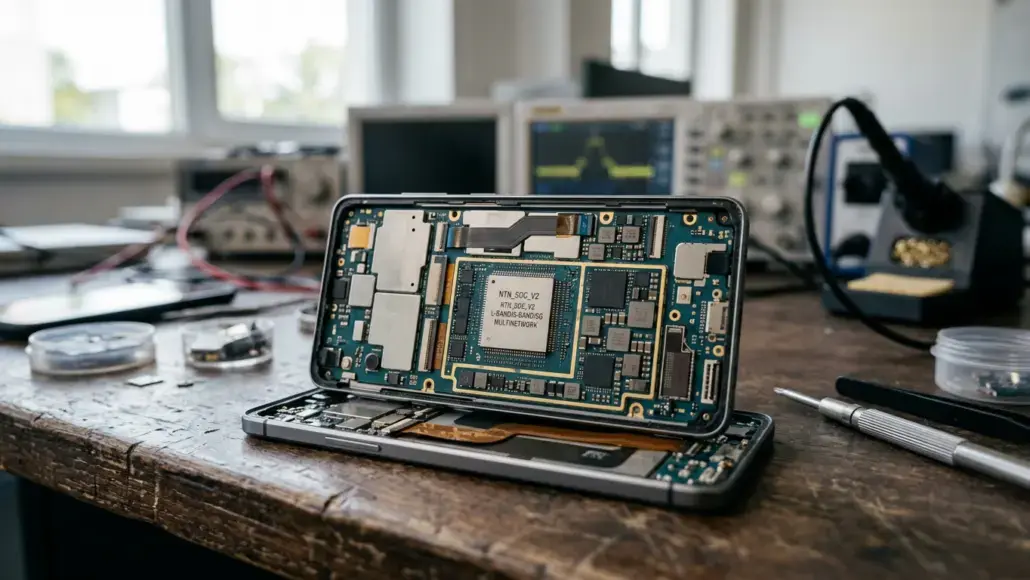

The telecommunications industry is witnessing a profound transformation in the design and functionality of mobile hardware, particularly regarding the integration of non-terrestrial connectivity. This shift is centered on the development of specialized satellite chipsets that allow standard smartphones to communicate directly with orbital constellations. In the past, satellite communication required dedicated, large scale hardware that was incompatible with the thin form factors and energy constraints of modern mobile devices. However, recent advancements in silicon engineering and baseband processing have enabled the consolidation of satellite protocols alongside traditional cellular technologies. This integration is essential for delivering a unified user experience, where a device can smoothly transition between 4G, 5G, and orbital networks without requiring external peripherals. The emergence of these high performance components is a critical step toward achieving global connectivity, effectively eliminating the geographic limitations that have traditionally defined mobile network coverage. These specialized chips are designed to operate across multiple orbital shells, providing a layered approach to connectivity that ensures reliability even in the most challenging environmental conditions.
As the telecommunications industry continues to innovate, the role of satellite chipsets will only grow in importance, serving as the foundational technology for a new era of ubiquitous mobile services. The integration of these components into mass market devices is also driving down the cost of satellite connectivity, making it an accessible feature for a wider range of consumers around the world. In the long term, the convergence of satellite and terrestrial hardware will be a defining feature of the global communications infrastructure, providing a truly unified network that transcends the physical limitations of the earth. This transition is being supported by a growing ecosystem of software developers and service providers who are creating new applications that utilize the unique capabilities of space based connectivity.
Architectural Evolution of Satellite-Capable Mobile Processors
The transition toward satellite-enabled smartphones has necessitated significant modifications to the underlying system on chip architecture. Modern satellite chipsets must now incorporate the necessary logic to handle non-terrestrial network protocols, specifically those defined by 3GPP Release 17 and Release 18. This involves the integration of specialized digital signal processing units capable of managing high latency links and significant Doppler shifts. Unlike terrestrial networks where the distance between the device and the base station is measured in kilometers, satellite links span hundreds or even thousands of kilometers. This distance results in a propagation delay that would typically cause a standard terrestrial modem to time out. Consequently, the baseband processor must implement extended timing advance engines and modified hybrid automatic repeat request processes to maintain stable communication.
Additionally, the integration of satellite capabilities requires a more sophisticated approach to signal processing. The device must be able to perform real time frequency pre-correction to account for the rapid movement of low Earth orbit satellites. This process is assisted by the integration of global navigation satellite system data, which provides the precise location and velocity information needed to calculate the necessary offsets. The architectural complexity is further increased by the need to support multiple frequency bands, including L-band and S-band allocations dedicated to mobile satellite services. To manage these diverse requirements, chip designers are adopting highly modular approaches, where the satellite modem can operate independently or in concert with the 5G baseband. This flexibility is vital for supporting various service models, ranging from simple emergency messaging to more intensive direct-to-device satellite services extending mobile network coverage across vast, unserved regions. The use of advanced semiconductor fabrication processes, such as 4nm and 5nm nodes, allows these chipsets to deliver high performance while maintaining the strict thermal limits required for mobile devices.
The architectural evolution also includes the integration of hardware based security features, ensuring that satellite communications are protected from unauthorized access and cyber threats. As the demand for satellite connectivity grows, we expect to see even greater levels of integration, with more functions being moved onto the main system on chip to reduce the overall footprint and power consumption. This will enable smaller and more efficient devices that can maintain a reliable connection to space without sacrificing performance or battery life. The collaboration between chipset designers and satellite operators is also leading to the development of more efficient signaling protocols, which further reduce the overhead and improve the overall capacity of the network.
Frequency Harmonization and Multi-Band Support Requirements
A major challenge in the development of satellite-compatible hardware is the management of diverse frequency allocations across different geographic regions. Satellite chipsets must be capable of supporting a wide range of mobile satellite service bands while also maintaining compatibility with global terrestrial 5G frequencies. This requires a highly flexible radio frequency front end that can switch between different filtering and amplification profiles. The primary bands currently targeted for non-terrestrial networks include:
- Band n255 (L-band): Operating in the 1.5 to 1.6 GHz range, providing a balance between signal penetration and bandwidth.
- Band n256 (S-band): Utilizing the 2.0 to 2.1 GHz range, often used for more data intensive satellite applications.
- Band n53 (S-band): A specific allocation used by providers like Globalstar for specialized emergency services.
- Terrestrial bands for Supplemental Coverage from Space: Including 700 MHz, 800 MHz, and 1.9 GHz PCS bands where satellites emulate terrestrial towers.
Effective frequency harmonization is essential for ensuring that a single device can operate globally. This involves not only the hardware capability to tune to these frequencies but also the software intelligence to manage interference. Satellite chipsets must implement advanced filtering techniques to prevent space based signals from interfering with adjacent terrestrial networks. This is particularly important in regions with dense cellular deployments, where even minor signal leakage can lead to service degradation. The radio frequency front end must also be designed to handle the high peak to average power ratios associated with modern satellite waveforms, requiring high linearity in the power amplifiers. The ability to manage these complex RF requirements within the strict space constraints of a smartphone chassis is a testament to the engineering progress in the semiconductor industry. This progress is also facilitating the development of multi-SIM and multi-active connectivity models, where a device can maintain simultaneous connections to both terrestrial and satellite networks. This capability is particularly important for enterprise and public safety users who require the highest levels of reliability and redundancy.
The use of advanced antenna tuning technologies allows the device to optimize its performance in real time, accounting for the orientation of the user and any physical obstructions that may interfere with the signal. The result is a more consistent and dependable connection that can handle a wide range of data and voice applications. As the technology continues to mature, we expect to see further advancements in RF design, including the use of gallium nitride and other high performance materials to improve the efficiency and power handling of satellite chipsets. These innovations will ensure that satellite connectivity remains a practical and sustainable feature for the next generation of mobile devices.
Power Efficiency and Thermal Management in Integrated Modems
The energy requirements of satellite communication present a significant hurdle for smartphone designers. Transmitting a signal to a satellite in orbit requires substantially more power than communicating with a nearby terrestrial tower. As a result, satellite chipsets must be exceptionally efficient to prevent excessive battery drain and overheating. The baseband processor must be able to enter low power states when satellite connectivity is not required, while still being able to wake up rapidly to perform orbital searches. Thermal management is equally critical, as the high power levels required for uplink transmissions can generate significant heat within the device. Designers often employ advanced packaging techniques and thermal interface materials to dissipate this heat effectively, ensuring that the device remains within safe operating temperatures during extended satellite sessions.

Additionally, the software layer plays a vital role in optimizing power consumption. Satellite chipsets use predictive algorithms to determine the best times to attempt a connection based on satellite visibility and signal quality. By avoiding unnecessary transmission attempts, the system can significantly extend the battery life of the device. The use of narrow bandwidths for initial signaling also helps to minimize energy usage, as it allows the modem to operate at lower clock speeds. As satellite technology matures, we expect to see even greater gains in efficiency, driven by the adoption of more advanced semiconductor manufacturing processes, such as 3nm and beyond. These smaller transistors allow for higher integration and lower power consumption, making satellite connectivity a more practical and sustainable feature for mass market smartphones.
Commercial Implementation and Handset Manufacturer Strategies
The adoption of satellite-compatible chipsets is being led by major semiconductor providers such as Qualcomm, MediaTek, and Samsung. These companies are now offering integrated solutions that combine 5G and satellite capabilities into a single package, simplifying the design process for handset manufacturers. Qualcomm, for instance, has introduced the Snapdragon X80 modem, which features native support for non-terrestrial networks. MediaTek has similarly developed the MT6825 chipset, which has been adopted by various specialized device manufacturers for ruggedized and outdoor focused smartphones. The availability of these standardized components is lowering the barrier to entry for handset makers, allowing them to add satellite features to their product lineups without developing proprietary hardware.
Handset manufacturers are adopting diverse strategies to market these new capabilities. Some are positioning satellite connectivity as a premium safety feature, emphasizing its utility in emergency situations. Others are looking toward broader consumer applications, such as text messaging in remote vacation areas or maritime environments. The integration of satellite chipsets also enables a new era of global roaming, where a user can maintain a connection even when traveling through regions with no terrestrial infrastructure. This ubiquity is a powerful selling point for high end smartphones, particularly for business travelers and outdoor enthusiasts.
As the ecosystem continues to grow, we expect to see satellite features move from flagship models into mid range devices, eventually becoming a standard expectation for all mobile consumers. The long term success of this technology will depend on the continued collaboration between chipset designers, satellite operators, and mobile network providers to ensure a reliable and cost effective service for users around the world. As the market for satellite-enabled devices continues to expand, we also expect to see new business models emerge, where connectivity is offered as a utility rather than a luxury feature. This shift will be supported by the development of open standards and interoperable hardware, which will lower the cost of entry for new players and foster a more vibrant and competitive ecosystem.
The integration of artificial intelligence and machine learning into the management of satellite links will also play a role in optimizing performance and improving the user experience. By predicting satellite visibility and signal quality, these systems can ensure that the device always uses the most efficient path for communication. The future of mobile connectivity is thus one of total integration, where the boundaries between terrestrial and satellite networks are effectively erased by the power of advanced silicon engineering. This will not only improve the reliability of mobile services but also open the door to entirely new categories of applications that rely on ubiquitous connectivity to thrive in a connected world. The focus will remain on delivering a seamless and high quality experience for all users, ensuring that they can stay connected regardless of where their journey takes them. Additionally, the role of 6G will be crucial in further integrating these two domains into a single, cohesive communications layer.