





















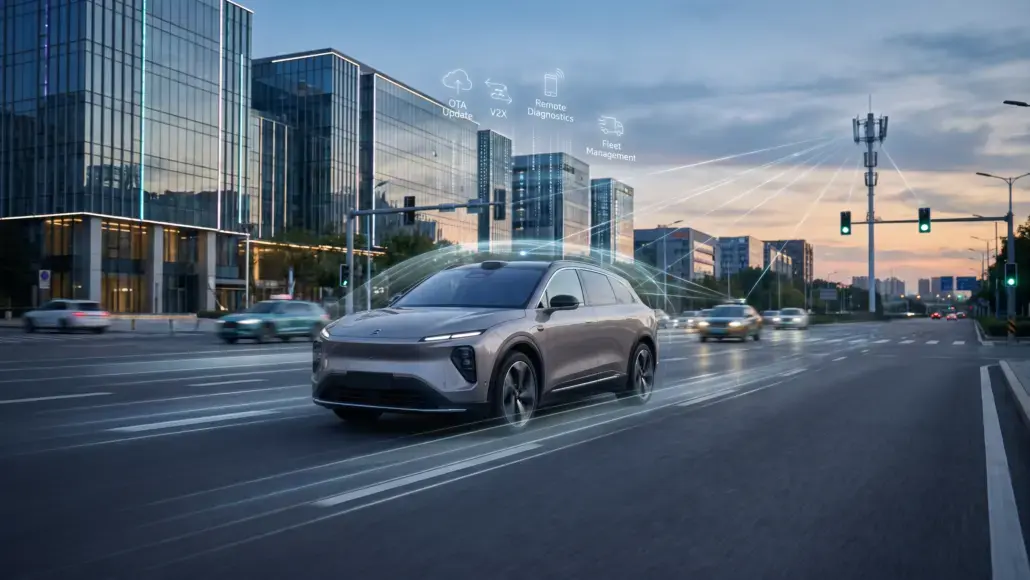

Software-Defined Mobility is reshaping the future of connected transportation as telecommunications technologies become integral to modern vehicle operations. As software-defined vehicles (SDVs) continue to evolve, reliable global cellular connectivity is emerging as the backbone of services ranging from over-the-air software updates to remote diagnostics, vehicle-to-everything (V2X) communication and fleet management. Growing collaboration between telecom and automotive stakeholders is accelerating the development of secure, scalable mobility ecosystems.
Software-Defined Mobility Relies on Advanced Cellular Connectivity
The rise of Software-Defined Mobility is transforming vehicles into continuously connected platforms that depend on uninterrupted communication throughout their operational lifecycle. Unlike traditional vehicles, SDVs require persistent connectivity to receive software upgrades, monitor system performance and deliver new digital services long after deployment.
Cellular connectivity enables manufacturers and mobility providers to support over-the-air (OTA) updates, predictive maintenance, remote diagnostics and real-time vehicle monitoring without requiring physical intervention. At the same time, V2X communication is becoming increasingly important for improving road safety, traffic management and intelligent transportation systems.
As connected vehicle deployments expand globally, maintaining reliable connectivity across multiple regions and mobile networks has become a critical requirement for automotive manufacturers.
Global Connectivity Strengthens Connected Vehicle Ecosystems
Delivering seamless connectivity across international markets requires technologies that can intelligently manage network access while simplifying connectivity management for manufacturers.
Solutions such as global eSIM lifecycle management and multi-network orchestration enable connected vehicles to switch between operators while maintaining secure and reliable communication. These capabilities help manufacturers reduce deployment complexity, improve service continuity and ensure vehicles remain connected throughout their lifecycle regardless of location.
By supporting global connectivity across diverse mobile environments, telecom providers are helping automotive companies deliver consistent digital experiences while meeting regulatory and operational requirements in multiple markets.
Telecom and Automotive Collaboration Accelerates Future Mobility
The continued evolution of Software-Defined Mobility depends on close collaboration between the telecommunications and automotive industries.
As connected vehicles become more software-centric, partnerships across both sectors are driving the development of standards, interoperability frameworks and secure connectivity solutions needed to support next-generation mobility services. These collaborative efforts are expected to accelerate innovations in autonomous driving, intelligent transport systems and connected fleet operations.
The convergence of telecom expertise with automotive innovation is also laying the foundation for future 5G and 6G mobility services that demand low latency, high reliability and scalable global connectivity.
Conclusion
Software-Defined Mobility continues to redefine connected transportation by placing cellular connectivity at the centre of modern vehicle operations. As demand grows for OTA updates, V2X communication, remote diagnostics and intelligent fleet management, collaboration between telecom and automotive ecosystems will remain essential in building secure, scalable and globally connected mobility solutions.