





















South Korea’s largest wireless telecom operator SK Telecom plans to establish a dedicated AI data centre infrastructure company by splitting its wholly owned subsidiary SK Broadband into two entities. The surviving company will continue operating as SK Broadband, while the newly established company, SK Horizon, will serve as an SK Horizon AI Infrastructure Platform focused on expanding AI data centre and submarine cable operations across the country.
In connection with the planned spin-off, SK Telecom has entered into a definitive agreement with funds managed by KKR and the IMM Investment-Stonebridge consortium for a combined KRW 3.08 trillion equity investment in the SK Horizon AI Infrastructure Platform. The surviving company will focus on innovation across its fixed-line, media and enterprise businesses, while SK Horizon will aim to expand Korea’s leading AI data centre infrastructure.
Based on the book value of net assets, the spin-off ratio has been set at approximately 0.84 for the surviving company and approximately 0.16 for the newly established company.
SK Telecom Establishes AI Infrastructure Platform
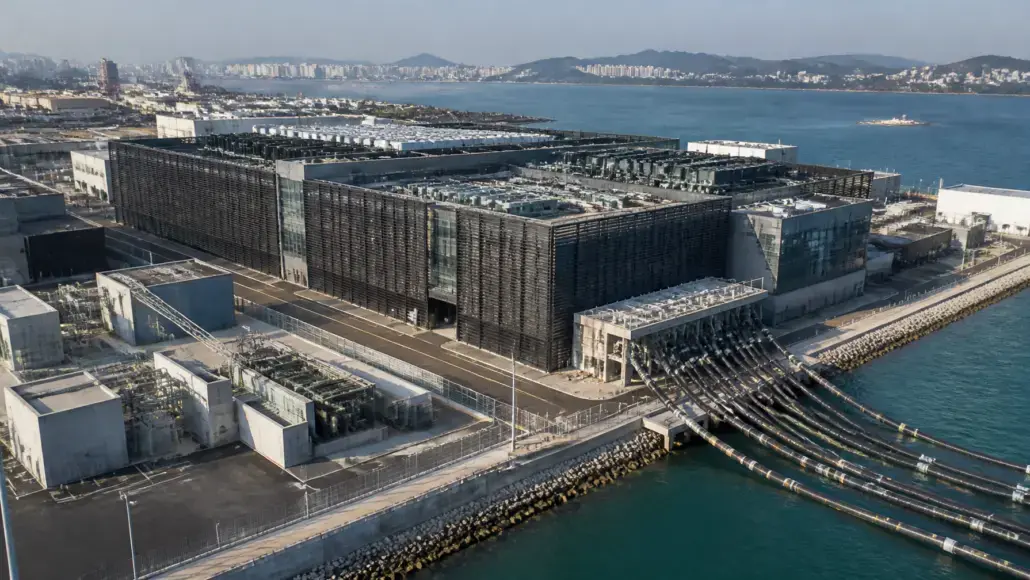
The SK Horizon AI Infrastructure Platform will be responsible for expanding infrastructure to a total planned capacity of 318 MW. This encompasses eight data centres already in operation — located in Seocho, Ilsan (two locations), Bundang, Gasan, Centum, Yangju and Pangyo — along with new AI data centres currently under construction in Ulsan and Guro.
SK Telecom noted that it plans to strengthen its AI data centre operational expertise through SK Horizon and expand into a range of AI infrastructure businesses. The company said the streamlined decision-making structure is expected to enable more effective funding for key business areas, including through external investment.
Upon completion of all phases of the investment, SK Telecom will retain management control as the largest shareholder with a 51% stake. KKR is expected to hold 29% and the IMM consortium 20%. Kim Seong-soo, CEO of SK Broadband, is expected to concurrently serve as CEO of SK Horizon, with the appointment to be finalised through a board resolution following the company’s establishment in early 2027.
SK Horizon Targets Data Centre and Cable Expansion
Beyond AI data centres, the SK Horizon AI Infrastructure Platform will pursue phased expansion of its submarine cable infrastructure, which the company described as essential for global AI businesses. This positions the telecom infrastructure business to support growing demand for cross-border connectivity driven by AI workloads.
SK Telecom has also completed the establishment of a broader AI data centre business structure alongside SK Horizon and SK Hyper, a specialised company established last July. SK Telecom will oversee overall AI data centre strategy and collaborate with global technology companies, while SK Horizon will focus on infrastructure operations and expansion covering existing data centres and submarine cables. SK Hyper, separately, will focus on new AI data centre projects, targeting 5 GW of capacity for phased opening in 2029 and expansion toward 15 GW by 2035.
“This governance restructuring is a proactive measure aimed at strengthening expertise and enabling faster execution in the AIDC business. As an AIDC infrastructure company, we will continue to scale up SK Horizon and grow it into Korea’s leading data centre operator,” said Kim Seong-soo, CEO of SK Broadband.
Keith Kim, Partner at KKR, said: “SK Horizon brings together an established operating platform, capacity under development, and a strong strategic partner. Korea’s advanced digital ecosystem and growing demand for AI capacity provide a strong foundation for SK Horizon’s next phase of growth.”
Kim Byung-hun, Head of Infrastructure at IMM Investment, added: “AI data centres and submarine cables will be among the core infrastructure assets shaping Korea’s digital sovereignty and industrial competitiveness going forward.”
The spin-off is intended to be completed in the first quarter of 2027, subject to the necessary procedures including an extraordinary general meeting of shareholders and government approvals.