





















Mobile networks have traditionally been designed primarily around communication, with sensing handled through separate technologies and systems. That separation is beginning to change as the development of 6G introduces the possibility of using wireless infrastructure not only to transmit information but also to detect, locate and understand objects and environments.
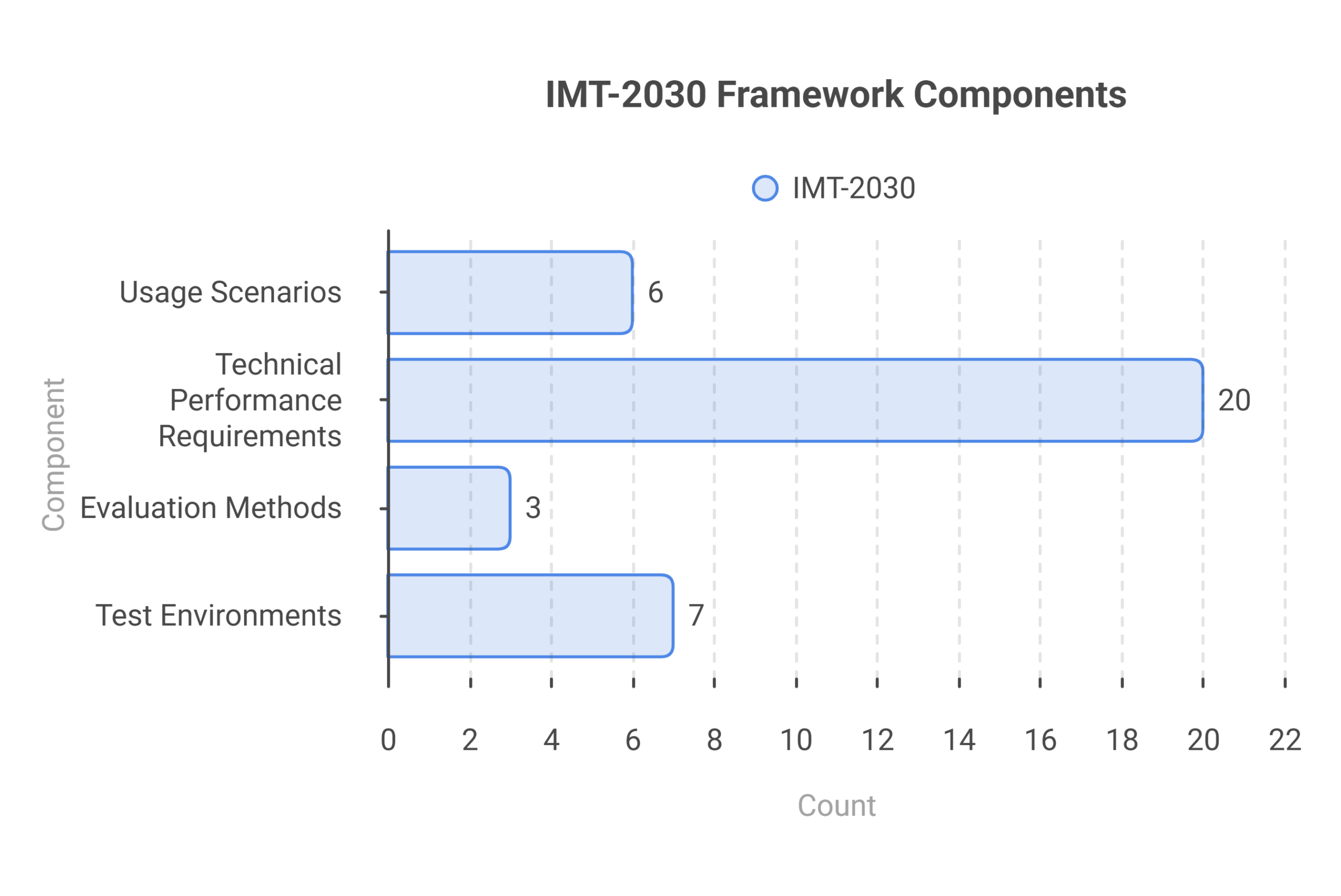
This is placing 6G integrated sensing among the emerging capabilities being considered for the next generation of mobile networks. The International Telecommunication Union has included integrated sensing and communication as one of six usage scenarios within its IMT-2030 framework, alongside immersive communication, hyper reliable and low latency communication, massive communication, ubiquitous connectivity, and artificial intelligence and communication.
Sensing is Becoming Part of the 6G Technology Framework
The development represents a significant change in how network infrastructure could be used. Integrated sensing and communication allows wireless signals and network infrastructure to support sensing functions while continuing to provide communication services. This can create opportunities for positioning, object detection, environmental monitoring and other applications without necessarily requiring completely separate sensing networks.
The ITU’s technical work already treats ISAC as a distinct 6G usage scenario rather than simply an extension of conventional communications. Its evaluation framework also introduces dedicated ISAC test environments, including Indoor Factory-ISAC and Urban Macro-ISAC, reflecting the need to assess sensing capabilities under different operating conditions.
This is giving 6G integrated sensing a more defined position within the standards process. Instead of being discussed only as a research concept, sensing is being incorporated into the technical requirements and evaluation procedures that will shape future radio interface technologies.
Standards are Beginning to Define Sensing Requirements
3GPP has also established dedicated work around integrated sensing and communication. Its Release 19 specifications include a technical specification for ISAC, with work covering the sensing-related requirements and service framework for mobile systems.
ITU-T research is examining the broader network architecture required to support sensing. Its technical report identifies functions such as sensing-service requests, sensing-node selection, sensing measurement-data processing and exposure of sensing capabilities and results. It also considers collaborative sensing involving multiple nodes and data sources.
This suggests that 6G integrated sensing will require more than improved radio hardware. Networks will need mechanisms to identify suitable sensing resources, process measurements and deliver usable sensing results while continuing to meet communication requirements.
Sensing and Communication are Converging Across the Network
The development of integrated sensing and communication is moving beyond the idea of using existing wireless signals for occasional sensing tasks. The emerging 6G approach is looking at sensing as a capability that can be incorporated into the communication system itself, allowing network infrastructure to support both data transmission and the collection of information about surrounding environments.
This is expanding the scope of 6G integrated sensing from an experimental research area into a broader network capability. The work now covers how sensing measurements are generated, processed and shared, as well as how multiple network nodes can contribute to a single sensing task.
Sensing is Moving Beyond a Single Base Station
One important development is the growing emphasis on collaborative sensing. A single network node may have limited visibility of an environment, particularly when objects are obstructed or when sensing conditions change. Multiple sensing nodes can potentially combine measurements to improve the information available about an object or environment.
Research into networked collaborative sensing is examining the use of multiple measurement dimensions, including range, Doppler and angular information. Combining these measurements can provide a more complete representation of an observed target than relying on a single sensing point.
This creates a different role for the network. Communication infrastructure would not simply provide the connectivity required to transmit sensing data from dedicated devices. The network itself could participate in collecting and processing the measurements. 6G integrated sensing could therefore make sensing a distributed capability across radio nodes, devices and computing resources.
Network Architecture is Adapting to Sensing Requirements
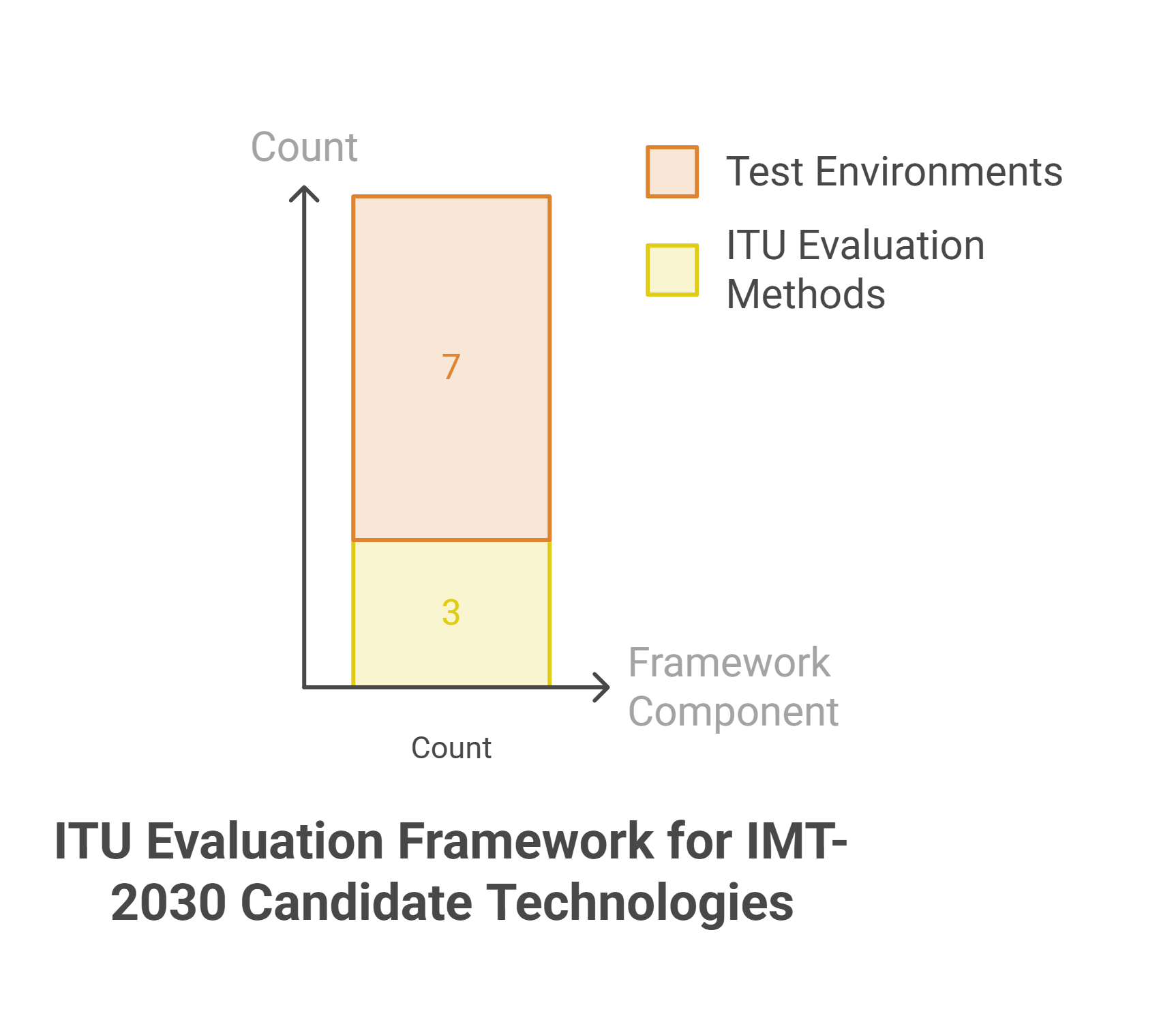
The technical requirements are also becoming more detailed. ITU’s 2026 evaluation framework introduces three evaluation methods for candidate 6G radio technologies: simulation, analytical evaluation and inspection. It also defines seven test environments, including two environments specifically focused on integrated sensing and communication, Indoor Factory-ISAC and Urban Macro-ISAC.
These environments matter because sensing performance can vary substantially depending on the physical setting. An indoor industrial environment presents different reflection, obstruction and positioning conditions from a large urban area. Evaluating both scenarios provides a more structured basis for understanding how sensing technologies could perform under different network conditions.
3GPP is also developing channel models specifically for ISAC evaluation. Existing communication-focused models are not sufficient for all sensing scenarios because sensing requires additional consideration of targets, background environments and the ability to distinguish objects from their surroundings.
The result is a more comprehensive technical framework in which 6G integrated sensing must be evaluated alongside communication performance. Sensing range, accuracy, reliability and resource requirements will need to be considered without undermining the network’s primary communication functions.