






















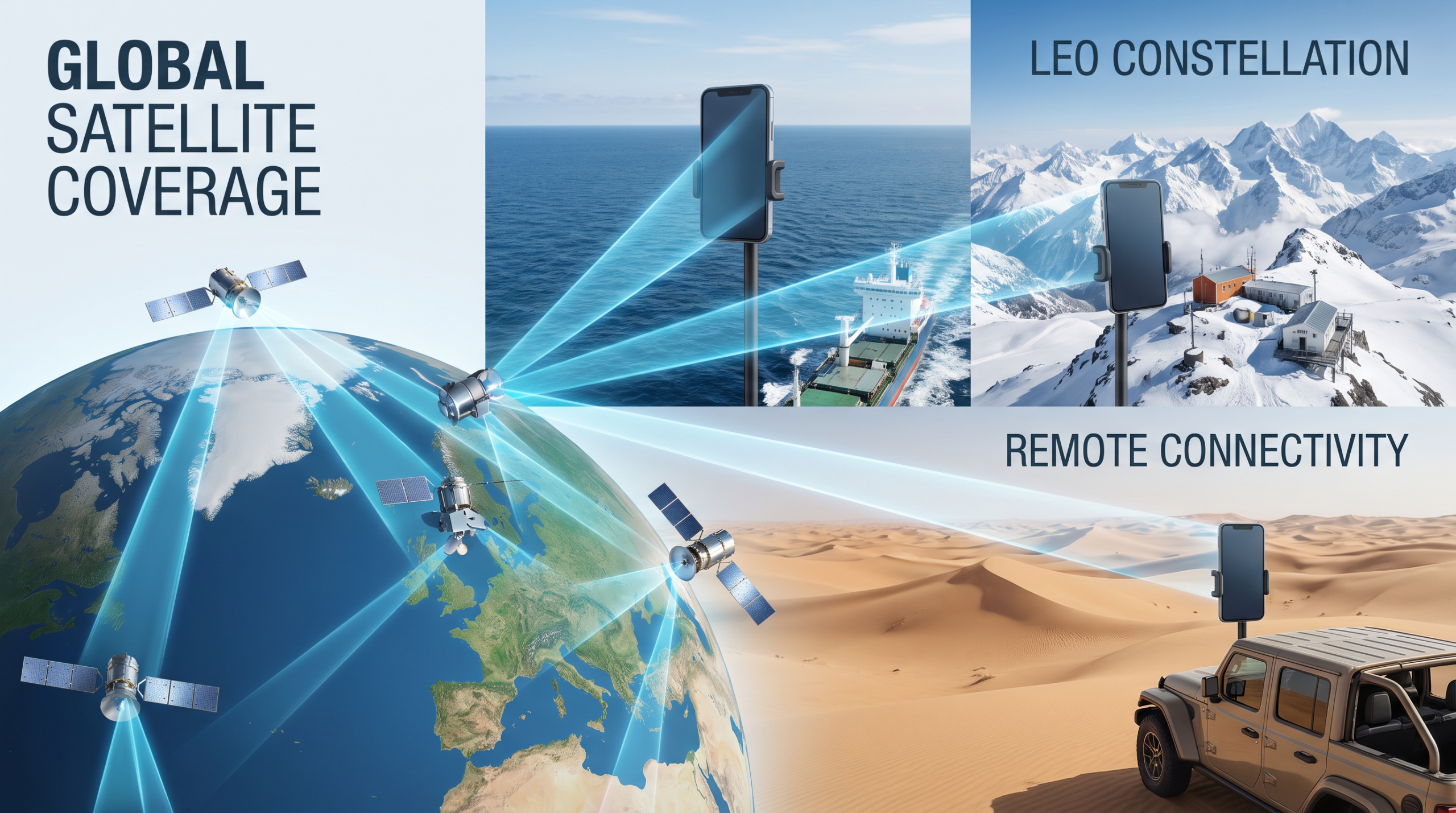
The telecommunications industry is witnessing the dawn of a new era in mobile connectivity, characterized by the ability of standard, unmodified smartphones to connect directly to orbital satellite constellations. This advancement represents a fundamental shift in the relationship between space and terrestrial networks, effectively removing the physical barriers that have long limited mobile network coverage to regions with terrestrial infrastructure. For decades, satellite communication required specialized, expensive hardware, making it a niche solution for maritime, aviation, and extreme industrial sectors. However, the emergence of direct-to-device services is democratizing access to space based connectivity, allowing everyday consumers to maintain a link even in the most remote corners of the globe. By utilizing massive low Earth orbit satellite arrays, the industry is providing a ubiquitous connectivity layer that fills the geographic gaps left by traditional macro towers. This transition is essential for achieving universal connectivity and ensuring that mobile services are available to everyone, regardless of their location. The deployment of low Earth orbit constellations at altitudes between 500 and 600 kilometers is a critical factor in this evolution, as it significantly reduces the propagation delay compared to legacy geostationary systems. This low latency is vital for maintaining the interactivity required for modern messaging and data services, providing a user experience that is comparable to terrestrial networks in many scenarios.
Additionally, the use of large phased array antennas on satellites allows for the creation of high gain spot beams that can connect to standard smartphones even in the most challenging environmental conditions. As the telecommunications industry continues to innovate, the role of space based connectivity will only grow in importance, serving as a foundational layer for a new era of global mobile services. The integration of these components into mass market devices is also driving down the cost of satellite connectivity, making it an accessible feature for a wider range of consumers around the world. In the long term, the convergence of satellite and terrestrial hardware will be a defining feature of the global communications infrastructure, providing a truly unified network that transcends the physical limitations of the earth. This transition is being supported by a growing ecosystem of software developers and service providers who are creating new applications that utilize the unique capabilities of space based connectivity. Additionally, the role of 6G will be crucial in further integrating these two domains into a single, cohesive communications layer.
Technological Parity between Satellite and Terrestrial Access
The development of non-terrestrial networks is increasingly focused on achieving technological parity with traditional cellular access. This involves the adoption of standardized 3GPP protocols that allow satellites to function as virtual base stations in orbit. Unlike proprietary satellite systems of the past, modern direct-to-device services are designed to work with the existing hardware and software already present in millions of smartphones. This compatibility is achieved through sophisticated modifications at the network layer, where the satellite system compensates for the extreme propagation delays and Doppler shifts inherent in space communication. For the end user, the experience is intended to be seamless; their device automatically switches to a satellite link when a terrestrial signal is unavailable, maintaining a continuous connection for messaging and basic data services.
Additionally, the advancement of baseband processor technology has allowed for the integration of satellite capabilities into the same silicon that handles 4G and 5G terrestrial traffic. This integration is vital for maintaining the thin form factors and power efficiency of modern mobile devices. By consolidating these functions, manufacturers can offer satellite connectivity as a standard feature rather than an optional add-on. The goal of this technological evolution is to treat the satellite link as just another frequency band within the mobile operator’s portfolio. This approach simplifies the user journey and ensures that the transition between networks is managed intelligently by the device firmware. The result is a more reliable and resilient communication environment that utilizes the strengths Ocean of both space and terrestrial assets to deliver a consistent service.
Link Budget Management and Massive Phased Array Design
One of the most significant engineering hurdles in delivering satellite connectivity to standard smartphones is the link budget. Standard handsets have limited transmit power and small, omnidirectional antennas, which are not optimized for communicating over the long distances to orbit. To overcome this, satellite operators are deploying spacecraft with massive phased array antennas, some of which are among the largest ever flown in low Earth orbit. These arrays are capable of forming incredibly narrow and high gain spot beams, concentrating the signal energy to establish a link with unmodified devices on the ground. The management of these link budgets requires a high degree of precision in beam steering and power control, involving:
- Real time tracking of satellites and ground devices to maintain optimal beam alignment.
- Advanced modulation and coding schemes to maximize data throughput in low signal to noise environments.
- Dynamic power allocation to compensate for atmospheric attenuation and physical obstructions.
- Use of specialized base station software onboard the satellite to manage multiple simultaneous connections.
- Sophisticated interference cancellation techniques to protect adjacent terrestrial frequency bands.
Additionally, the implementation of satellite ntn emergency communications supporting network resilience is a critical use case for these high gain systems. During disasters where terrestrial towers are destroyed, these massive satellite arrays can provide an immediate and wide area communication layer for both citizens and first responders. The ability to connect directly to a standard smartphone ensures that emergency alerts and SOS messages can reach the maximum number of people without requiring any specialized equipment. This resilience is a key driver for the adoption of direct-to-device services by national telecommunications authorities and public safety agencies around the world. As satellite technology continues to mature, we expect to see even larger and more capable antenna systems, eventually enabling higher bandwidth services like voice calls and streaming video directly from space.
Carrier Integration Strategies and Global Roaming Coalitions
Mobile network operators are adopting a variety of strategies to integrate satellite connectivity into their commercial offerings. Most operators view these services as a high value differentiator that can improve customer retention and attract new subscribers who frequent remote areas. The integration typically follows a roaming-based model, where the satellite constellation provider acts as a neutral host for the mobile operator’s traffic. This allows users to retain their existing phone numbers and service plans while communicating through space. To facilitate this, operators are forming global roaming coalitions, ensuring that their subscribers have access to satellite connectivity even when traveling internationally. This collaborative approach is essential for achieving the scale needed to make space based mobile services economically viable. The development of standardized non-terrestrial network protocols is also facilitating the creation of a multi-vendor ecosystem, where different satellite operators and hardware manufacturers can work together more effectively. This interoperability is vital for ensuring that a single device can operate globally, regardless of the underlying satellite constellation. By utilizing these open standards, the industry can avoid the silos of the past and foster a more vibrant and competitive market for satellite-to-device services.
Additionally, the integration of artificial intelligence into the management of these networks will allow for more efficient beam steering and resource allocation, optimizing the performance of the system in real time. By predicting user location and demand, these systems can ensure that satellite capacity is always directed to where it is needed most. The result is a more reliable and cost effective service that can support a growing population of mobile subscribers who demand 100 percent geographic availability. The future of mobile connectivity is thus one of total integration, where the boundaries between space and earth are effectively erased by the power of advanced technology. This evolution will not only improve the reliability of mobile services but also open the door to entirely new categories of applications that rely on ubiquitous connectivity to thrive in a connected world. The focus will remain on delivering a seamless and high quality experience for all users, ensuring that they can stay connected regardless of where their journey takes them. Additionally, the development of specialized 6G protocols will likely incorporate non-terrestrial networks as a native component, further solidifying the role of space in the future of mobile communication.
The business models for direct-to-device services are also evolving. Some operators are bundling satellite messaging into their premium unlimited plans, while others are offering it as a stand-alone add-on for a daily or monthly fee. There is also significant potential for B2B applications, such as remote asset tracking for logistics companies and high reliability connectivity for utility providers. By offering a unified connectivity solution that spans both terrestrial and non-terrestrial domains, operators can capture new revenue streams and improve the overall utility of their networks. The long term success of these strategies will depend on the continued reduction of satellite launch costs and the widespread adoption of standardized non-terrestrial network protocols by device manufacturers and network equipment providers alike.
Regulatory Barriers and Supplemental Coverage from Space Policies
The expansion of mobile connectivity into space is not without its regulatory challenges. National telecommunications authorities must balance the need for expanded coverage with the requirement to protect existing terrestrial services from interference. In the United States, the Federal Communications Commission has led the way with its Supplemental Coverage from Space framework, which provides a pathway for satellite operators to use terrestrial mobile spectrum in partnership with terrestrial carriers. This policy requires strict adherence to power flux density limits at national borders and the implementation of effective interference mitigation techniques. Other countries are following suit, developing their own regulatory frameworks to manage the unique complexities of space based mobile connectivity.
International coordination is equally critical, as satellite footprints frequently cross national boundaries. The International Telecommunication Union plays a central role in managing orbital slots and frequency allocations to ensure that the space environment remains sustainable and equitable. Issues such as orbital debris management and spectrum sovereignty are also major concerns for the global telecommunications community. Satellite providers must work closely with national governments to ensure that their services comply with local laws regarding lawful intercept, data privacy, and emergency service routing. Despite these hurdles, the momentum behind direct-to-device services is growing, driven by a shared vision of a world where connectivity is truly ubiquitous. As the regulatory and technical environments continue to mature, we expect to see these services become a standard and indispensable component of the global telecommunications ecosystem, providing a vital link for billions of people around the world.