























The telecommunications industry is moving toward a highly integrated operational model that bridges the traditional divide between terrestrial cellular systems and space based constellations. As mobile network operators increasingly incorporate satellite connectivity into their service offerings, the need for a cohesive control framework has become paramount. Historically, satellite and terrestrial networks operated in silos, each with its own management systems, billing platforms, and operational procedures. This fragmented approach resulted in significant inefficiencies and limited the ability of providers to offer truly seamless connectivity. The implementation of unified network management is addressing these challenges by consolidating the control planes of both domains into a single, comprehensive architecture. This advancement allows operators to manage their entire infrastructure as a unified ecosystem, improving the delivery of services and simplifying the complexities of multi-network orchestration. By streamlining operations and providing a holistic view of network health, providers can better meet the demands of a globalized digital economy.
Consolidation of Space and Terrestrial Control Planes
The core of a modern telecommunications strategy involves the integration of space and terrestrial control planes to ensure a consistent user experience. This consolidation is driven by the adoption of cloud native technologies and standardized interfaces that allow different network components to communicate more effectively. Unified network management systems utilize software defined networking to abstract the underlying hardware, whether it is a terrestrial gNodeB or an orbital transponder. This abstraction allows network administrators to apply uniform policies across the entire infrastructure, ensuring that security, quality of service, and traffic management rules are consistently enforced. For example, a single management console can be used to monitor the performance of terrestrial towers in urban centers alongside the health of low Earth orbit satellites serving remote territories.
Additionally, the consolidation of management systems enables more efficient billing and subscriber management. In a hybrid network environment, a single user may transition between cellular and satellite links multiple times during a single session. Without a unified approach, tracking this usage and providing accurate billing would be an immensely complex task. By integrating the business support systems of both domains, operators can offer a single invoice and a unified customer profile, regardless of the access technology used. This simplification is not only beneficial for the operator but also for the end user, who receives a more transparent and reliable service. The transition toward integrated control planes also facilitates the faster deployment of new features, as software updates can be pushed across the entire network simultaneously. This agility is essential in a fast paced market where the ability to innovate quickly is a key competitive advantage.
The integration of unified network management systems is also supported by the adoption of open APIs, such as those defined by the TM Forum and MEF. These standardized interfaces allow for the seamless exchange of data between different network components, reducing the complexity of integration and fostering a more vibrant ecosystem of vendors and service providers. By utilizing these open standards, operators can avoid vendor lock-in and maintain a diverse range of infrastructure components that can be managed through a single, unified interface. This flexibility is vital for adapting to the changing needs of the market and ensuring that the network remains resilient and competitive in the long term. The adoption of these technologies is also driving a shift toward more automated and self-healing networks, where the system can identify and resolve issues without human intervention. This zero-touch approach to network management is a key objective for the industry as it seeks to reduce operating costs and improve the quality of service for all users.
The result is a more efficient and reliable telecommunications infrastructure that can support the growing demands of a connected world. As the technology continues to evolve, we expect to see even greater gains in performance and efficiency, driven by the integration of artificial intelligence and machine learning into the heart of the management framework. These systems will be capable of analyzing vast amounts of performance data in real time, identifying patterns and optimizing resources to meet the needs of every user. The future of mobile connectivity is thus one of total integration, where the boundaries between terrestrial and satellite networks are effectively erased by the power of advanced software orchestration. Additionally, the development of specialized 6G protocols will likely incorporate non-terrestrial networks as a native component, further solidifying the role of space in the future of mobile communication.
Service Orchestration and Hybrid Connectivity Models
The ability to orchestrate services across multiple network types is a critical capability for modern telecommunications providers. Unified network management allows for the dynamic allocation of resources based on real time demand and network conditions. This involves the use of advanced orchestration engines that can determine the most efficient path for a particular data flow. For instance, high bandwidth traffic in a densely populated area might be routed through a terrestrial 5G link, while critical emergency messages in a remote region are prioritized for satellite transmission. This intelligent routing is made possible by the following capabilities:
- Real time visibility into the capacity and health of both terrestrial and orbital resources.
- Automated path selection based on predefined service level agreements and cost considerations.
- Seamless handovers between different access technologies to maintain session continuity.
- Dynamic slicing of network resources to support specialized B2B and public safety applications.
- Centralized management of security protocols to protect data across all network domains.
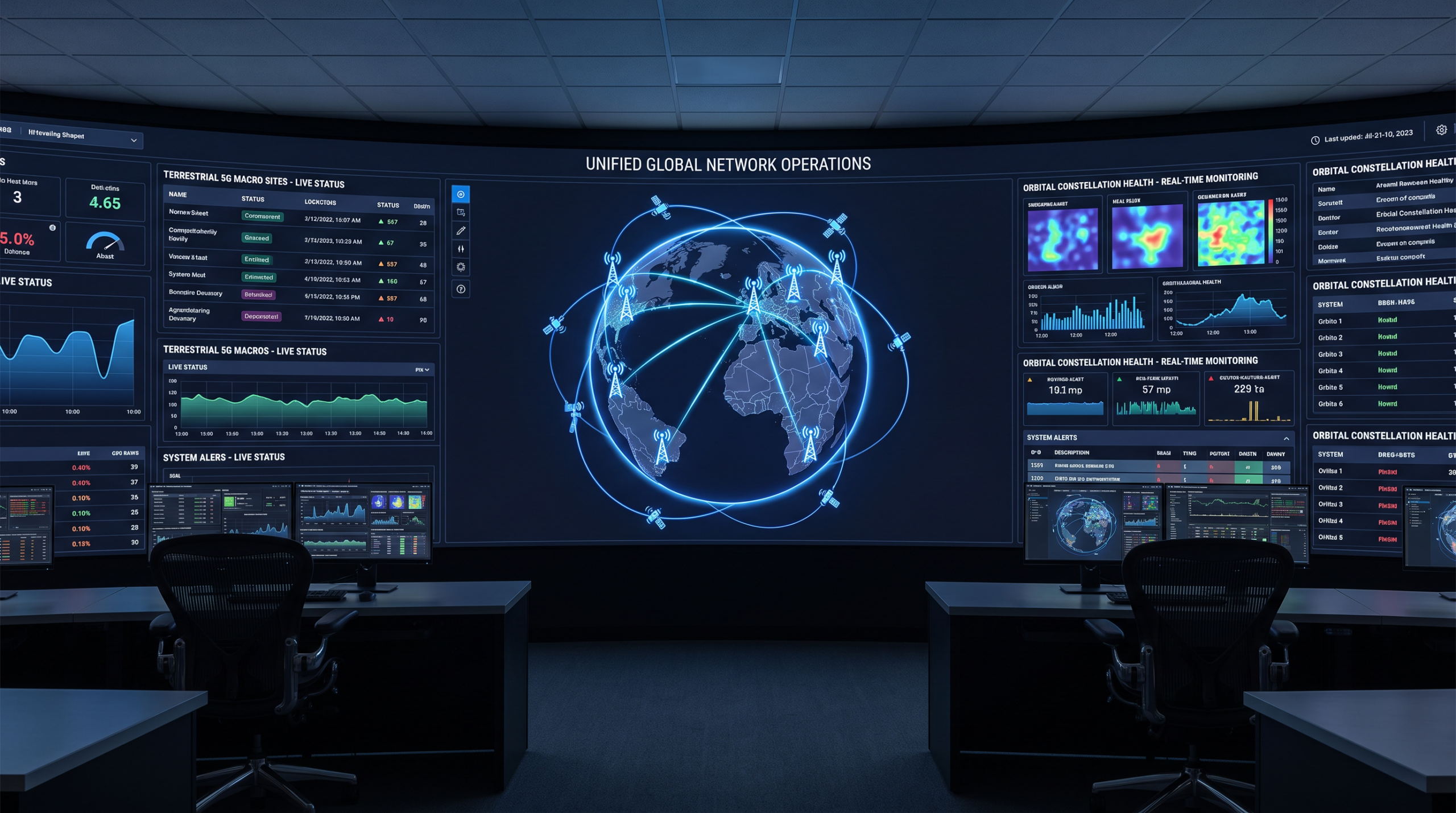
Additionally, the integration of 5g ntn integration extending mobile connectivity into remote regions highlights the potential of hybrid models to bridge the digital divide. By combining the strengths of 5G and non-terrestrial networks, operators can provide high speed broadband to areas that were previously impossible to serve. The orchestration of these services requires a high degree of precision, as the network must account for the variable latency and bandwidth characteristics of each link. Unified management systems provide the necessary tools to manage these variables, ensuring that users receive a consistent and high quality experience. The development of standardized APIs is also playing a role in this orchestration, allowing different vendors and service providers to integrate their systems more easily. This open approach fosters innovation and ensures that the telecommunications ecosystem remains competitive and resilient.
Operational Efficiency and Automated Resource Allocation
Operational efficiency is a primary driver for the adoption of integrated management frameworks. By automating routine tasks such as network configuration, monitoring, and fault detection, operators can significantly reduce their operating expenses. Unified network management systems use artificial intelligence and machine learning to analyze vast amounts of performance data, identifying patterns and predicting potential issues before they impact service. This proactive approach to maintenance is particularly important for satellite constellations, where physical repairs are impossible. Automated resource allocation also ensures that the network is always operating at peak efficiency, minimizing waste and maximizing the return on investment for both terrestrial and orbital assets.
The use of closed loop automation further enhances the resilience of the network. When a fault is detected, the management system can automatically trigger a remediation process, such as rerouting traffic to a healthy satellite or adjusting the power levels of a terrestrial tower. This self healing capability reduces the need for manual intervention and ensures that service is restored as quickly as possible. Additionally, the automation of resource allocation allows for more flexible service models, such as on demand capacity for enterprise customers or temporary coverage for large scale events. By providing the tools to manage these dynamic requirements, unified management systems empower operators to be more responsive to the needs of their customers. The long term result is a more efficient, reliable, and cost effective telecommunications infrastructure that can support the growing demands of a connected world.
The automation of resource allocation is also facilitating the development of new business models, such as on-demand capacity and network slicing for enterprise customers. By providing the tools to manage these dynamic requirements, unified management systems empower operators to be more responsive to the needs of their customers. This responsiveness is particularly important in sectors such as logistics and utility management, where the demand for connectivity can fluctuate significantly based on geographic location and time of day. The use of advanced analytics also allows operators to optimize their capital expenditure by identifying the areas of greatest demand and prioritizing infrastructure investments accordingly. This data-driven approach to network planning ensures that the infrastructure is always aligned with the needs of the market, maximizing the return on investment for both terrestrial and orbital assets. Additionally, the integration of edge computing into the management framework will enable faster decision making and reduced latency, ensuring that time-sensitive applications can operate reliably across all network domains.
The collaboration between international standards bodies and the telecommunications industry is also ensuring that these systems are interoperable across different regions and jurisdictions. This universality is vital for supporting global connectivity and ensuring that the benefits of the digital age are shared by everyone, regardless of where they live or work. The focus will remain on delivering a seamless and high quality experience for all users, ensuring that they can stay connected regardless of their journey. Additionally, the role of 5G and 6G will be crucial in further integrating these two domains into a single, cohesive communications layer.
Future Trends in Integrated Network Visibility
The future of network management is closely tied to the concept of ubiquitous visibility, where every component of the infrastructure is monitored in real time. This level of insight is essential for managing the increasing complexity of multi-layered networks that include terrestrial macro cells, small cells, and multiple orbital shells. Future unified network management systems will likely incorporate digital twin technology, creating a virtual representation of the entire network to simulate different scenarios and optimize performance. This will allow operators to test the impact of new satellite launches or terrestrial deployments before they are physically implemented, reducing risk and improving the success rate of new initiatives.
Additionally, the integration of edge computing into the management framework will enable faster decision making and reduced latency. By processing data closer to the source, whether it is a terrestrial base station or a satellite gateway, the system can respond more quickly to changing conditions. This will be particularly important for time sensitive applications such as autonomous vehicles and industrial automation. The trend toward open standards and interoperability will also continue, as operators seek to avoid vendor lock in and maintain a diverse ecosystem of suppliers. As the telecommunications industry continues to evolve, the importance of unified network management will only grow, providing the foundational control layer that enables the next generation of global connectivity. The focus will remain on delivering a seamless and reliable experience for users, ensuring that the boundaries between space and earth are effectively erased in the digital domain.