














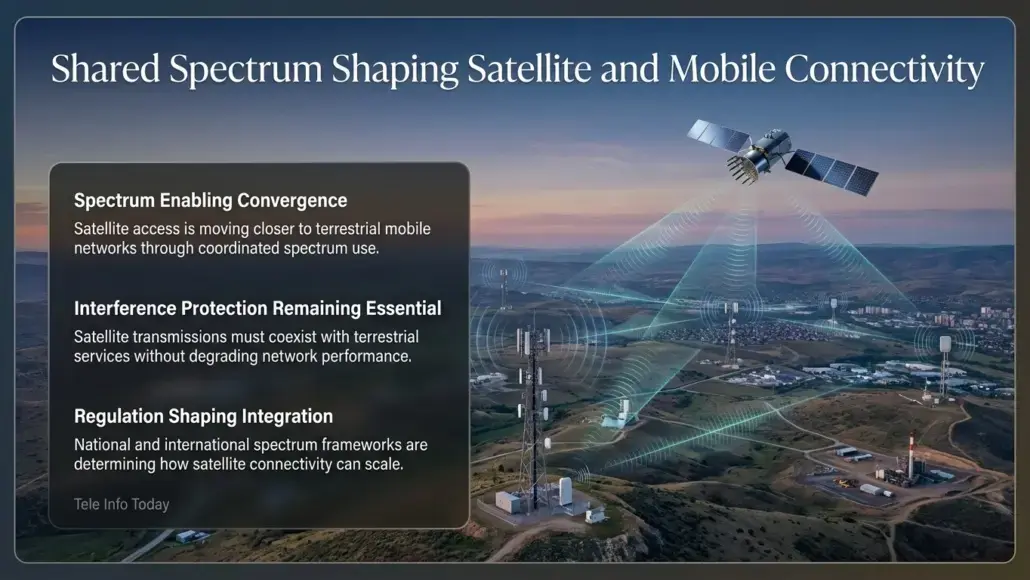

Satellite connectivity is entering a phase in which the challenge is shifting from simply reaching users beyond terrestrial networks to finding practical ways for satellite systems to operate alongside mobile infrastructure. Shared spectrum is becoming central to that transition because direct to device services can use frequencies associated with terrestrial mobile networks, creating a closer link between satellite access and conventional cellular services.
The distinction between satellite and terrestrial spectrum is becoming less rigid as mobile operators and satellite providers pursue direct connectivity. Under emerging arrangements, satellite systems can operate through spectrum held by mobile operators under defined technical and regulatory conditions. This creates a pathway for satellite connectivity to become an extension of mobile networks rather than a completely separate communications layer.
Mobile Spectrum Creating a New Route for Satellite Connectivity
Using terrestrial mobile frequencies can bring satellite services closer to the existing mobile ecosystem. Where compatible devices and network arrangements are in place, operators can potentially extend selected services beyond the practical footprint of terrestrial infrastructure without requiring an entirely separate satellite handset environment. This makes shared spectrum an important part of the emerging network architecture. The model can support several forms of network expansion:
- Mobile services can reach remote locations where new terrestrial sites are difficult to justify.
- Satellite links can provide an additional access layer alongside existing cellular infrastructure.
- Operators can incorporate satellite connectivity into broader coverage planning.
- Compatible devices can potentially use satellite services without moving into a completely separate connectivity ecosystem.
The commercial opportunity therefore depends not only on satellite capacity, but also on how effectively satellite access can be incorporated into existing mobile systems.
Interference Protection Shaping Satellite and Terrestrial Coexistence
The larger challenge comes from the physical difference between satellite and terrestrial networks. Terrestrial systems generally operate through relatively concentrated cells with extensive frequency reuse, while satellites can cover very large geographic areas. A satellite transmission can therefore overlap locations where terrestrial networks are already operating on the same or neighbouring frequencies. This makes shared spectrum dependent on careful coordination rather than simple allocation. Key requirements include:
- Defined technical limits for satellite transmissions.
- Protection of existing terrestrial mobile services.
- Coordination across overlapping coverage areas.
- Conditions governing power, frequency use and interference.
Regulatory activity is beginning to reflect this convergence. Ofcom has established a framework for qualifying direct to device services using specified mobile spectrum in the United Kingdom, while international work under the World Radiocommunication Conference 2027 process is examining the broader regulatory treatment of satellite connectivity linked to terrestrial International Mobile Telecommunications systems.
The direction is therefore moving toward a more integrated radio environment in which satellite and terrestrial networks can operate as complementary access layers. The effectiveness of that model will depend on how spectrum frameworks balance wider connectivity with interference protection and efficient use of existing mobile networks.
Spectrum Coordination Moving Toward Practical Network Integration
The next stage of satellite and terrestrial convergence depends on turning spectrum access into a workable operating framework. In the United Kingdom, Ofcom approved a licence variation in April 2026 allowing VodafoneThree and its satellite partner to provide direct to device services using licensed 900 MHz spectrum. It later amended the exemption regulations governing qualifying services using that band. Ofcom had also approved Telefonica UK’s use of 1800 MHz spectrum for direct to device connectivity in February 2026.
These decisions demonstrate that shared spectrum is moving from policy discussion into specific licensing arrangements. The implementation remains tightly controlled, with regulators defining the frequencies and technical conditions under which satellite services can operate. The regulatory milestones illustrate the progression:
- 1800 MHz licence variation approved for Telefonica UK in February 2026.
- 900 MHz licence variation approved for VodafoneThree in April 2026.
- Updated direct to device exemption regulations issued by Ofcom in June 2026.
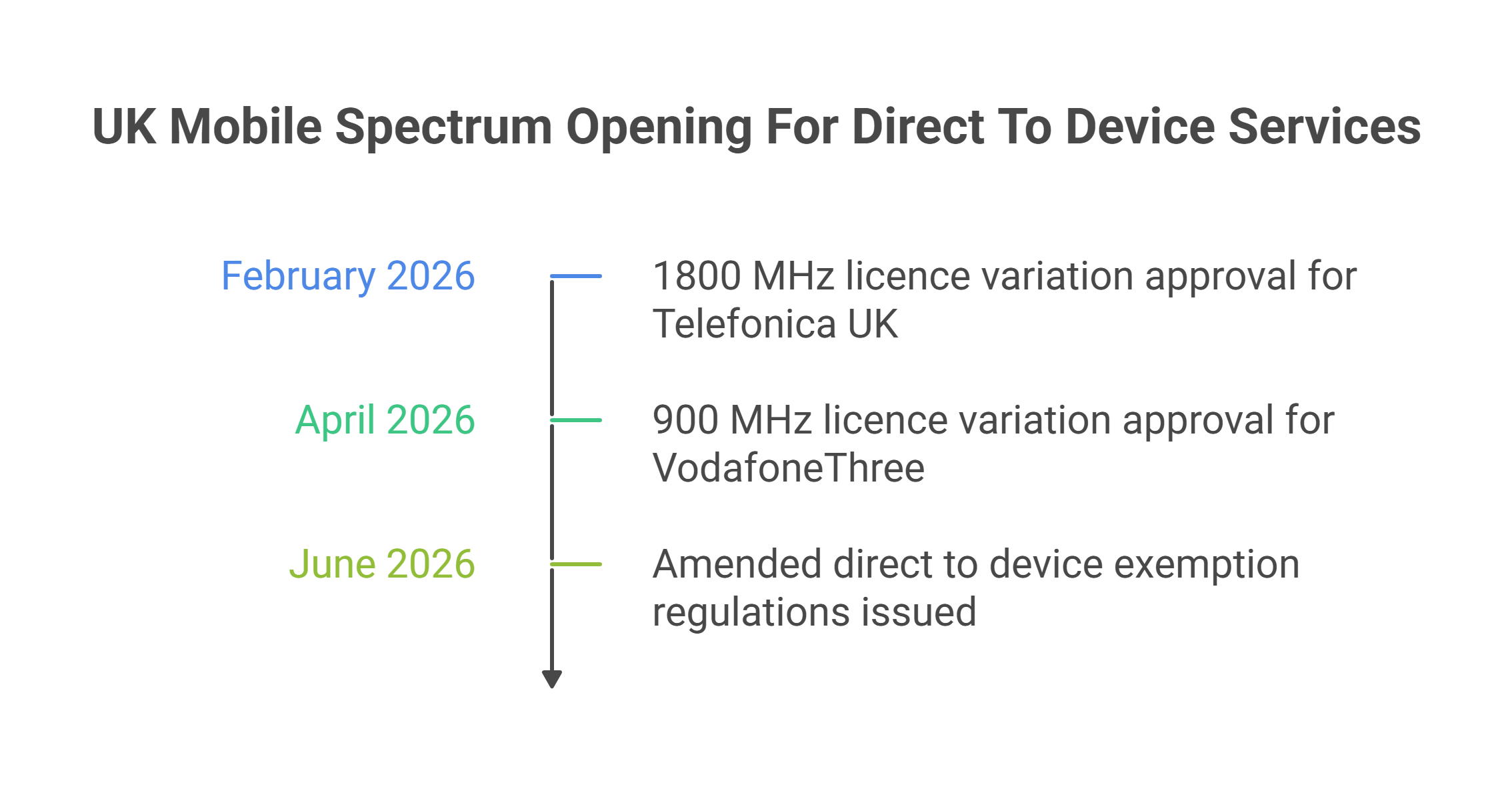
The timeline shows how satellite connectivity is moving from spectrum policy into defined national licensing and operating frameworks.
International Rules Expanding the Spectrum Coordination Debate
National decisions are developing alongside a broader international process. The International Telecommunication Union (ITU) is examining direct satellite connectivity under World Radiocommunication Conference 2027 agenda item 1.13. The studies cover possible Mobile Satellite Service allocations in frequency ranges used or identified for terrestrial International Mobile Telecommunications systems, while explicitly requiring protection of incumbent services from harmful interference.
This places shared spectrum within a wider coordination framework rather than treating each national deployment as an isolated case. The outcome will influence how regulators approach satellite access to frequencies that already support terrestrial mobile networks. The operational challenge is therefore becoming more precise:
- Satellite transmissions must remain within defined technical conditions.
- Existing terrestrial networks require protection from harmful interference.
- Frequency coordination must account for large satellite coverage footprints.
- National licences need to align with wider international spectrum rules.
The commercial significance is also growing. In the United States, the Federal Communications Commission (FCC) reported more than $28 billion in direct to device deal flow across at least 130 MHz of spectrum during the previous 18 months. The figure underscores the strategic value attached to spectrum access, although it reflects the US market rather than a global total.
As these frameworks develop, the next question for the mobile ecosystem shifts toward the devices that can take advantage of satellite connectivity and operate across this increasingly integrated network environment. That creates a direct link to satellite capable smartphones.
Spectrum Coordination Shaping Satellite Network Integration
The development of direct to device connectivity is making spectrum coordination a core requirement for combining satellite and terrestrial mobile networks. Shared spectrum can expand the reach of mobile services, but its effectiveness depends on interference protection, technical limits and regulatory frameworks that preserve existing terrestrial network performance. The industry is moving toward a more coordinated model:
- National regulators are establishing specific conditions for satellite use of mobile frequencies.
- International spectrum discussions are addressing longer term coexistence between satellite and terrestrial systems.
- Commercial investment is increasing as access to suitable spectrum becomes strategically more valuable.
The emerging model therefore depends less on simply making frequencies available and more on managing them efficiently across complementary network layers. That regulatory and technical balance will shape how broadly satellite connectivity can become integrated with conventional mobile services.
References
- GSMA – Spectrum for D2D Public Policy Paper – 2025
- GSMA – The Limits of D2D – 2026
- Ofcom – Statement: Direct to Device licence exemption regulations update – 2026
- International Telecommunication Union – WRC-27 Agenda Item 1.13 – 2026
- Federal Communications Commission – DA 26-398 Order – 2026