















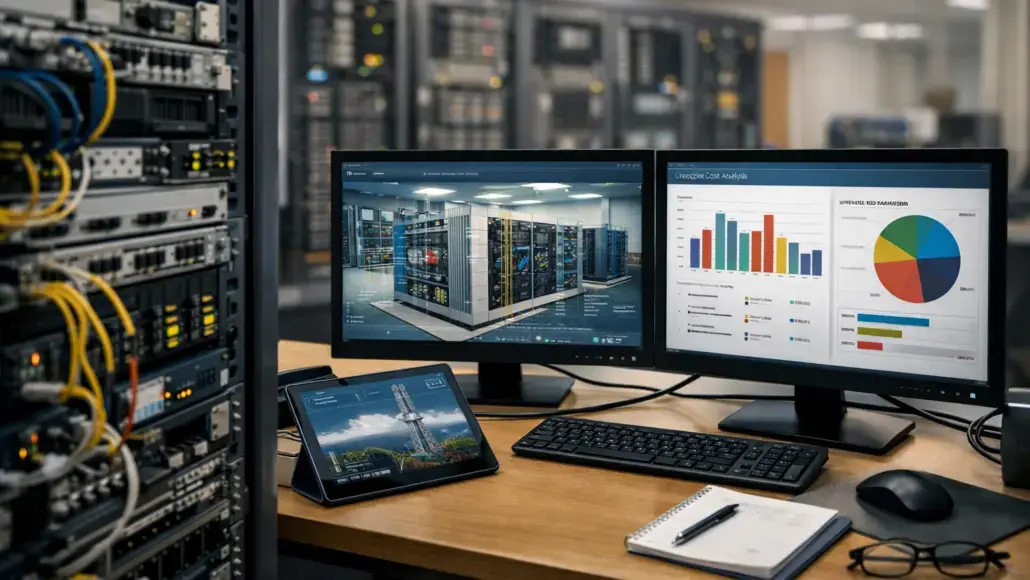

The financial performance of telecommunications operators is inextricably linked to the efficient management of capital-intensive physical assets. From massive core switching centers to thousands of remote edge nodes, the total cost of ownership for network hardware spans acquisition, installation, operation, maintenance, and eventual removal. Digital twin technology has emerged as a significant tool for financial controllers and network engineers seeking to gain a granular understanding of how hardware ages over time. By creating a synchronized virtual model of every asset in the network, operators can track performance and degradation in real-time, enabling a data-driven approach to investment and operational strategy.
Traditionally, lifecycle cost analysis has relied on historical averages and vendor-provided data, which often fail to account for the unique environmental and operational conditions of a specific network. A digital twin captures the actual stressors that an asset experiences, such as temperature fluctuations, power quality issues, and varying traffic loads. This high-fidelity data provides a more accurate picture of how equipment ages and when it is likely to fail, allowing for the optimization of maintenance schedules and the extension of asset life. This shift from reactive to proactive management is a key driver of long-term profitability in the telecom sector.
Driving Precision in Predictive Maintenance and Operational Expenses
Operational expenses related to maintenance constitute a significant portion of a network’s total cost of ownership. Traditional periodic maintenance often leads to unnecessary site visits for healthy equipment or, conversely, catastrophic failures of components that were not due for inspection. Digital twins integrate sensor data to enable predictive maintenance, where interventions are performed only when the virtual model indicates a high probability of failure. By reducing the number of manual inspections and preventing emergency repairs, operators can significantly lower their overall infrastructure expenses.
The virtual model also optimizes the logistics of maintenance activities. By simulating the failure of a specific component, project managers can determine the exact tools and spare parts needed for a repair, ensuring that technicians are fully prepared before they leave the warehouse. This spatial awareness, combined with real-time inventory data, minimizes the time spent on-site and the likelihood of return visits. The efficiency gains in labor and transportation costs contribute directly to a healthier bottom line.
Energy consumption is another major component of operational cost that can be managed through virtual modeling. Digital twins allow engineers to simulate the energy efficiency of different hardware configurations under varying load conditions. By identifying power-hungry components or inefficient cooling setups, operators can make targeted adjustments that reduce electricity bills. This focus on energy efficiency not only lowers costs but also supports the company’s sustainability goals, which is increasingly important for attracting investment and meeting regulatory requirements.
Strategic Procurement and Vendor Performance Analysis
The procurement phase offers the most significant opportunity to influence the long-term costs of a network. By using digital twins to analyze the performance of existing assets, procurement teams can identify which vendors and models offer the best value over time. This analysis goes beyond the initial purchase price to include factors like reliability, ease of maintenance, and energy efficiency. The insights gathered from the virtual models empower operators to negotiate better terms with suppliers and to standardize on the most cost-effective hardware, which is vital for managing equipment lifecycle costs effectively.
Digital twin simulations also assist in the evaluation of new technologies before they are deployed at scale. For example, an operator can create a virtual pilot of a new 5G radio unit to see how it integrates with existing infrastructure and its impact on the overall network performance. This “try before you buy” capability reduces the risk of expensive procurement mistakes and ensures that every new investment is aligned with the company’s strategic goals. The ability to model the long-term impact of a technology choice is a vital advantage in the rapidly evolving telecom market.
Vendor accountability is further strengthened through the use of performance data from digital twins. If a specific batch of hardware fails to meet its promised reliability or efficiency standards, the operator has clear, data-backed evidence to support a claim or negotiate a remedy. This transparency builds more collaborative and performance-based relationships with suppliers, ensuring that both parties are incentivized to deliver the best possible value.
Optimizing Network Evolution and Capacity Planning
The constant need to upgrade and expand networks requires a forward-looking approach to asset management. Digital twin technology allows for the simulation of different growth scenarios to understand the impact on equipment lifecycle costs. For instance, an engineer can model how the transition from 4G to 5G will affect the remaining life of existing power systems and structural assets. This information is critical for planning the timing and scope of upgrades, ensuring that capital is deployed where it will have the greatest impact.
Capacity planning is also refined through virtual modeling. By simulating the traffic growth of the next five years, operators can identify which parts of the network will reach their limits and require expansion. The digital twin can suggest the most cost-effective way to add capacity, such as upgrading existing nodes versus building new sites. This optimization prevents both under-utilization of assets and the need for emergency capacity additions, both of which are costly and inefficient, thereby helping to keep equipment lifecycle costs within budget.
The decommissioning of legacy hardware is the final stage of the asset lifecycle. Integrating digital twins into the site decommissioning process ensures that every component is removed efficiently and that its residual value is maximized for future use. The virtual model tracks the condition of the hardware until the moment of removal, providing a clear inventory for reuse or resale. By closing the loop on asset management, the digital twin approach ensures that no value is lost at the end of a component’s operational life.
Enhancing Financial Reporting and Regulatory Compliance
Accurate financial reporting requires a clear understanding of asset depreciation and valuation. Digital twins provide a continuous, data-driven assessment of the state of the network’s physical assets, leading to more precise accounting and tax reporting. Instead of relying on broad depreciation schedules, companies can use the actual performance and health data from the virtual models to reflect the true value of their infrastructure. This level of transparency is highly valued by auditors, investors, and regulators.
Regulatory compliance often involves the tracking of specific environmental and safety metrics across the network. Digital twins simplify this task by providing a centralized repository for all relevant data, from the energy efficiency of a data center to the structural integrity of a remote tower. The virtual model can automatically generate compliance reports, reducing the administrative burden on the company and the risk of fines for non-compliance. This proactive approach to regulation builds a positive reputation with authorities and demonstrates the company’s commitment to responsible asset management.
Strategic planning for future regulatory changes, such as new environmental standards or safety requirements, is also enabled by virtual modeling. Operators can simulate the impact of these changes on their existing assets and develop a cost-effective plan for compliance. This foresight prevents the need for sudden, expensive upgrades and ensures that the network remains ahead of the regulatory curve.
Building a Foundation for AI-Driven Financial Optimization
The future of telecom finance lies in the integration of artificial intelligence with the digital twin platform. AI algorithms can analyze the vast amounts of data gathered by the virtual models to identify opportunities for financial optimization that would be impossible for humans to detect. For example, the system could suggest shifting network traffic to more energy-efficient sites during periods of low demand or identify a subtle pattern of failure that indicates a systemic issue with a specific vendor’s hardware. This proactive management ensures that equipment lifecycle costs are kept to a minimum while maintaining high service quality.
AI-driven simulations will also enable more sophisticated forecasting of future equipment lifecycle costs. By considering factors like inflation, shifting energy prices, and the pace of technological innovation, the system can provide management with a highly accurate view of the network’s long-term financial requirements. This level of insight allows for more informed decision-making and a more resilient financial strategy.
The digital twin is not just a tool for engineering, it is a strategic asset for the entire organization. By providing a single, authoritative source of truth for the network’s physical assets, it enables a level of collaboration and alignment between departments that was previously unattainable. The result is a more efficient, profitable, and technologically advanced telecommunications company that is ready for the challenges of the future. The shift toward digital-twin-based asset management is not a trend, it is the new standard for excellence in the industry. Strategic financial management requires that every decision is backed by the kind of detailed data that only virtual modeling can provide. By understanding the true drivers of cost throughout the network, companies can ensure they remain competitive in an increasingly demanding market. The ability to simulate future scenarios and assess their financial impact is a critical advantage for any operator looking to lead the industry. The digital twin platform provides the necessary tools to handle this complexity, offering a powerful platform for analysis, optimization, and automation. By embracing these virtual models, telecom operators can ensure that their networks remain resilient, efficient, and ready for the challenges of the future. The integration of lifecycle analysis into the core operational workflow is no longer an option, it is a strategic necessity for any company committed to delivering world-class connectivity.