























The telecommunications industry relies on a complex and highly specialized global network of suppliers to provide the hardware necessary for 5G densification and fiber-to-the-home expansion. Managing the procurement and delivery of these components across multiple borders and jurisdictions presents significant logistical hurdles, particularly during periods of geopolitical instability or global shipping disruptions. For many operators, the lack of real-time visibility into the movement of critical components results in delayed network rollouts and increased operational costs. Without a clear understanding of where assets are in the transit process, procurement teams are often forced to maintain higher safety stock levels, which ties up valuable capital that could be better spent on other infrastructure projects.
The traditional methods of tracking inventory, which often rely on periodic manual updates and disconnected spreadsheet systems, are increasingly inadequate for the demands of modern telecom deployments. These legacy approaches create significant information gaps, making it difficult to predict when specific components will arrive at a staging area or installation site. When a shipment of radio units or optical line terminals is delayed, the impact can ripple through the entire installation schedule, causing labor crews to sit idle and delaying the start of service for new subscribers. This lack of coordination between the supply chain and field operations is a major source of inefficiency for communications service providers.
Addressing these procurement challenges requires a shift toward a more integrated and transparent supply chain model. By establishing a digital thread that connects every stage of the lifecycle from the manufacturer to the final installation site, operators can gain the insights needed to manage risks more effectively. This transparency is particularly important for high-value assets that are in limited supply, such as the specialized semiconductors used in advanced networking equipment. By improving their ability to track these items in transit, operators can better align their procurement strategies with the actual needs of their network expansion plans, leading to a more resilient and responsive supply chain.
Implementing Real-Time Tracking for Fiber Infrastructure
The deployment of fiber-optic networks involves the coordination of thousands of individual components, from large reels of cable to small connectors and splitters. Managing this inventory across vast geographic areas is a monumental task that requires a high degree of precision. By implementing real-time tracking solutions, such as RFID tags and GPS-enabled sensors, telecom operators can maintain constant visibility into the location and status of their fiber infrastructure assets. This information allows for more accurate planning of rollout schedules and reduces the likelihood of project delays caused by missing or misplaced materials.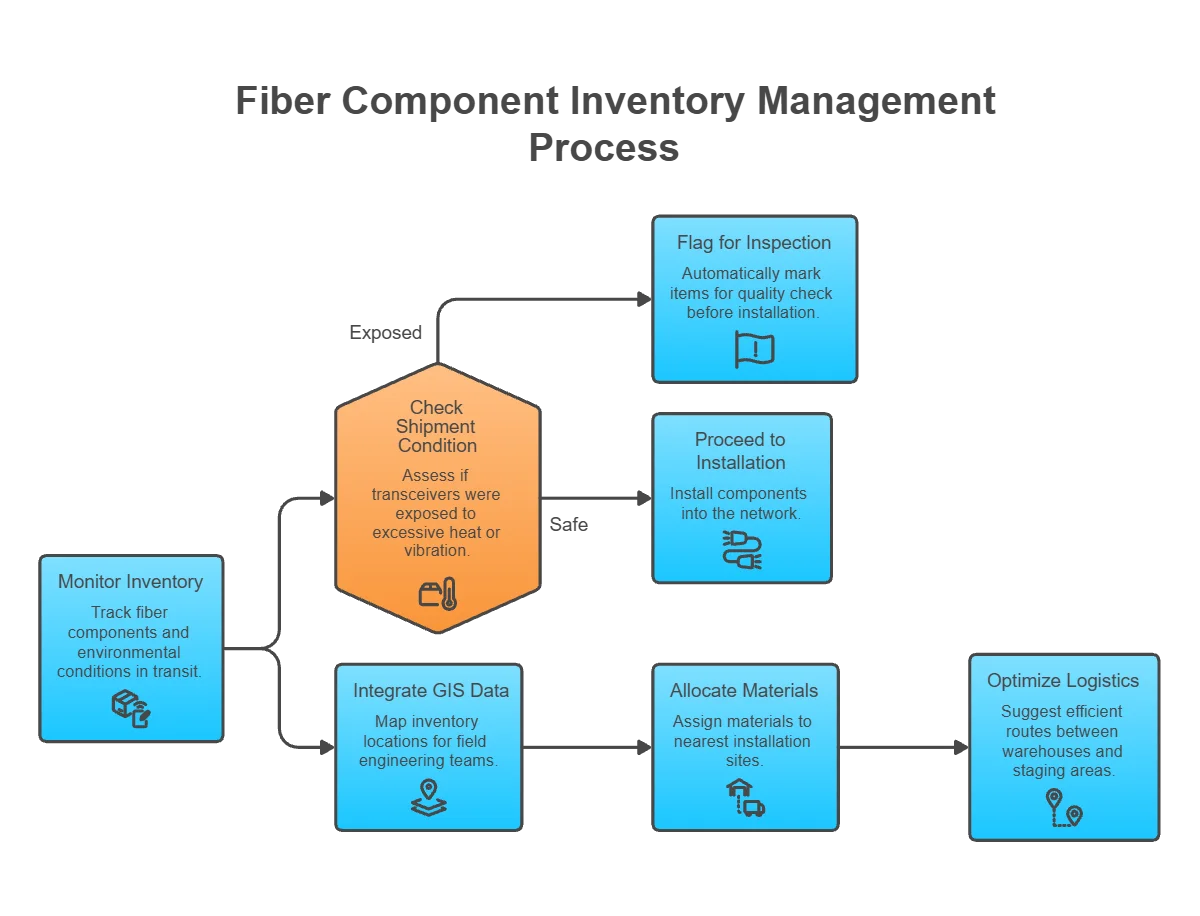
Real-time inventory visibility is also essential for maintaining the quality and integrity of fiber components during the installation process. Sensitive optical equipment can be easily damaged if not handled or stored correctly, and tracking these items allows operators to monitor their environmental conditions in transit. If a shipment of high-capacity transceivers is exposed to excessive heat or vibration, the system can automatically flag the item for inspection before it is installed in the network. This proactive approach to quality control helps to ensure the long-term reliability of the infrastructure and reduces the need for costly post-installation repairs.
The integration of tracking data with geographic information systems provides even greater benefits for field engineering teams. By visualizing the location of inventory on a map, project managers can more effectively allocate materials to the nearest installation sites, reducing transport costs and carbon emissions. This spatial awareness is particularly useful for large-scale fiber rollouts that span entire cities or regions. When inventory is managed in real time, the system can automatically suggest the most efficient route for moving materials between warehouses and staging areas, ensuring that the right components are always available at the right time.
Strategic Stocking and Demand Forecasting for 5G Hardware
Optimizing the inventory of 5G hardware requires a delicate balance between having enough stock to support rapid deployment and minimizing the costs associated with excess equipment. Telecom operators are increasingly utilizing advanced analytics and machine learning to improve their demand forecasting capabilities, allowing them to better predict the specific types and quantities of components needed for future network expansions. By analyzing historical deployment data and current market trends, these systems can provide more accurate recommendations for strategic stocking levels, ensuring that critical items are always in the pipeline.
The move toward more accurate forecasting also allows for a more collaborative relationship with hardware vendors. When operators can share their projected needs with suppliers in advance, it reduces the risk of sudden shortages and allows for more efficient production planning. This level of cooperation is essential for maintaining supply chain resilience in a competitive market where multiple operators are competing for the same limited pool of high-tech components. By integrating forecasting data with real-time inventory visibility, communications service providers can create a more stable and predictable environment for their infrastructure projects.
Strategic stocking is also a key component of risk management for the telecom supply chain. By maintaining decentralized caches of critical spare parts, operators can ensure that they are prepared to respond quickly to network failures or natural disasters. This localized approach to inventory management reduces the reliance on central warehouses and minimizes the time it takes to get replacement equipment to the field. When combined with real-time tracking, these decentralized stocks can be managed as a single virtual inventory, providing both the benefits of localized availability and the efficiency of centralized control.
Integrating Supply Chain Data with Field Operations
One of the most significant opportunities for improving efficiency in the telecom sector is the closer integration of supply chain data with field operations. When installation crews have access to real-time information about the arrival of materials, they can more effectively schedule their work and avoid the downtime associated with waiting for deliveries. This coordination is particularly important for complex projects that involve multiple subcontractors and specialized equipment. By providing a common operating picture for all stakeholders, the organization can ensure that everyone is working from the same set of facts.
The use of mobile applications that allow field technicians to scan and update inventory status in real time is a major driver of this integration. As components are moved from the warehouse to the staging area and finally installed in the network, the digital record is updated automatically. This provides a high level of accuracy for the inventory system and ensures that the physical state of the network is always reflected in the digital twin. This real-time feedback loop also allows project managers to identify and address bottlenecks in the deployment process as they happen, rather than waiting for periodic reports.
Additionally, integrating supply chain data with network management systems provides a foundation for more advanced asset lifecycle management. By tracking the installation date and serial number of every component, operators can more effectively manage warranties, schedule maintenance, and plan for future upgrades. This level of detail is essential for maintaining the performance and reliability of complex 5G networks over time. When the entire lifecycle of an asset is tracked from procurement to decommissioning, the organization can gain a much deeper understanding of the total cost of ownership and make more informed decisions about future infrastructure investments.
Business Value of Transparent Logistics in Infrastructure
The business value of transparent logistics and real-time inventory visibility in the telecommunications industry is profound. By reducing the time and cost associated with network deployments, operators can significantly improve their return on investment for infrastructure projects. Faster rollouts mean that services can be launched sooner, leading to earlier revenue generation and a faster time-to-market for new digital offerings. In an industry where being the first to offer 5G or high-speed fiber in a new area is a key competitive advantage, the agility provided by a transparent supply chain is invaluable.
In addition to financial benefits, a more resilient supply chain also leads to higher levels of customer satisfaction. When network expansions and upgrades are completed on schedule, it reduces the likelihood of service disruptions and ensures that subscribers have access to the high-quality connectivity they expect. This reliability is essential for maintaining brand reputation and for attracting and retaining high-value customers in a crowded market. By investing in the tools and processes needed to improve inventory visibility, communications service providers are also investing in the long-term success of their business.
Ultimately, the transformation of the telecom supply chain is about building a more sustainable and efficient foundation for the digital future. By reducing waste and optimizing the movement of materials, operators can lower their environmental impact while still meeting the growing demand for connectivity. The insights gained from a transparent logistics system can also lead to more ethical and responsible procurement practices, as it becomes easier to track the origin and handling of every component. For these reasons, the pursuit of real-time inventory visibility is a strategic priority that will continue to shape the evolution of the telecommunications industry for years to come.