


















The evolution of mobile networks is increasingly being shaped by the need to deliver higher capacity, greater intelligence and broader connectivity without allowing energy consumption to rise at the same pace. This is becoming particularly important as the industry moves from 5G-Advanced toward 6G, where networks are expected to support substantially more data, devices and computing-intensive services.
This is placing 6G network sustainability closer to the centre of future network design. The International Telecommunication Union has identified sustainability as one of the overarching principles of the IMT-2030 framework, alongside security and resilience, ubiquitous connectivity and intelligence. The framework also identifies energy efficiency and resource optimisation as important capabilities for the next generation of mobile systems.
Network Efficiency is Improving as Traffic Continues to Grow
The scale of the challenge can already be seen in the existing mobile ecosystem. Mobile operators consumed around 290 TWh of electricity in 2023, while mobile data traffic was roughly four times higher than in 2019. Over the same period, the number of mobile connections increased by about 8.5%, demonstrating how rapidly network usage has expanded relative to subscriber growth.
At the same time, efficiency has improved. Data from the GSMA covering 19 operators indicates that the energy intensity of data transmission declined by around 10% to 30% annually between 2019 and 2023. Operational emissions also declined during the period, despite continued growth in data traffic.
The figures highlight an important distinction. Greater efficiency does not automatically mean lower overall energy demand. Network densification, additional infrastructure and rising traffic can offset improvements in energy consumption per unit of data. 6G network sustainability will therefore depend on whether efficiency improvements can continue to exceed the growth in network demand.
Sustainability is Becoming a Measurable Network Objective
The transition is increasingly moving beyond general commitments toward measurable technical requirements. The ITU’s IMT-2030 framework places sustainability within the broader technical development of 6G, while research and standards work are examining how energy consumption can be monitored and optimised across different parts of the network.
This shifts the discussion from simply reducing electricity consumption at individual sites toward improving the efficiency of the network as a complete system. Radio access equipment, transport infrastructure, core networks, computing resources and connected devices can all influence the overall energy footprint.
For 6G, 6G network sustainability will therefore need to be considered alongside performance requirements rather than after network architecture has already been established. The challenge is to increase capability while limiting both energy intensity and the broader environmental costs associated with network expansion.
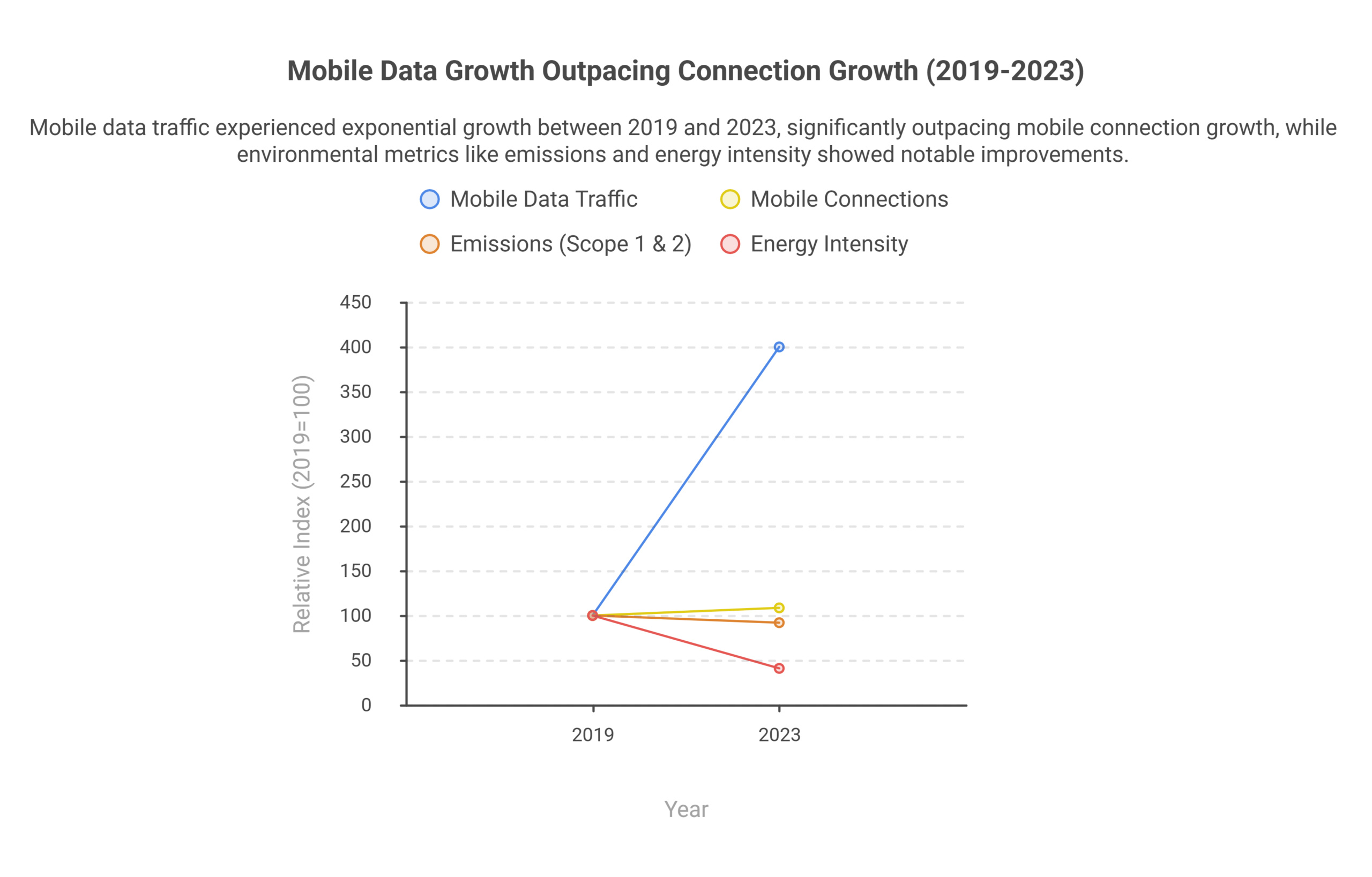
Key Takeaway: Mobile networks are becoming more energy efficient, but rapid traffic growth means future generations will need efficiency gains that continue to outpace demand.
The combination of rising network demand and improving efficiency creates the central sustainability challenge for the next generation. 6G network sustainability is consequently becoming less about achieving isolated energy savings and more about designing networks capable of delivering significantly greater performance while controlling their overall resource and environmental footprint.
Energy Efficiency must Extend Across the 6G System
Improving energy efficiency in future mobile networks will require more than reducing the power consumed by individual network components. The move toward 6G is bringing greater attention to how radio access networks, transport systems, core infrastructure, computing resources and connected devices operate as a combined system. This is making 6G network sustainability increasingly dependent on end-to-end efficiency rather than isolated improvements.
Efficiency is Extending Across the Network
The radio access network is a particularly important area because it represents a major share of cellular network energy consumption. Research examining the energy performance of future RAN architectures has estimated that the RAN can account for around 76% of cellular network energy use in the analysed environment. This makes improvements in how radio infrastructure operates during both high and low traffic periods particularly significant.
Energy-saving mechanisms are already being developed through 5G-Advanced and are expected to inform the evolution toward 6G. These include methods for adapting network resources to changing traffic conditions, reducing unnecessary activity during periods of low demand and improving the efficiency of network equipment without compromising required service levels.
The goal is increasingly to make network energy consumption responsive to actual demand. 6G network sustainability could therefore depend on the ability of future infrastructure to dynamically balance performance requirements with available network resources.
Measuring Energy Across the Full System
Measurement is becoming another important part of the sustainability equation. ITU-T work on energy efficiency for mobile networks emphasises end-to-end monitoring and control, covering user equipment, access networks, core networks, data networks, services and applications. This broader approach recognises that optimising one part of the network may have limited value if energy consumption increases elsewhere.
Device efficiency also forms part of this wider picture. Research into future radio technologies has reported approximately 35% lower modem energy consumption in a defined small, bursty-packet scenario through power-saving mechanisms. While this is a specific research result rather than a universal industry benchmark, it demonstrates the potential for efficiency improvements beyond network infrastructure.
Lifecycle considerations are also becoming more relevant. Future network efficiency cannot be assessed only through electricity consumed during operation. Hardware replacement, equipment lifespan, material use and the environmental cost of deploying new infrastructure can also affect the overall sustainability profile.
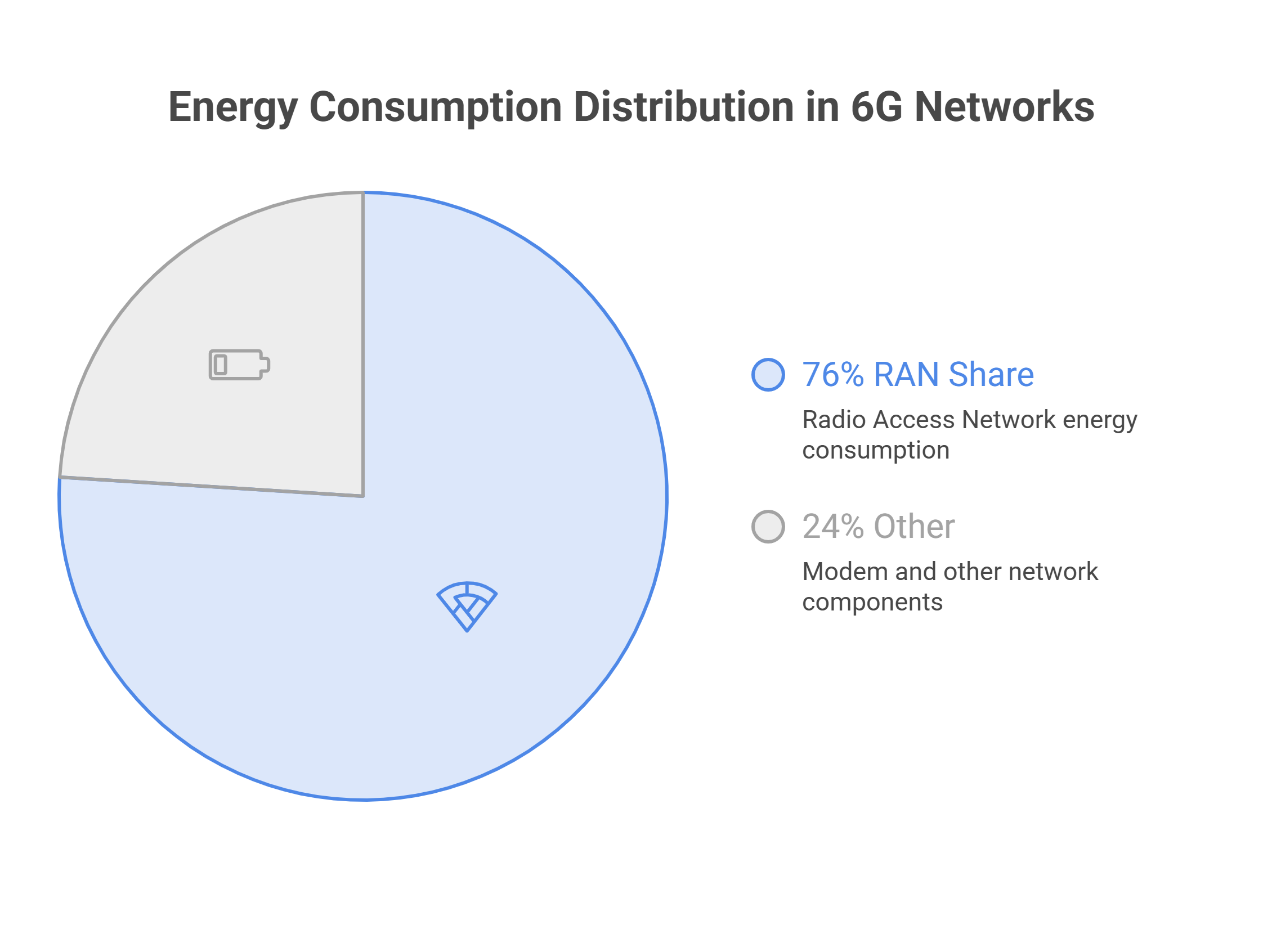
Key Takeaway: Sustainable 6G design is expanding beyond network power consumption toward end-to-end measurement, device efficiency and system-level optimisation.
The broader challenge is to ensure that gains in efficiency are not offset by increasing network complexity and demand. 6G network sustainability will therefore require efficiency to be measured across the entire system, from infrastructure and radio equipment to devices and services, while also considering the longer-term resource and environmental impact of network deployment.