








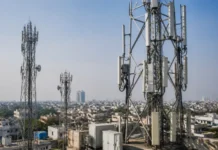











Fourth generation (4G) technology will offer many advancement to the wireless market, including downlink data rates well over 100 Mbps, low latency, very efficient spectrum use and low-cost implementations.
With impressive network capabilities, 4G enhancement promise to bring the wireless experience to an entirely new level with impressive user applications, such as sophisticated graphical user interfaces, high-end gaming, high-definition video and high-performance imaging.Consumer expectations for mobile handsets and similar products are becoming more and more sophisticated.
Consumers are demanding a better user experience along with more advanced and useful applications on a more ergonomic device.
The current 3G devices are good, but they will have to improve in areas like imaging and processing power to support future 4G applications like three dimensional (3D) and holographic gaming, 16 megapixel (MPixel) smart cameras and high-definition (HD) camcorders. Applications like these will demand more processing power than the current 3G handsets offer, requiring more efficient applications processors.
The move to 4G networks will allow service providers to offer the impressive applications that will drive users to upgrade to the new phones. Current downlink data rates are less than 10 megabits per second (Mbps); 4G
systems will offer downlink data rates well over 100 Mbps, an improvement of 10 times over 3G. 4G systems will also have low latency, improving the consumer experience. With flexible network connections, efficient use of spectrum and impressive user applications, 4G will offer what consumers want.
What is LTE?
Long Term Evolution (LTE) technology is sometimes called 3.9G or Super 3G and has been developed by the Third Generation Partnership Project (3GPP) as an improvement to the current Universal Mobile Telecommunications System (UMTS). By using Orthogonal Frequency Division Multiple Access (OFDMA), LTE will be able to provide download rates of 150 Mbps for multi-antenna (2×2) multiple-input multiple output (MIMO) for the highest category terminals. For these terminals upload rates in the 50 Mbps range will allow an efficient transfer of data.
LTE makes very efficient use of the available spectrum with channel bandwidths from 1.25 Megahertz (MHz) to 20 MHz The flexible “slice” will allow LTE to be more easily implemented in countries where 5 MHz is a commonly allocated amount of spectrum. LTE will also co-exist with legacy systems already rolled out around the world.
Latency and Efficiency
Latency in a wireless network describes the time it takes between when an action is initiated or requested and when it actually begins. In 3.5G networks, when a phone is in dormant mode and wants to initiate a connection, a several hundred mille seconds (ms) delay is common. For transmission of data packets, 50 ms one-way latency is the norm.
Consumers want a connection experience like they get at their homes using a wired broadband connection. LTE will decrease latency to just 50 ms from dormant to connection and a 5 ms one-way latency after that, delivering connection latencies similar to a wired connection.
A new class of mobile devices is emerging that is a convergence of the Smartphone market with the PC market.
These new MIDs, Mobile Internet Devices, are low-power, high-performance wireless devices, able to deliver a desktop experience on a small footprint, portable device. MIDs deliver an intuitive user interface with touch screens, as well as full featured browser support, high resolution displays, broadband and personal connectivity, a camera, camcorder, navigation, media player, gaming and office productivity applications in a small footprint that can operate all day on a single charge.
Next Generation Applications Processors
The amount of processing performance needed to deliver these new 4G applications will be large. Integrated, multi-core architectures that deliver microprocessors and DSPs on a single chip will be critical to 4G’s success.
Products such as TI’s OMAP applications processors enable ore sophisticated and intuitive user’s interfaces and provide a web browsing experience similar to traditional PCs.
Integration and Power Management
To be able to deliver the performance needed for 4G technologies, process technologies must continue towards higher integration. The current 45 nanometer (nm) process in use today allows up to two times the density compared to the previous 65nm process. In addition to cost savings, the 45nm process achieves a 25% performance increase over the 65nm process. Continued integration will increase performance while decreasing costs over time. But all this integration comes at a price, namely the need for sophisticated power management technologies. Shrinking the process technology down to 45nm has an exponential effect on leakage power until it becomes a significant part of a device’s total power.
The big challenge in brining 4G to the market will be using the right applications processors as well as modem and power management technologies to deliver the performance, size and battery life that consumers demand. The path is clear to bring 4G to reality and deliver compelling application and performance that will pave the way for the future of wireless.