
















Malaysia’s communications regulator is evaluating Starlink satellite to phone technology as part of efforts to improve mobile connectivity in underserved areas, with discussions underway with SpaceX on the potential deployment of direct-to-cell services.
The Malaysian Communications and Multimedia Commission (MCMC) confirmed that it is assessing the technology’s feasibility, particularly for extending mobile coverage to remote communities where conventional network infrastructure remains difficult and costly to deploy.
MCMC Assesses Direct-to-Cell Technology
MCMC Chairman Tan Sri Mohamad Salim Fateh Din said the regulator is in discussions with SpaceX regarding its Starlink satellite to phone offering, which enables compatible smartphones to communicate directly with satellites without relying on traditional cellular towers.
He said the commission is carrying out technical and regulatory evaluations before deciding on any potential implementation, adding that any future deployment should complement Malaysia’s existing telecommunications infrastructure rather than disrupt the market.
According to MCMC, the technology could provide an additional connectivity layer for locations where expanding terrestrial mobile networks is economically or geographically challenging.
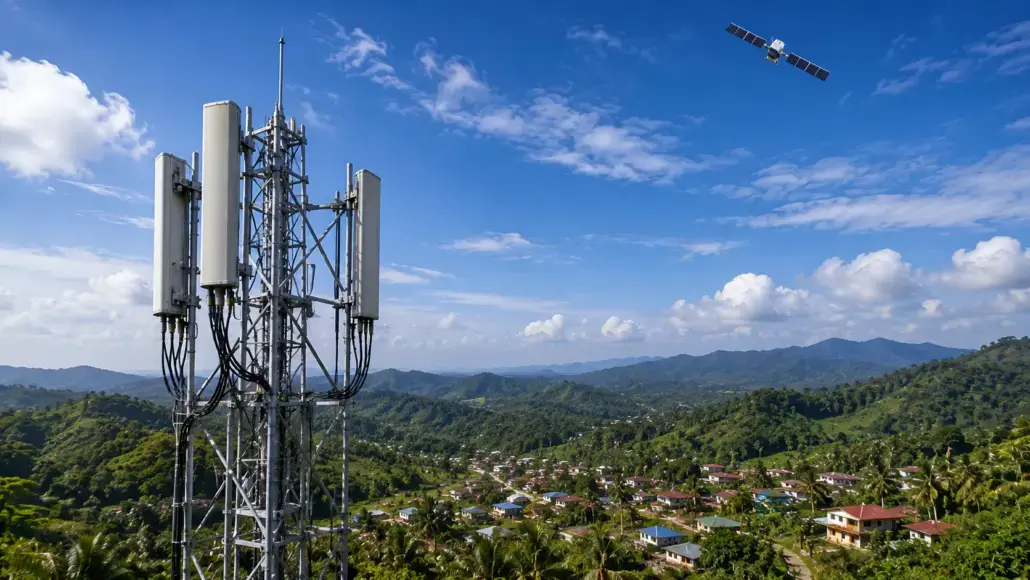
Direct-to-cell services use low-Earth orbit satellites equipped to communicate with standard mobile devices. Initial deployments are expected to support text messaging, with voice and mobile data capabilities planned in later phases.
Satellite Connectivity Could Support Rural Coverage
Malaysia has invested heavily in expanding nationwide digital infrastructure through initiatives such as the National Digital Network Plan (JENDELA). However, parts of Sabah, Sarawak and remote inland regions continue to experience limited mobile coverage because of difficult terrain and dispersed populations.
The regulator believes Starlink satellite to phone technology could complement existing infrastructure by extending connectivity to areas that remain beyond the reach of conventional mobile networks.
Rather than replacing terrestrial services, satellite-based connectivity is being considered as a solution for filling persistent coverage gaps while supporting the government’s broader digital inclusion objectives.
Regulator Reviews Industry Impact
MCMC said any decision on introducing Starlink satellite to phone services will also consider the interests of Malaysia’s telecommunications operators.
Mohamad Salim said the regulator intends to work closely with industry stakeholders to ensure satellite connectivity supports, rather than competes with, existing network investments. Malaysian operators already use Starlink’s satellite services for selected backhaul applications in remote locations, but direct-to-cell technology would represent a new capability that enables consumer devices to connect directly to satellites.
Several countries have begun evaluating similar satellite-based mobile services as operators and governments look for practical ways to improve coverage in hard-to-reach areas.
MCMC has not announced a timeline for a regulatory decision, saying further technical assessments and industry consultations will be completed before any framework for Starlink satellite to phone services is introduced in Malaysia.