













Close
SATEXPO 2026
Monday, April 27, 2026
CIOE 2026

T-Mobile Starlink Beta Offers Satellite Connectivity

Note* - All images used are for editorial and illustrative purposes only and may not originate from the original news provider or associated company.

Subscribe

- Never miss a story with notifications

- Gain full access to our premium content

- Browse free from any location or device.

Media Packs

Expand Your Reach With Our Customized Solutions Empowering Your Campaigns To Maximize Your Reach & Drive Real Results!

– Access the Media Pack Now

– Book a Conference Call

Leave Message for Us to Get Back

Related stories

Cloud and Edge Networks Accelerated by Optical Links

The synergy between centralized data centers and decentralized edge nodes is critical for the next wave of digital transformation. By utilizing high-capacity optical links, operators are achieving the ultra-low latency and massive data transfer speeds required to support real-time applications and seamless global connectivity across diverse industries.

High Speed Data Centers Leveraging Optical Interconnects

The rapid expansion of cloud computing and artificial intelligence has pushed traditional data center architectures to their physical limits. By replacing copper-based connections with high-performance optical interconnects, modern facilities are achieving the throughput and efficiency required to handle massive workloads while maintaining the scalability necessary for future enterprise IT growth.

Optical Wireless Communication Expanding Network Reach

Moving beyond the constraints of the radio frequency spectrum, light-based wireless systems are unlocking a new era of high-speed connectivity. Optical wireless communication offers a secure, interference-free, and high-capacity alternative for expanding network reach in dense urban environments, industrial sites, and beyond the reach of traditional fiber infrastructure.

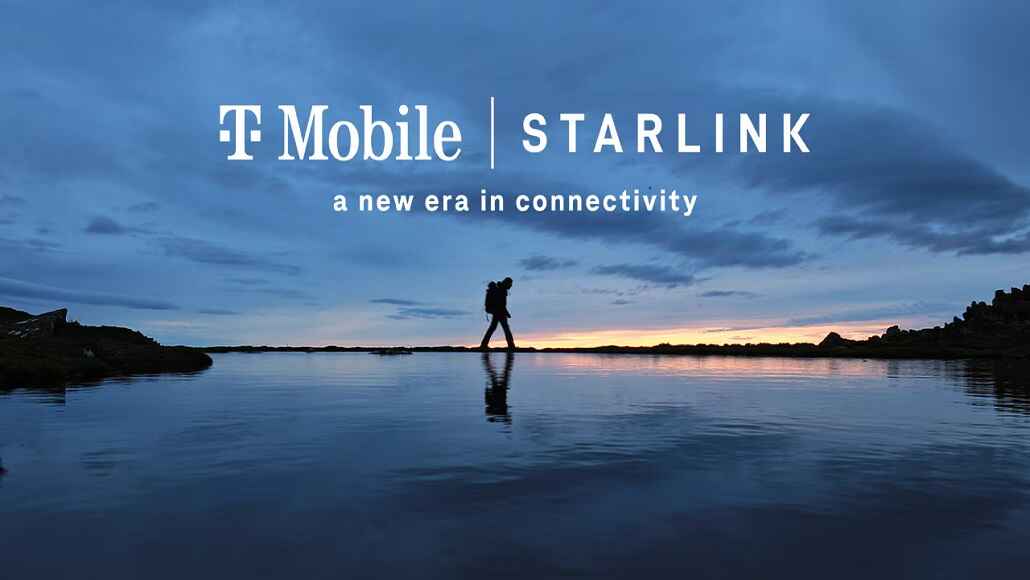
T-Mobile has launched a game-changing innovation in wireless connectivity with the public beta of T-Mobile Starlink, developed in partnership with SpaceX’s Starlink. This revolutionary satellite-based service aims to eliminate dead zones, ensuring connectivity across over 500,000 square miles of areas previously unreachable by cell towers.

T-Mobile Starlink enables mobile signals using Direct-to-Cell satellites orbiting over 200 miles above the Earth. This technology provides text messaging now, with picture messages, voice calls, and mobile data expected to follow soon.

“T-Mobile Starlink is the first and only space-based mobile network in the US that automatically connects to your phone so you can be connected even where no cellular network reaches. It’s a massive technical achievement and an absolute game changer for ALL wireless users,” said Mike Sievert, President and CEO, T-Mobile. “We’re still in the early days — I don’t want to overhype the experience during a beta test — but we’re officially putting ‘no bars’ on notice. Dead zones, your days are numbered at the Un-carrier.”

Seamless User Experience

The simplicity of T-Mobile Starlink sets it apart. Smartphones, even those made in the last four years, seamlessly connect to the satellite network when users move out of traditional cell tower coverage. There is no need for additional equipment or manual setup.

This service also supports Wireless Emergency Alerts (WEAs) nationwide, ensuring that critical and potentially life-saving messages reach users even in remote areas or during natural disasters. Whether on hiking trails or in disaster-affected areas, T-Mobile Starlink ensures that users stay connected when they need it most.

The beta service will remain free until July 2025. After that, T-Mobile Starlink will be included at no extra cost for Go5G Next plans, including variations like Go5G Next 55+. Business customers can also access Starlink at no cost on Go5G Business Next plans, while first responder agencies benefit from T-Priority plans. Customers on other T-Mobile plans can add Starlink for $15/month per line. Early adopters registering before February receive a $10/month discount during the beta period.

Access for Everyone

T-Mobile is opening this service to users of all wireless carriers, including AT&T and Verizon customers, who can try T-Mobile Starlink text messaging for free during the beta period. Once the service officially launches in July, it will be available for $20/month per line for non-T-Mobile customers.

The beta phase allows T-Mobile to gradually test and perfect the service before its July launch. All wireless users, businesses, and first responder agencies can register to participate in the beta and provide feedback.

A Vision for Universal Coverage

T-Mobile and Starlink envision a future free of mobile dead zones and invite wireless providers worldwide to join the growing alliance for universal connectivity. Providers such as KDDI (Japan), Telstra (Australia), Optus (Australia), Rogers (Canada), and Kyivstar (Ukraine) have already joined the initiative.

Learn more about this partnership and how it delivers reliable satellite-to-mobile connectivity at direct.starlink.com.

T-Mobile Starlink is poised to change the wireless industry, ensuring that wherever you can see the sky, you stay connected.

2026 Advertising Opportunities

Tele Info Today

Put your brand in front of professionals across telecommunications, digital infrastructure, and enterprise IT.

With our 2026 Media Pack, you can:

  • Reach operators, vendors, and enterprise technology decision-makers
  • Promote solutions across 5G, cloud, edge, and next-generation networks
  • Engage audiences shaping connectivity and digital transformation

Latest stories

Related stories

Cloud and Edge Networks Accelerated by Optical Links

The synergy between centralized data centers and decentralized edge nodes is critical for the next wave of digital transformation. By utilizing high-capacity optical links, operators are achieving the ultra-low latency and massive data transfer speeds required to support real-time applications and seamless global connectivity across diverse industries.

High Speed Data Centers Leveraging Optical Interconnects

The rapid expansion of cloud computing and artificial intelligence has pushed traditional data center architectures to their physical limits. By replacing copper-based connections with high-performance optical interconnects, modern facilities are achieving the throughput and efficiency required to handle massive workloads while maintaining the scalability necessary for future enterprise IT growth.

Optical Wireless Communication Expanding Network Reach

Moving beyond the constraints of the radio frequency spectrum, light-based wireless systems are unlocking a new era of high-speed connectivity. Optical wireless communication offers a secure, interference-free, and high-capacity alternative for expanding network reach in dense urban environments, industrial sites, and beyond the reach of traditional fiber infrastructure.

6G Vision Enabled by Advanced Optical Communication

While 5G is still being deployed globally, the vision for 6G is already taking shape, promising a world of holographic communication and ubiquitous sensing. This next generation of connectivity relies on breakthroughs in advanced optical communication to bridge the gap between terrestrial fiber and satellite networks, creating an ultra-fast, low-latency digital foundation for the future.

Subscribe

- Never miss a story with notifications

- Gain full access to our premium content

- Browse free from any location or device.

Media Packs

Expand Your Reach With Our Customized Solutions Empowering Your Campaigns To Maximize Your Reach & Drive Real Results!

– Access the Media Pack Now

– Book a Conference Call

Leave Message for Us to Get Back

Translate »