















Data is currently the fuel for these two industries, which have always led the way in every technological revolution, without exception, evolving with the demands of a hyper-connected world. However, with increasing demand for faster, low-latency and easier access to data, a paradigm shift is happening in the way data is stored, processed, and distributed. Now we are entering the era of decentralized data center which shifts its arm from central cloud computing to edge computing. This transition is more than a passing trend; it is the future of IT and telecom and has the potential to change the ways in which businesses and consumers engage with technology.
The Centralized Cloud — A Legacy Model
For the past 10 years, cloud computing has sat in the epicenter of IT infrastructure. Previously, vast amounts of data have been processed and stored on centralized data centers that were typically located far away from end users. What the cloud approach has given us is unprecedented advantages in the form of scale, cost effectiveness, and global ability. All the big players like Amazon Web Services (AWS), Microsoft Azure, Google Cloud have developed large infrastructures around distributed data centers, providing businesses with the ability to transition into the digital age with powerful tools.
Yet as the amount of data created across the globe grows exponentially, the shortcomings of centralized data centres are increasingly evident. According to the International Data Corporation (IDC), there will be 59 zettabytes of data in 2020, with the total volume of worldwide data doubled to 175 zettabytes by 2025. A large part of this data will be created at the network edge by devices or sensors including IoT devices, autonomous vehicles, and smart cities.
It is simply impossible for the centralized cloud to process this influx of data. Latency becomes an issue as an interstate trip becomes needed in order for data to be processed and then returned to the user. Moreover, the challenges posed by bandwidth, network reliability and data sovereignty are making the centralized cloud computing model increasingly impractical for the data-heavy applications of the future. These challenges led to a more distributed approach: edge computing.
The Rise of Edge Computing
Instead, edge computing is a decentralized architecture that allows data to be processed closer to the point of generation, without having to be sent to distant centralized data centers. This represents a big change from traditional cloud computing and solves most of the problems presented by centralized systems.
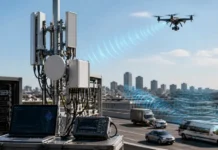
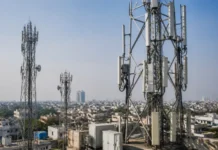
One of the biggest motivators to edge computing comes from the telecom market. When 5G networks – which are currently being launched around the world – have become widely available, high speed and low latencies can unleash the full potential of edge computing. 5G allows for smaller-scale data centers known as edge nodes near end users, which process data locally rather than sending it back and forth to centralized data centers. This ability to deal with data at the “edge” of the network is vital for latency-sensitive applications like autonomous vehicles, virtual reality and telemedicine.
According to IDC, edge will be the underpinning of IT and telecom in the future, with an estimated 75% of all data will be processed beyond centralized data centers by 2025. This allows for a much more efficient way of resource utilization and caters very effectively to the ever-increasing demand that businesses have for real-time data processing solutions.
The Future of Data Centers: Why Decentralization Is Needed
So, the move from centralized cloud computing to an edge-computing approach is not just a technology play — it’s a response to the changing requirements of businesses, consumers, and industries. So, there are a lot of benefits of decentralized data centers which are a must for the future of IT and telecom.
Lower Latency and Quicker Response Times
Applications like self-driving cars demand millisecond precision. Decentralized data centers reduce latency because they process data closer to where it is produced. For instance, suppose an edge node will be established in a city; it can perform real-time processing of the information that is generated by a fleet of autonomous cars to enable navigation seamlessly and safely. For instance, in healthcare decentralized systems allows doctors to perform remote surgeries with ultra-low latency thereby cutting the distance between patient and data processing facilities.
Enhanced Network Efficiency
As IoT devices explode, networks are being challenged to analyze vast amounts of data running through the network. By minimizing the data transmitted to centralized servers, decentralized data centers help ease this load. There are going to be 25 billion connected devices by 2025, generating data that needs processing, according to Gartner. Now, ability to process relevant data on location with Edge computing helps to make sure, only relevant data is transmitted to cloud, helping in overall network effectiveness and reducing the bottleneck.
Better Data Sovereignty and Security
Data sovereignty — the concept that data is subject to the laws and regulations of the country in which it is collected — is a growing concern for global businesses. Decentralized data centers allow companies to store and process data in certain geographic locations compliant with regulations, like the General Data Protection Regulation (GDPR) in Europe.
Furthermore, data never leaves the physical site, which assures businesses better safety measures against a potential cybersecurity threat. Decentralized systems help reduce the distance that data needs to travel over potentially insecure networks and the chance that it will be intercepted or tampered with in the process.
Energy Efficiency and Sustainability
The size and scale of centralized data centres leads to increasing energy consumption and hence a limiting factor in the environmental impact. Data centers consume 2% of total electricity consumption in the United States according to the U.S. Department of Energy. Decentralized data centers (especially edge nodes), on the other hand, provide a model that is more efficient in energy terms, as they spread workloads and minimize energy-intensive long-distance data transmission.
Edge computing thus presents itself as an integral part of the bigger picture of green initiatives that telecom providers are incorporating systematically into their practices to meet sustainability goals. When data is processed locally where it was generated, the carbon cost of processing that data is drastically reduced, leading to a greener future.
Industries Leading the Charge
Many sectors are already using decentralized data centers to revolutionize. Edge computing also plays a critical role in the automotive industry, especially for autonomous cars. Organizations such as Tesla and Waymo are constructing localized data processing infrastructures to extract the information from sensors and cameras as soon as they are being collected.
Healthcare is another early use case, where edge computing helps power telemedicine, remote monitoring, and AI-driven diagnostics. At the same time, large retailers use edge nodes in stores to study customer behavior and improve inventory management.
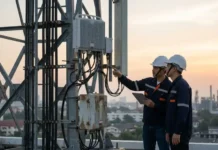
Telecom companies are leading the transformation themselves. Telecom Operators are deploying next generation applications using MEC (Multi-access Edge Computing)- nodes with the rise of 5G. AT&T and Verizon, for instance, have invested billions in edge computing infrastructure to feed ultra-low latency services to customers and consumers.
Collaborative: The Foundation of a Decentralized Future
The transition from traditional data centers to decentralized ones is indeed a game-changer, but it relies on cooperation between IT providers, telecom companies, and regulators. The vast investment needed to construct edge computing infrastructure, as well as making sure that decentralized systems can communicate without friction, require interdisciplinary collaboration around interoperability.
Industry Leaders Advancing Edge Computing Examples, from NVIDIA’s AI-native 6G networks and AWS Local Zones to Microsoft’s Azure IoT Edge. It highlights the innovation that can shape the future of connectivity and IT through decentralized systems.
Conclusion
Enterprises will adapt to this new model — learning to embrace compute where traditional data centers do not exist, and cloud services become pieces rather than an end goal. Addressing not only the shortcomings of centralized systems but also opening new opportunities for industries and consumers.
At the heart of this transformation are decentralized data centers, which allow data to be processed in a faster, more efficient, and secure manner. It is this seamlessness and efficiency that makes edge computing the next frontier for IT and telecom evolution. Decentralization is the future of IT and telecom, and it has already started.