
















Close
SATEXPO 2026
Friday, February 27, 2026
CABSAT 2026

Deutsche Telekom Debuts Cross-Platform eSIM Switch in Europe

Note* - All images used are for editorial and illustrative purposes only and may not originate from the original news provider or associated company.

Subscribe

- Never miss a story with notifications

- Gain full access to our premium content

- Browse free from any location or device.

Media Packs

Expand Your Reach With Our Customized Solutions Empowering Your Campaigns To Maximize Your Reach & Drive Real Results!

– Access the Media Pack Now

– Book a Conference Call

Leave Message for Us to Get Back

Related stories

Intelligent Wi-Fi: WBA Stresses AI/ML-Driven Network Reform

WBA Publishes Industry First Guidance on Artificial Intelligence and...

Enterprise IT Infrastructure for the AI Economy

The rapid ascent of artificial intelligence as the primary driver of corporate value is placing unprecedented demands on traditional data center and computing models. To thrive in the AI-centric economy, organizations must modernize their IT foundations, moving toward high-performance computing architectures and scalable cloud platforms that can handle the massive data volumes and intense processing requirements of modern machine learning workloads.

AI Driven Automation Redefining Industry Operations

The shift toward intelligent autonomous systems is fundamentally altering the mechanical and logistical foundations of global manufacturing. By integrating advanced cognitive computing into physical production lines, businesses are moving away from rigid, pre-programmed automation toward a flexible, learning-based model that optimizes efficiency, predicts failures, and adapts to market shifts in real-time.

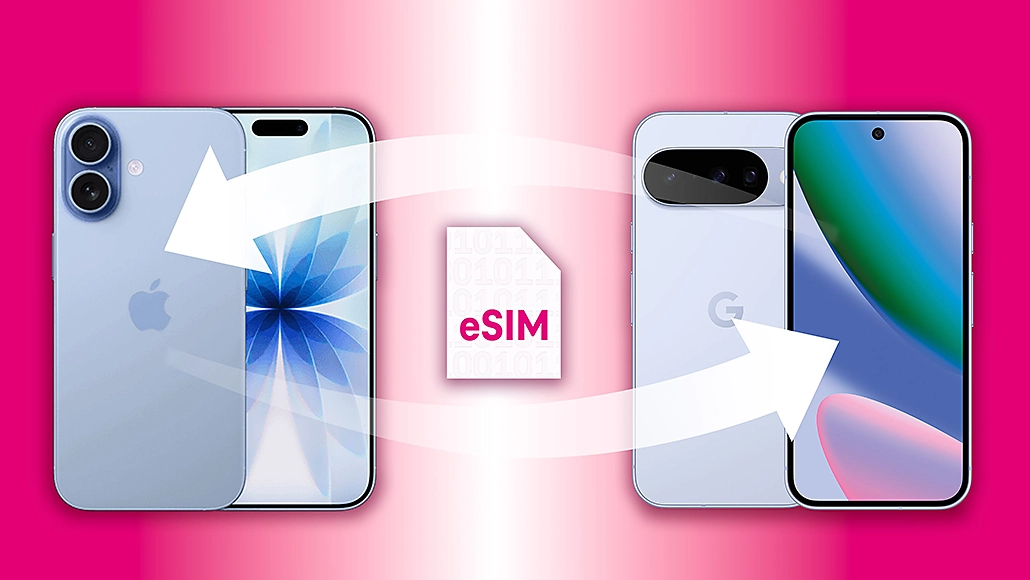
Deutsche Telekom is now the first network operator in Europe to let customers move their eSIM profiles between Android and iOS devices. The process is simple, flexible, and secure and doesn’t require any extra apps or paperwork.

“With the new eSIM transfer, we are making it easier than ever for our customers to switch devices. Simple, flexible, and secure—that is our goal,” said Michael Hagspihl, Vice President Global Strategic Projects and Marketing Partnerships of Deutsche Telekom.

Until now, Deutsche Telekom supported eSIM transfers only within the same operating system, between iOS devices since 2020 and Android devices since 2023. The new cross-platform function now allows users to move profiles between Android and iOS, making it easier to switch to a new smartphone.

At present, the feature supports iPhones running iOS 26 and Google Pixel 10 models, with additional Android devices to follow. Users can begin the transfer straight from the settings menu on their new device. The system spots the old phone, checks that the device, tariff, and user are eligible, and then carries out the transfer securely. The phone number and tariff remain unchanged.

The technology behind this function is based on the GSMA standard TS.43 and Deutsche Telekom’s entitlement server. Developed in-house since 2017, the system manages authorizations, ensures a secure transfer, and allows the company to introduce new functions quickly. The service is expected to expand to other Deutsche Telekom national companies in the future.

“Anyone who changes their operating system wants to seamlessly transfer their connection. This is exactly what we are now enabling – quickly, securely and without additional effort,” Hagspihl added. The eSIM itself is a digital SIM card permanently installed in the device, replacing the need for a physical chip and making profile transfers straightforward

Latest stories

Related stories

Intelligent Wi-Fi: WBA Stresses AI/ML-Driven Network Reform

WBA Publishes Industry First Guidance on Artificial Intelligence and...

Enterprise IT Infrastructure for the AI Economy

The rapid ascent of artificial intelligence as the primary driver of corporate value is placing unprecedented demands on traditional data center and computing models. To thrive in the AI-centric economy, organizations must modernize their IT foundations, moving toward high-performance computing architectures and scalable cloud platforms that can handle the massive data volumes and intense processing requirements of modern machine learning workloads.

AI Driven Automation Redefining Industry Operations

The shift toward intelligent autonomous systems is fundamentally altering the mechanical and logistical foundations of global manufacturing. By integrating advanced cognitive computing into physical production lines, businesses are moving away from rigid, pre-programmed automation toward a flexible, learning-based model that optimizes efficiency, predicts failures, and adapts to market shifts in real-time.

5G Advanced Networks Accelerating Enterprise IoT

The evolution of 5G into its "Advanced" phase represents a critical milestone for industrial connectivity, offering the reliability and precision required for mission-critical operations. By combining dedicated private networks with edge computing and high-density sensor arrays, enterprises can create a seamless digital nervous system that drives the next wave of smart factory innovation and autonomous logistics.

Subscribe

- Never miss a story with notifications

- Gain full access to our premium content

- Browse free from any location or device.

Media Packs

Expand Your Reach With Our Customized Solutions Empowering Your Campaigns To Maximize Your Reach & Drive Real Results!

– Access the Media Pack Now

– Book a Conference Call

Leave Message for Us to Get Back

Translate »