





















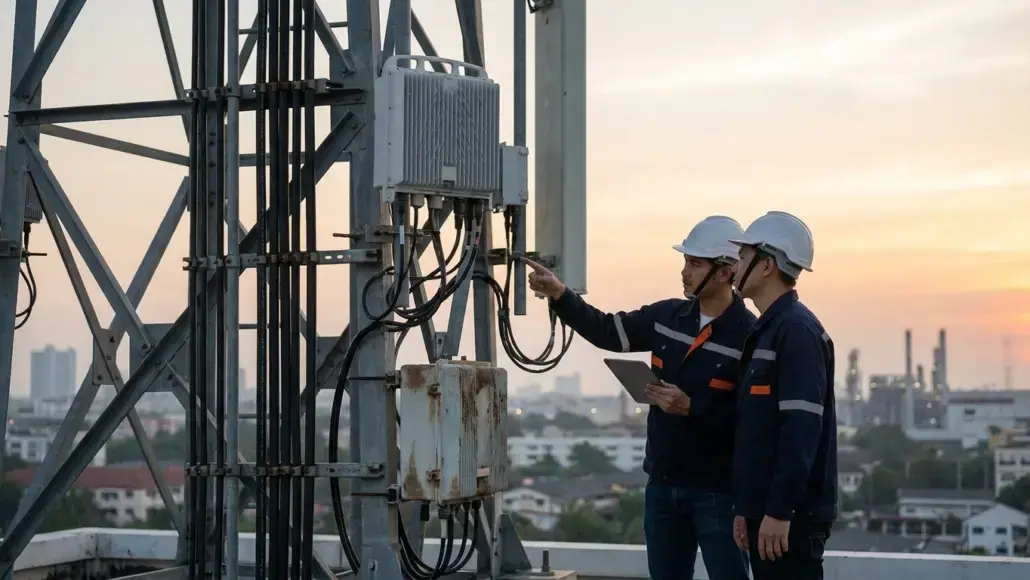

Nokia plans to start commercial sales of NVIDIA-powered AI Radio Access Network (AI-RAN) equipment from 2027, positioning its new offering as a step toward AI-native mobile networks. The Finnish telecom equipment maker will combine Nokia’s anyRAN software with NVIDIA’s accelerated computing and AI-RAN platform in its AI mobile network gear.
The platform is intended to help telecom operators increase network capacity, improve spectrum efficiency and run AI workloads on existing mobile infrastructure. Nokia and NVIDIA first announced their strategic partnership in late 2025. Pilot deployments are expected to begin by the end of 2026, before commercial availability in 2027.
AI-RAN capabilities and NVIDIA’s role
According to Nokia, the platform represents the industry’s first commercial AI-RAN architecture built for telecom operators. AI-RAN integrates artificial intelligence directly into the radio access network, enabling AI-driven radio optimization, higher spectrum efficiency, dynamic network management and AI inference at the network edge.
Unlike conventional RAN upgrades, AI-RAN allows operators to improve network performance largely through software running on accelerated computing platforms. The AI mobile network gear is designed to support AI-native 5G-Advanced and future 6G services, while also providing software-based performance upgrades.
NVIDIA’s GPUs supply the computing capability required to execute AI models directly within telecom networks. Nokia brings anyRAN software, mobile network expertise, network management and telecom software, while NVIDIA contributes accelerated GPU computing, the AI-RAN platform, AI acceleration and edge AI infrastructure. Together, the companies aim to enable real-time optimization and edge AI applications.
Efficiency targets and operator benefits
Nokia says the platform can substantially improve network efficiency. Reported targets include more than 20% improvement in spectral efficiency demonstrated through AI-driven radio innovations, a target of 50% spectral efficiency gains by 2027, and more than 100% improvement targeted by 2028.
The platform could provide higher network capacity without requiring additional radio spectrum, as well as a lower cost per transmitted bit. Nokia’s AI mobile network gear is also expected to support better utilization of existing infrastructure, reduced capital expenditure, faster software-based upgrades, lower operating costs and new AI-powered services at the network edge.
A software subscription model would allow operators to receive continuous AI enhancements without frequent hardware refreshes. These capabilities are intended to help operators respond to rapidly growing demand for AI services and mobile data while supporting a smoother transition toward 6G.
Industry implications and deployment challenges
AI-RAN is emerging as a major telecommunications trend, reflecting the convergence of AI and telecom infrastructure, greater use of GPU-accelerated networks, expansion of edge computing and smarter network automation. Several telecom operators have already begun evaluating AI-RAN technologies through pilot programs.
Large-scale deployment nevertheless faces high GPU infrastructure costs, integration with existing networks, increased energy consumption, the skills required to manage AI-native networks and return on investment for operators. Commercial adoption will depend on successful pilot deployments and demonstrated cost savings.
By embedding artificial intelligence directly into radio networks, Nokia’s AI mobile network gear could improve capacity, automate network optimization and support emerging AI applications without relying solely on expensive hardware upgrades.