















LG Uplus has solidified its lead in the IoT market. By aggressively absorbing public and industrial remote control supplies, it became the first telecommunications company in South Korea to exceed 10 million IoT subscription lines. According to telecommunications industry data, the provider’s IoT subscription lines surpassed the 10 million mark last month. Based on the April data released by the Ministry of Science and ICT, the total number of IoT connections in the country stood at 32,557,491. By attracting around 500,000 new connections within two months, the service provider successfully reached this milestone, greatly surpassing other regional operators.
The Role of Remote Control in Public Infrastructure
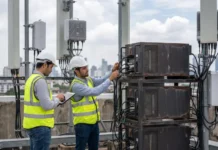
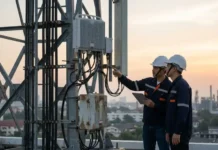
The primary contributor to this growth was the implementation of remote control technologies. Since 2023, the telecommunications company has been actively providing services by securing orders for the Intelligent Metrology (AMI) operations of the Korea Electric Power Corporation. In addition, these network solutions are operated across large-scale public initiatives, including the water and sewage systems of local governments, the Korea District Heating Corporation, and various manufacturing facilities in the Ulsan and Yeosu Industrial Complexes. The provider secured a dominant position in the water meter reading field specifically, which involves installing dedicated terminals on water meters to transmit usage metrics to local government centers, further expanding the IoT market.
Overcoming Profitability Doubts With AI Platforms
Historically, this sector was evaluated as having low average sales per user compared to mobile operations. At one point, calculations showed that average revenue in this field was less than one-hundredth of traditional mobile revenue. The business structure relied heavily on public bidding, involving enormous infrastructure investment costs and fierce lowest-price competition, which initially cast doubt on its profitability.
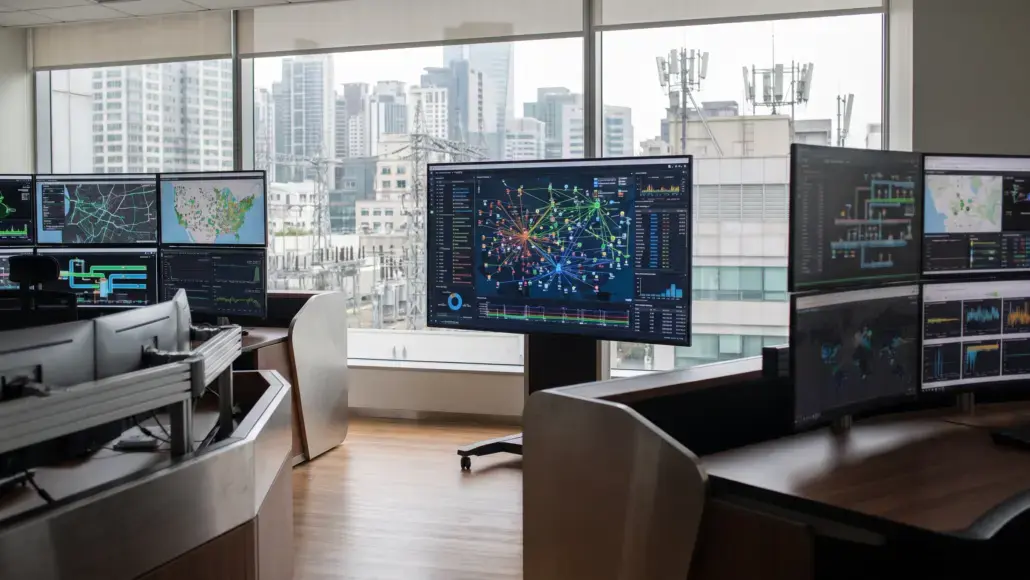
However, as the hyper-connected era advances, the utility of these networks is expanding. The company plans to use its massive volume of connections as a strategic inflection point for value conversion rather than just focusing on supply volume. The updated strategy involves generating new operational avenues by combining accumulated system metrics with AI platforms.
Industry officials note that while previous operations involved simply sending meter readings from devices to local governments for small fees, the future strategy relies heavily on advanced AI platforms. By analyzing vast amounts of real-time metrics, the company will offer solution packages designed to detect power waste or identify pipe cracks. This transition is viewed as a stepping stone to develop into a high value-added data business. Ultimately, leveraging these connections is intended to solidify the provider’s foundation as a robust data business.