




















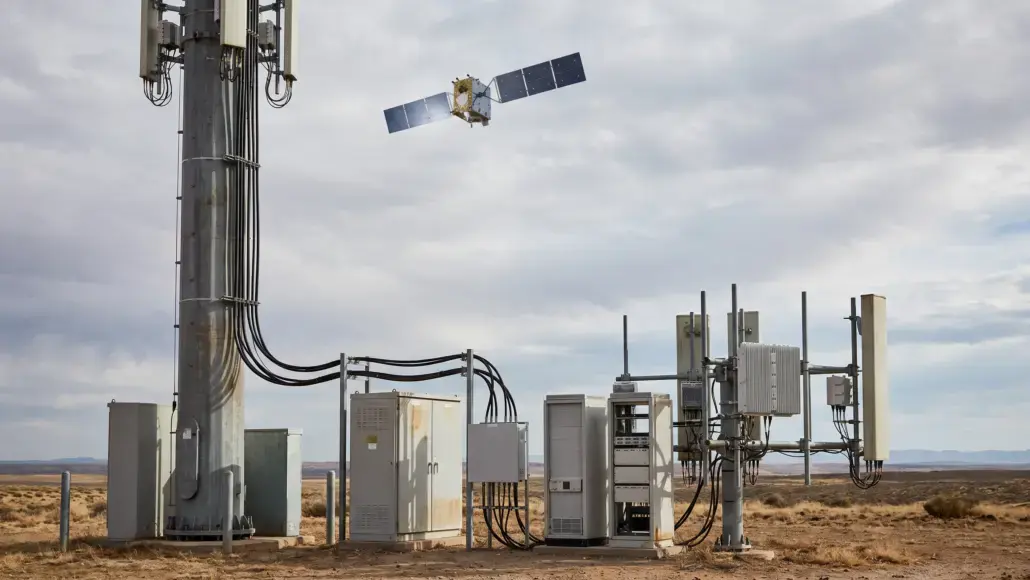

Mobile connectivity is increasingly moving beyond the limits of conventional terrestrial infrastructure. As networks expand toward remote, maritime and otherwise difficult-to-reach areas, satellite and other non-terrestrial systems are becoming more closely integrated with cellular technologies. This is creating a new stage in network evolution in which connectivity can be supported by both ground-based and space-based infrastructure.
This shift is giving 5G advanced NTN a more important role in the development of mobile networks. 3GPP introduced support for New Radio Non-Terrestrial Networks in Release 17, establishing a standards-based foundation for using satellite systems within the 5G framework. Release 18 has continued that work with enhancements designed to address some of the operational challenges created by satellite-based connectivity.
NTN is Moving from Satellite Connectivity Toward Cellular Integration
The importance of this development is that NTN is no longer being treated as a completely separate communications system. Instead, standardisation is focused on making non-terrestrial connectivity work within the broader mobile ecosystem. This includes radio procedures, network signalling and mechanisms needed to support communication between terrestrial and satellite-based components.
Release 18 work has introduced enhancements for NR NTN, including improvements to handover procedures. These developments are relevant because satellite coverage can change as spacecraft move relative to users and terrestrial cells. Managing those transitions efficiently is therefore essential if NTN is to become a practical extension of mobile networks rather than a standalone service.
The technical direction is also linked to the growing interest in direct-to-device connectivity. Instead of requiring a dedicated satellite terminal, satellites can potentially communicate with compatible mobile devices directly, allowing users to access connectivity in locations where terrestrial coverage is unavailable.
Coverage Expansion is Driving the Case for NTN
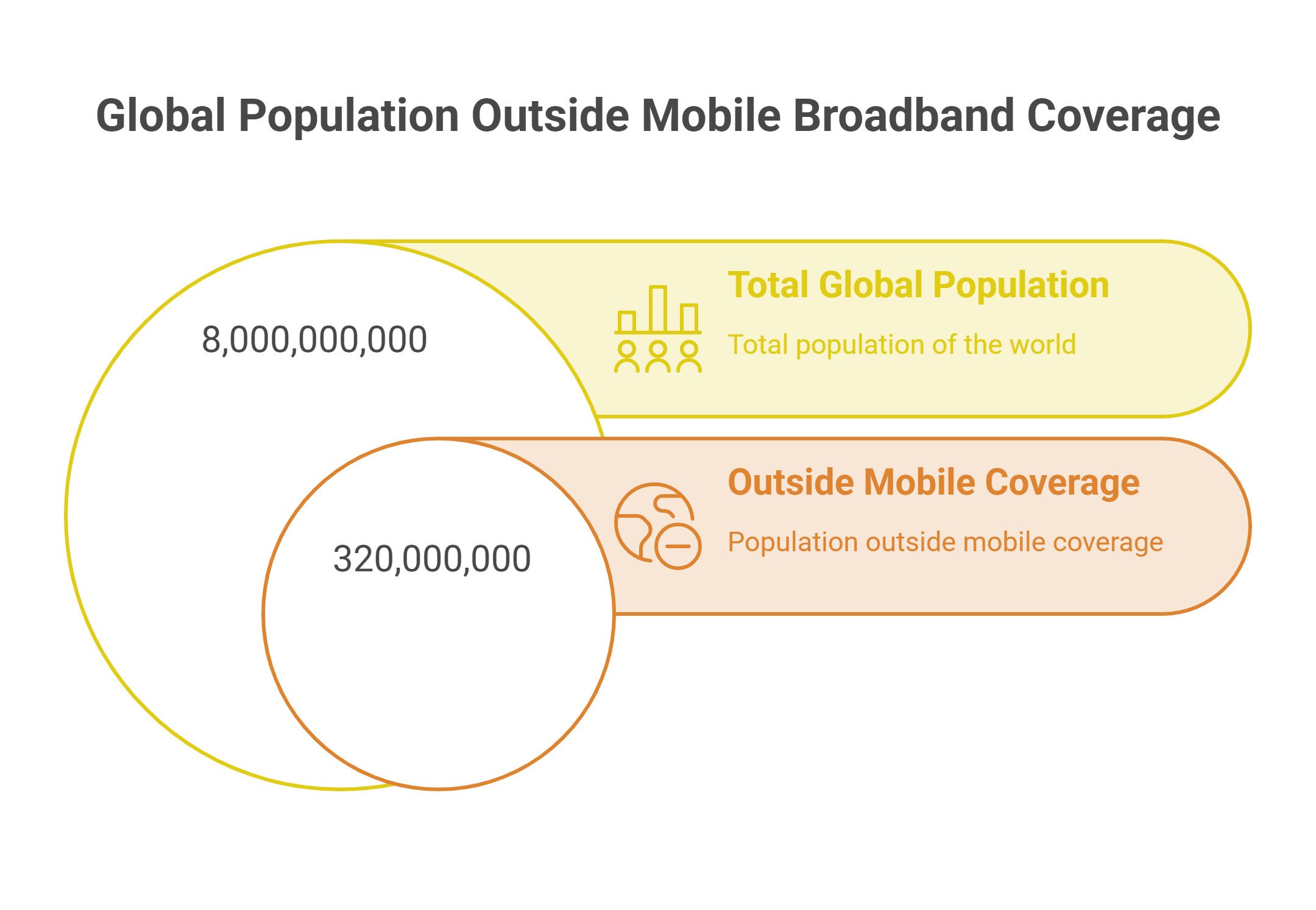
The coverage opportunity is substantial. GSMA estimates that around 4% of the global population remains outside mobile broadband coverage, creating a persistent infrastructure gap in remote and geographically challenging areas. Satellite-based connectivity can help address some of these locations where building conventional terrestrial infrastructure may be difficult or uneconomic.
This does not mean satellite systems will replace terrestrial mobile networks. Their value is more likely to come from extending reach, providing connectivity across difficult terrain and adding resilience when terrestrial infrastructure is unavailable. 5G advanced NTN can therefore be viewed as a complementary layer that expands the geographic footprint of mobile connectivity.
This hybrid model is becoming increasingly important as operators and standards bodies consider how terrestrial and non-terrestrial networks can work together. The objective is not simply to place more connectivity in orbit, but to integrate different network environments into a more continuous service architecture.
The development of 5G advanced NTN also creates a pathway toward future networks that place greater emphasis on ubiquitous connectivity. As standards continue to address interoperability, mobility and device support, non-terrestrial systems are becoming increasingly relevant to the evolution of the mobile network beyond traditional terrestrial coverage.
Direct-to-Device Connectivity is Testing the Limits of Hybrid Networks
The development of non-terrestrial connectivity is moving beyond the question of whether satellites can provide coverage and toward how effectively they can operate alongside terrestrial mobile infrastructure. Direct-to-device connectivity is becoming an important test case because it aims to connect ordinary mobile devices through satellite networks without requiring conventional satellite terminals.
This is giving 5G advanced NTN a more practical role in the evolution of hybrid connectivity. The technology could extend service into areas where terrestrial networks are unavailable, but its long-term value depends on how spectrum, capacity, device compatibility and network integration are managed.
Direct-to-Device Connectivity is Expanding the Coverage Opportunity
The coverage gap provides a clear rationale for the technology. GSMA estimates that around 4% of the world’s population lives outside mobile broadband coverage. Remote terrain, oceans, sparsely populated regions and other difficult environments can make terrestrial deployment challenging, creating areas where satellite connectivity could provide an alternative route to basic mobile access.
However, coverage alone does not determine whether an NTN service can operate at scale. Satellite systems have physical and spectrum constraints that limit the amount of capacity they can provide compared with dense terrestrial networks. This means direct-to-device connectivity is better understood as a complement to terrestrial infrastructure, particularly for locations where extending conventional coverage is difficult.
The distinction is important because 5G advanced NTN does not remove the need for terrestrial networks. Instead, it can extend their reach by adding a non-terrestrial layer that becomes available when a conventional mobile connection is not accessible.
Spectrum and Capacity are Shaping the Hybrid Model
Spectrum is one of the most important factors influencing this model. Direct-to-device services can operate through mobile-satellite spectrum or, under specific regulatory arrangements, use terrestrial mobile spectrum in coordination with satellite systems. Each approach creates different requirements around licensing, interference management, handset compatibility and network coordination.
Capacity presents another constraint. Satellite systems can cover very large geographic areas, but serving large numbers of users simultaneously requires sufficient spectrum, satellite capacity and efficient resource allocation. This creates a fundamental difference between geographic reach and network capacity.
The result is a hybrid architecture in which terrestrial networks continue to provide high-capacity connectivity in populated areas while NTN systems extend service into coverage gaps and provide additional resilience. 5G advanced NTN can support this model by bringing satellite connectivity into a standards-based cellular environment rather than operating entirely outside conventional mobile networks.
Key Takeaway: Direct-to-device connectivity can address geographic coverage gaps, but capacity and spectrum constraints make it more suitable as a complement to terrestrial networks than as a replacement for them.
The development therefore depends on more than satellite coverage alone. Device compatibility, spectrum policy and network interoperability will determine how seamlessly non-terrestrial systems can function alongside existing mobile infrastructure. As these elements mature, 5G advanced NTN is helping establish the technical basis for a more integrated terrestrial and non-terrestrial connectivity model.
NTN is Becoming a Bridge Toward Ubiquitous Connectivity
The integration of non-terrestrial networks is expanding the role of cellular infrastructure beyond locations where conventional terrestrial deployment is practical. Satellite connectivity can extend coverage into remote regions while also providing an additional layer of resilience when terrestrial networks are unavailable.
This makes 5G advanced NTN increasingly relevant to the longer-term evolution of mobile connectivity. Current 5G-Advanced work is addressing the technical challenges of integrating NTN with terrestrial systems, while the 6G IMT-2030 framework places greater emphasis on ubiquitous connectivity and reaching underserved locations.
The direction is therefore toward greater integration rather than replacement. 5G advanced NTN can provide the technical and operational foundation for hybrid networks in which terrestrial and non-terrestrial systems work together to expand coverage, improve resilience and support more continuous connectivity across different environments.