

















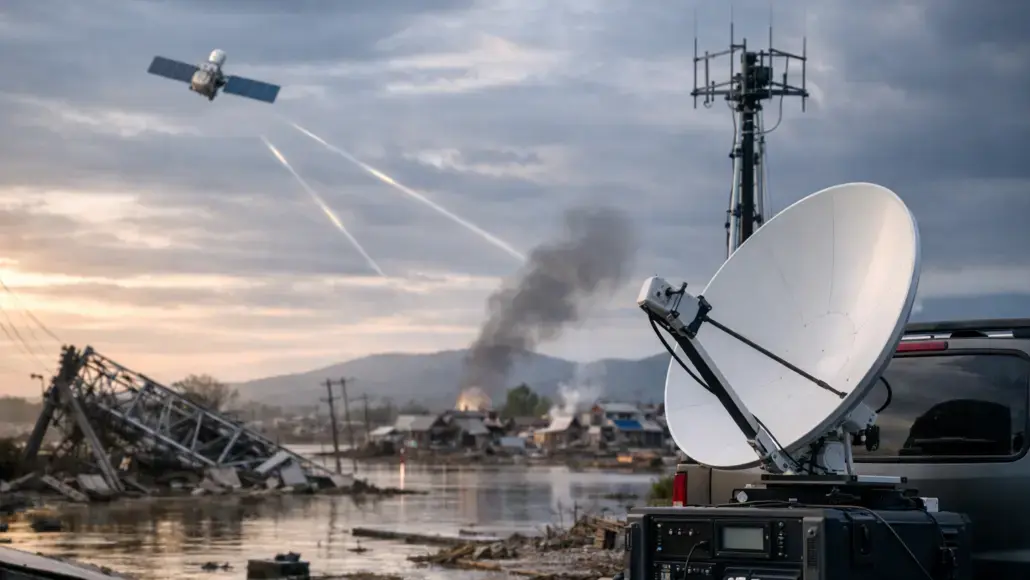

The telecommunications sector is increasingly prioritizing the development of non-terrestrial network solutions to bolster infrastructure resilience, particularly during catastrophic events that disable terrestrial assets. Natural disasters, such as hurricanes, floods, and earthquakes, frequently result in the physical destruction of macro towers and the severing of fiber backhaul lines, leaving entire regions without critical connectivity. In these scenarios, the reliance on traditional cellular networks becomes a significant vulnerability. The integration of emergency satellite communications provides a dependable alternative, offering a space based connectivity layer that operates independently of ground infrastructure. This capability is not merely a convenience but a vital component of modern public safety strategies, ensuring that both citizens and first responders can maintain a link to the outside world when terrestrial systems fail. By utilizing the wide area coverage of low Earth orbit constellations, the industry is effectively creating a safety net that spans the globe, providing reliable access to emergency services regardless of local conditions.
Strategic Role of Non-Terrestrial Networks in Disaster Recovery
The strategic importance of satellite based connectivity in disaster recovery cannot be overstated. When terrestrial networks are compromised, the primary objective is to restore basic communication services as quickly as possible to facilitate search and rescue operations and coordinate relief efforts. Non-terrestrial networks are uniquely suited for this task because their vantage point in space allows them to cover vast geographic areas without the need for local equipment. Recent advancements in satellite technology, specifically the transition toward standardized non-terrestrial network protocols, have made it possible for standard smartphones to connect directly to orbital assets. This capability ensures that help is always within reach, even when the nearest cellular tower has been rendered inoperable. The deployment of these space based resources allows mobile network operators to maintain a presence in affected zones, providing essential text and voice services that are critical for life safety.
Additionally, the role of satellite connectivity extends beyond immediate life safety to the broader continuity of national infrastructure. During extended outages, emergency satellite communications serve as a critical backhaul for temporary terrestrial sites, such as mobile command centers and deployable cell sites on wheels. These hybrid systems combine the high capacity of local terrestrial links with the resilient reach of satellite networks, creating a flexible and redundant communication environment. The ability to rapidly deploy space based connectivity ensures that government agencies and utilities can continue to operate and manage the recovery process effectively. The reliability of these links is enhanced by the multi-orbital nature of modern satellite constellations, which provide multiple points of access and minimize the impact of individual satellite failures. This multi-layered approach to network resilience is becoming a standard requirement for telecommunications providers worldwide as they seek to mitigate the risks associated with an increasingly volatile climate and other external threats.
During the 2024 hurricane season, specifically during Hurricanes Helene and Milton, the deployment of satellite based emergency messaging under temporary authorizations proved to be a critical factor in saving lives. Thousands of messages were successfully delivered in areas where terrestrial towers had been completely destroyed, allowing families to coordinate rescue efforts and receive vital safety information. These real world applications highlight the maturity of the technology and its readiness to be integrated into national public safety frameworks. The ability to maintain a continuous link to the sky provides a level of security that was previously unavailable to the general public. As the number of low Earth orbit satellites continues to grow, the capacity of these emergency networks will increase, eventually enabling more intensive services such as voice calls and real time video for first responders. This evolution is being supported by a coordinated effort between satellite operators, mobile carriers, and government agencies to ensure that the infrastructure is in place before the next crisis occurs. The integration of artificial intelligence into disaster management systems will also play a role in optimizing the deployment of satellite resources during emergencies. By analyzing real time data from multiple sources, these systems can identify the areas of greatest need and direct satellite beams to provide maximum coverage. The result is a more efficient and effective disaster response that utilizes the full potential of space based communication technology.
Technical Standards for Emergency Service Integration
The effective integration of satellite based emergency services requires strict adherence to international technical standards, particularly those developed by 3GPP. Release 17 and Release 18 provide the foundational framework for non-terrestrial networks, defining how devices and satellites interact to ensure reliable communication. These standards address the unique physical layer challenges of space to ground links, such as the management of propagation delays and Doppler shifts. In an emergency context, the speed and reliability of the connection are paramount. The network must be able to handle a sudden influx of emergency requests without becoming congested. To manage this, the protocols include specialized mechanisms for:
- Prioritization of emergency SOS messages over standard non-critical traffic.
- Automated location reporting to ensure that rescue teams can pinpoint the user coordinates.
- Reduced signaling overhead to accelerate the time to first connection.
- Enhanced link stability through advanced error correction and retransmission strategies.
- Integration with existing terrestrial public safety answering points for seamless call routing.
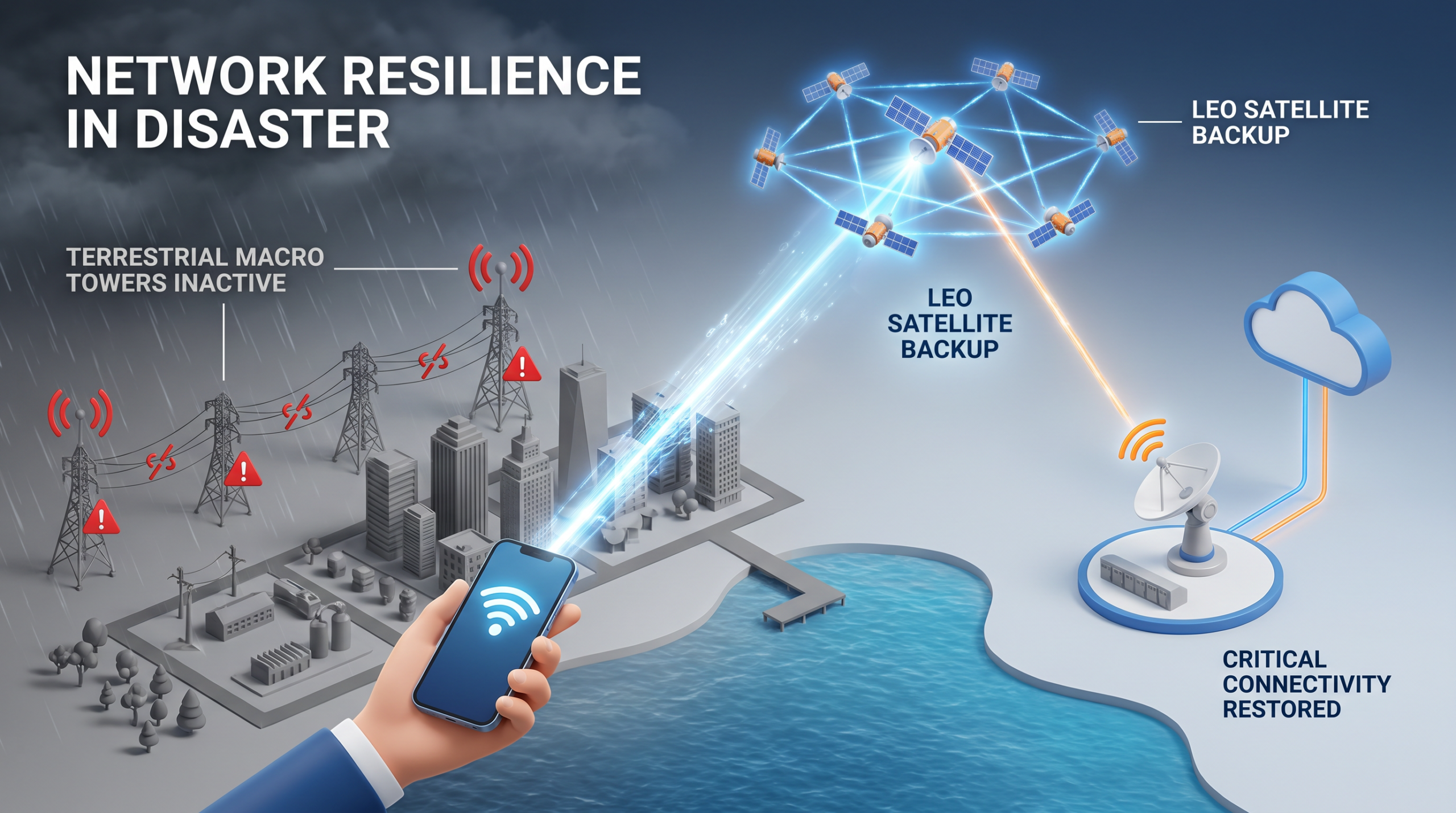
Additionally, the development of unified communication protocols ensures that different satellite and terrestrial networks can work together harmoniously. This interoperability is essential for large scale disaster response efforts involving multiple organizations and jurisdictions. For instance, the use of satellite-to-device messaging improving connectivity beyond cellular reach allows a user to send an SOS even if they are far outside the coverage area of their home network. The system is designed to identify the emergency nature of the message and route it through the most appropriate available network, whether it is a partner satellite constellation or a competing terrestrial carrier. This collaborative approach to emergency communication is a significant advancement for the industry, as it breaks down the silos that have traditionally limited the effectiveness of public safety networks. The technical standards also address the requirement for high precision timing, which is essential for ensuring that emergency messages are processed with minimal latency. By utilizing global navigation satellite system data, devices can calculate the exact timing advance needed to reach a satellite orbiting at high speeds. This level of precision ensures that the communication link remains stable even in the most challenging environments.
Additionally, the development of regenerative payloads will allow satellites to process emergency requests onboard, further reducing the response time by eliminating the need for a double hop to a ground station. This shift toward more intelligent space based infrastructure will be a key driver for the next generation of public safety services. The collaboration between international standards bodies and the satellite industry is also ensuring that these systems are interoperable across different manufacturers and regions. This universality is vital for supporting global search and rescue operations that span multiple countries and jurisdictions. The use of standardized waveforms also reduces the complexity for handset manufacturers, allowing them to integrate emergency satellite features into a wider range of devices. As the ecosystem continues to grow, we expect to see even greater levels of innovation in the field of emergency communications, providing a truly global safety net for all mobile users. Additionally, the role of 5G and 6G will be critical in further integrating these two domains into a single, cohesive communications layer.
Public Safety Network Orchestration and Prioritization
Effective emergency response requires a highly orchestrated approach to network management, where critical traffic is given absolute priority. Public safety networks, such as FirstNet in the United States, are increasingly integrating satellite capabilities into their core architectures to ensure ubiquitous coverage for first responders. This orchestration involves the use of software defined networking and network functions virtualization to dynamically allocate resources based on the severity of the situation. During a major disaster, the network management system can automatically dedicate specific satellite beams or terrestrial frequency bands to public safety use, ensuring that police, fire, and medical personnel have a clear and reliable communication channel. This level of prioritization is vital for maintaining command and control in chaotic environments where network congestion is a constant risk.
The prioritization of traffic also extends to the device level. Modern smartphones are equipped with specialized firmware that recognizes emergency signaling and allocates maximum power to the satellite link. This ensures that the message has the best possible chance of reaching the orbital receiver, even under difficult conditions such as heavy rain or dense tree canopy. The orchestration process also includes the real time monitoring of network health and performance, allowing operators to identify and resolve issues before they impact emergency services. By combining data from terrestrial sensors, satellite telemetry, and user reports, providers can maintain a comprehensive view of the communication environment. This visibility is essential for making informed decisions about resource allocation and deployment, ultimately leading to faster response times and more successful rescue operations.
Regulatory Compliance and Global Emergency Service Accessibility
The global nature of satellite communication necessitates a complex regulatory framework to ensure that emergency services are accessible and reliable across international borders. Regulators must balance the need for rapid deployment with the requirement to protect terrestrial spectrum from interference. In many jurisdictions, satellite operators are required to provide free access to emergency messaging services as a condition of their operating licenses. This ensures that the ability to call for help is not restricted by a user’s subscription status or ability to pay. Additionally, international coordination through the ITU is essential for harmonizing the frequencies used for emergency satellite communications, ensuring that a device purchased in one country will function correctly in another during a crisis.
Compliance with local laws regarding lawful intercept and data sovereignty is also a critical consideration for satellite providers. While the physical signal may originate in space, the data must be handled according to the regulations of the country where the user is located. This requires sophisticated geofencing and traffic routing techniques to ensure that sensitive information is managed appropriately. As the technology continues to evolve, we expect to see even greater integration between satellite and terrestrial regulatory bodies, leading to a more unified and effective global emergency communication ecosystem. The long term goal is to ensure that no individual is ever truly out of reach when they need help, creating a future where emergency satellite communications are a standard and dependable feature of every mobile network. This commitment to resilience and safety is a cornerstone of the telecommunications industry’s mission to connect the world securely and reliably, even in the most challenging circumstances.