










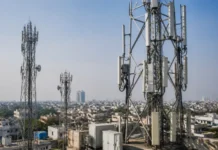











Amr Talaat, the Minister of Communications and Information Technology of Egypt, confirmed that the country has gone on to allocate new spectrum capacity, which stands equivalent to all the frequencies granted to mobile operators in the past 30 years, hence marking an unmatched step that has been taken in the telecom sector.
Talaat, who was speaking at the launch of the National Spectrum Strategy, confirmed that the deal, which happens to be valued at almost $3.5 billion, goes on to include the allocation of 410 MHz to mobile operators, hence representing the largest spectrum allocation agreement in Egypt’s mobile communications sector history.
He went on to note that the expansion goes on to build upon the 5G services launch that happened in June 2025, therefore making sure of network readiness for future digital applications, and also went ahead and stressed that the move indeed is a long-term strategic step that is sure to reshape the telecom infrastructure in Egypt by way of a public-private partnership.
Talaat went on to add that the communications sector is indeed the fastest-growing sector in Egypt for eight continuous years and contributes almost 6% of GDP, whereas the digital exports went on to reach $7.4 billion because of the strong growth when it comes to outsourcing services.
Earlier, Mostafa Madbouli, the Prime Minister of Egypt, saw the signing of the largest spectrum allocation deal in Egypt’s telecommunications sector history.
The deal went on to be signed during a ceremony that was held at the Mohamed Ali Palace in the Shubra district of Cairo as per the supervision of the Ministry of Communications and Information Technology.
It goes on to stipulate the allocation of 410 MHz of new spectrum to four mobile operators in Egypt, which is apparently equivalent to the overall spectrum that has been assigned ever since the launch of mobile services in the country.
Notably, this agreement comes in the framework of the National Spectrum Strategy 2026–2030 and looks forward to supporting the sustainability and development of telecom infrastructure, upgrading the service quality, making the 5G services more robust, and also adding a thrust to the market competitiveness along with being digitally ready.