

















Close
SATEXPO 2026
Friday, April 17, 2026
CIOE 2026

Qatar CRA Issues New Regulations for Telecom Infrastructure

Note* - All images used are for editorial and illustrative purposes only and may not originate from the original news provider or associated company.

Subscribe

- Never miss a story with notifications

- Gain full access to our premium content

- Browse free from any location or device.

Media Packs

Expand Your Reach With Our Customized Solutions Empowering Your Campaigns To Maximize Your Reach & Drive Real Results!

– Access the Media Pack Now

– Book a Conference Call

Leave Message for Us to Get Back

Related stories

Non-Terrestrial Networks Expanding Telecom Infrastructure

Non-terrestrial networks are redefining the boundaries of global connectivity by incorporating satellites, high-altitude platforms, and drones into the existing cellular framework. This expansion addresses the inherent limitations of ground-based towers, offering a resilient and comprehensive solution for rural coverage, emergency communications, and disaster recovery on a worldwide scale.

Satellite Integration Accelerating 5G and 6G Networks

Modern telecommunications are undergoing a profound shift as space-based assets merge with terrestrial cellular infrastructure to deliver ubiquitous high-speed connectivity. This evolution addresses the geographical limitations of traditional base stations, creating a unified global network capable of supporting the next generation of mobile technology and massive machine-type communications.

Satellite Backhaul Enabling Scalable Telecom Operations

Satellite backhaul has emerged as a cornerstone of modern network design, providing a flexible and cost-effective alternative to terrestrial fiber and microwave links. This technology allows telecom operators to bypass the physical constraints of ground-based infrastructure, facilitating rapid expansion into rural and underserved markets while maintaining a high standard of data transmission and service reliability.

The Communications Regulatory Authority (CRA) of Qatar has rolled out a new Regulation for the Construction, Installation, and Sharing of Radio Communications Sites. The update brings fresh rules to strengthen safety measures and push for wider infrastructure sharing across future networks. The move follows wide public consultation and discussions with several stakeholders. The new framework blends global standards with Qatar’s own needs and is intended to make the site approval process clearer and more transparent.

The regulations for telecom infrastructure set out one unified approach for planning and designing mobile network sites across the country. It promotes cooperation between licensed telecom Service Providers and government bodies to ensure that site development follows uniform technical standards and a smoother approval process.

CRA has combined three older regulatory documents into one complete guideline, replacing earlier instructions for radio station construction, base station and tower standards, and mobile site sharing. The unified framework promotes the sharing of infrastructure, reduces overlap in development, and helps protect both the environment and public health, keeping Qatar’s telecom sector in step with international standards.

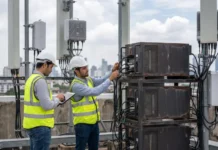
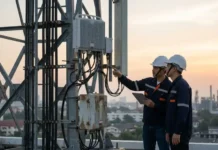
The revised regulations for telecom infrastructure lay out specific technical and safety standards for network sites, including ground-based towers, rooftop setups, wall-mounted units, and temporary structures. They also specify safety distances, load capacities, and electromagnetic field (EMF) exposure limits that follow international guidelines. Service Providers are also required, where possible, to share and co-locate infrastructure to use resources efficiently. Early coordination between Service Providers, municipal authorities, and developers is encouraged to ease site selection and speed up approvals. CRA will oversee implementation through audits, technical reporting, and enforcement when necessary.

Ali Al Suwaidi, Technical Affairs Department Director at CRA, stated: “This Regulation is a key step in enhancing telecommunications quality and consumer experience, supporting expanded coverage and faster deployment of 5G and other emerging technologies. By simplifying procedures and reducing deployment costs, it helps Service Providers operate more efficiently. Additionally, it reinforces government efforts to raise safety standards and environmental planning, aligning with CRA’s strategy to promote a sustainable, efficient telecom sector that directly contributes to achieving the goals of Qatar National Vision 2030.”

Latest stories

Related stories

Non-Terrestrial Networks Expanding Telecom Infrastructure

Non-terrestrial networks are redefining the boundaries of global connectivity by incorporating satellites, high-altitude platforms, and drones into the existing cellular framework. This expansion addresses the inherent limitations of ground-based towers, offering a resilient and comprehensive solution for rural coverage, emergency communications, and disaster recovery on a worldwide scale.

Satellite Integration Accelerating 5G and 6G Networks

Modern telecommunications are undergoing a profound shift as space-based assets merge with terrestrial cellular infrastructure to deliver ubiquitous high-speed connectivity. This evolution addresses the geographical limitations of traditional base stations, creating a unified global network capable of supporting the next generation of mobile technology and massive machine-type communications.

Satellite Backhaul Enabling Scalable Telecom Operations

Satellite backhaul has emerged as a cornerstone of modern network design, providing a flexible and cost-effective alternative to terrestrial fiber and microwave links. This technology allows telecom operators to bypass the physical constraints of ground-based infrastructure, facilitating rapid expansion into rural and underserved markets while maintaining a high standard of data transmission and service reliability.

Cloud Integrated Satellite Networks Transforming Telecom

The synergy between cloud computing and satellite communications is creating a more agile and responsive telecommunications framework. By virtualizing ground stations and moving network functions into the cloud, operators can provide high-speed data processing and real-time connectivity to global enterprises regardless of their location, driving a new wave of digital transformation.

Subscribe

- Never miss a story with notifications

- Gain full access to our premium content

- Browse free from any location or device.

Media Packs

Expand Your Reach With Our Customized Solutions Empowering Your Campaigns To Maximize Your Reach & Drive Real Results!

– Access the Media Pack Now

– Book a Conference Call

Leave Message for Us to Get Back

Translate »