


















Monday, January 5, 2026

Yettel Secures 5G Spectrum to Advance Serbia’s Network Shift

Note* - All images used are for editorial and illustrative purposes only and may not originate from the original news provider or associated company.

Subscribe

- Never miss a story with notifications

- Gain full access to our premium content

- Browse free from any location or device.

Media Packs

Expand Your Reach With Our Customized Solutions Empowering Your Campaigns To Maximize Your Reach & Drive Real Results!

– Access the Media Pack Now

– Book a Conference Call

Leave Message for Us to Get Back

Related stories

From Managed Networks to Self-Optimizing Telecom Systems

Telecom networks are evolving from traditionally managed systems requiring manual optimization toward self-optimizing infrastructure driven by AI and automation. These intelligent systems autonomously adjust capacity, resolve faults, and optimize performance to meet unpredictable demands of digital financial services.

Telecom Networks as the Foundation of Autonomous Digital...

Telecom networks enable autonomous digital economies where AI agents, automated finance, and real-time digital services operate seamlessly. Explore how intelligent connectivity reshapes global digital transformation and economic structures.

The Rise of Autonomous Intelligence Across Telecom-Driven Financial...

Autonomous digital agents leverage telecom connectivity to operate independently, learn continuously and make intelligent decisions without human intervention. These agentic AI systems depend on telecom networks' low-latency, reliable data exchange and intelligent routing to evolve into self-governing financial platforms.

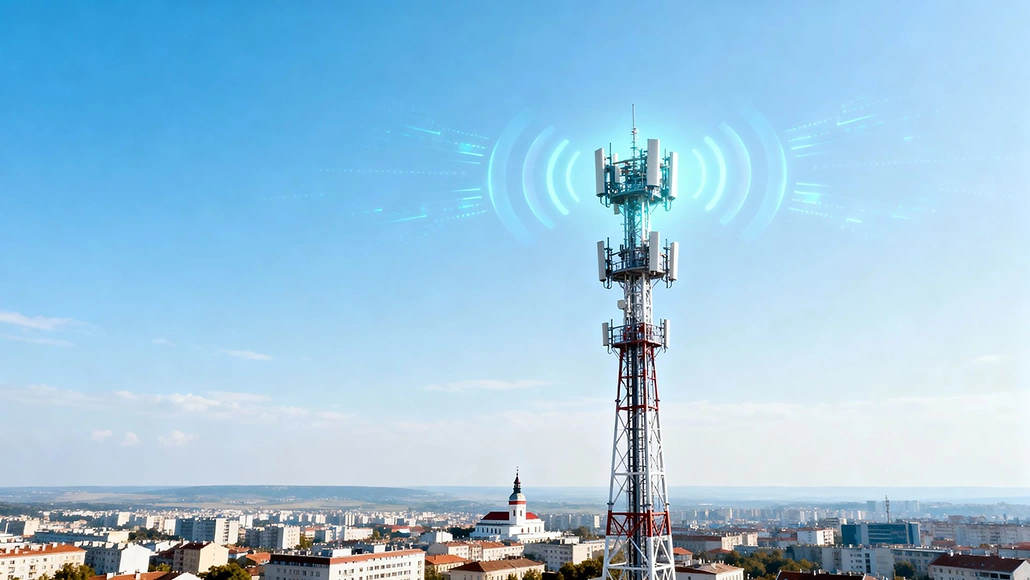
Yettel has put more than EUR 100 million to secure the 5G spectrum it sought in Serbia, wrapping up the November auction overseen by the Regulatory Agency for Electronic Communications and Postal Services (RATEL). The result marks an important step in Serbia’s move toward next-generation mobile networks, a development the country’s telecom sector has been watching for a long time. As part of the auction, the operator obtained 5G licenses covering the 700 MHz, 2600 MHz, and 3.6 GHz bands, frequencies seen as essential to delivering wide-area reach, stronger data capacity, and low-latency performance. In parallel, Yettel extended its long-standing rights to use the 900 MHz, 1800 MHz, and 2100 MHz bands, protecting continuity across its established mobile services.

With the regulatory steps now moving toward completion, the company has indicated that it will shift immediately into technical rollout activities, preparing its network for a commercial 5G introduction in December. The operator has emphasized that the technology’s impact will not be limited to faster mobile speeds. The company says 5G’s reliability, lower latency and ability to handle large numbers of connected devices will open the door to new digital uses in logistics, healthcare, smart manufacturing and public safety. These advances are expected to support Serbia’s wider digital push and help the country hold its ground in the regional telecom market.

Industry observers note that mid-band and millimeter-wave spectrum is becoming more critical across Europe as data use keeps rising. With streaming, cloud gaming and enterprise digitalization driving heavier traffic, operators are rethinking how they build capacity. Yettel’s move to secure a wider 5G spectrum mix fits the direction many European providers are taking as they prepare networks for future growth and services.

Mike Michel, CEO of Yettel, said: “We’re ready to bring 5G to our customers as soon as we receive the official license. At Yettel, we prioritize maintaining the highest network quality while continually introducing new services to the market. We already offer a wide range of 5G devices, enabling our customers to experience all the benefits of these new technologies immediately. The investment level in spectrum and technology is significant, but 5G is an essential foundation for further growth, and we will launch it in December.”

Latest stories

Related stories

From Managed Networks to Self-Optimizing Telecom Systems

Telecom networks are evolving from traditionally managed systems requiring manual optimization toward self-optimizing infrastructure driven by AI and automation. These intelligent systems autonomously adjust capacity, resolve faults, and optimize performance to meet unpredictable demands of digital financial services.

Telecom Networks as the Foundation of Autonomous Digital...

Telecom networks enable autonomous digital economies where AI agents, automated finance, and real-time digital services operate seamlessly. Explore how intelligent connectivity reshapes global digital transformation and economic structures.

The Rise of Autonomous Intelligence Across Telecom-Driven Financial...

Autonomous digital agents leverage telecom connectivity to operate independently, learn continuously and make intelligent decisions without human intervention. These agentic AI systems depend on telecom networks' low-latency, reliable data exchange and intelligent routing to evolve into self-governing financial platforms.

How Intelligent Automation is Redefining Telecom Networks for...

Intelligent automation transforms telecom networks into adaptive digital platforms supporting complex financial ecosystems through automated network orchestration, AI-driven traffic management, and predictive maintenance strategies that enable always-on, high-performance financial services.

Subscribe

- Never miss a story with notifications

- Gain full access to our premium content

- Browse free from any location or device.

Media Packs

Expand Your Reach With Our Customized Solutions Empowering Your Campaigns To Maximize Your Reach & Drive Real Results!

– Access the Media Pack Now

– Book a Conference Call

Leave Message for Us to Get Back

Translate »