










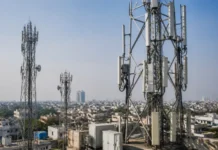









The network to power the future of IoT is here. T-Mobile is the first wireless provider in North America to successfully complete Narrowband IoT field tests on a live commercial network, working together with Qualcomm and Ericsson.
Narrowband IoT or NB-IoT is an evolution of LTE technology built on industry standards and uses very small amounts of dedicated spectrum to carry data with incredible efficiency and performance.
Of course, the Un-carrier is first out of the gate with this global technology platform to prepare for the massive projected growth in the world of IoT — which is expected to surge from 8.3 billion connected devices this year to 20.4 billion by 2020 worldwide, according to technology research firm Gartner. With its ability to scale and support a direct pathway to 5G, Narrowband IoT is already seeing rapid adoption across the globe, even ahead of other technologies.
“Narrowband IoT is no longer a thing of the distant future — T-Mobile is lighting it up this year!” said Neville Ray, Chief Technology Officer for T-Mobile. “By investing in Narrowband IoT now, we’re ensuring our customers will be able to bring their products to market faster with better performance, vastly improved battery life and big cost savings — all on a dedicated highway that’s purpose-built for connected devices.”
The field tests were conducted in partnership with Qualcomm and Ericsson across multiple sites on T-Mobile’s live commercial LTE network in Las Vegas and used just 200 KHz of T-Mobile’s AWS spectrum.
“Connecting the IoT — and virtually everything — requires wireless technologies that can scale up to high-performance IoT and also scale down to low complexity IoT application needs. New LTE narrowband technologies support lower power consumption, improved coverage, and increased device density,” said Vieri Vanghi, vice president, product management, Qualcomm Technologies, Inc. “With these groundbreaking field tests, which utilized our global multimode LTE IoT modems, Qualcomm Technologies and T-Mobile have demonstrated the ability to deploy a next-gen network that’s going to bring LTE IoT technologies to life for businesses and consumers across the U.S.”
“Working together on Narrowband IoT for these successful field tests on a live LTE network is one more step in our continued close partnership with T-Mobile to bring the best, most innovative network services to our customers,” said Fredrik Jejdling, Head of Business Area Networks at Ericsson.
What Happens in Vegas … is Innovative AF
T-Mobile and the City of Las Vegas today also announced a new partnership to deploy IoT technology throughout the city — including Narrowband IoT. Together, T-Mobile and Las Vegas are piloting several IoT projects starting in the City’s Innovation District, an area just off the Las Vegas strip that is dedicated to developing emerging technologies. A few of the IoT projects include:
Flood Abatement: Flood and storm drainage sensors will provide early warning and fault detection for Las Vegas residents.
Smart City Lighting: T-Mobile will power the City’s LED lighting within a single compact device.
Environmental Monitoring: Sensors placed atop existing smart city light poles will continuously monitor temperature, humidity and environmental gases.
“The Las Vegas Innovation District was created to bring the most exciting emerging technologies right to our doorstep,” said Michael Sherwood, Director of Technology and Innovation at the City of Las Vegas. “We are excited about partnering with T-Mobile to bring these technologies to the core of our city in a way that will benefit residents and tourists.”
Of course, T-Mobile customers won’t have to wait for Narrowband IoT to power their connected devices. T-Mobile helps IoT customers quickly bring devices to market through all-in-one, low-cost IoT Access packs on certified Cat-1 modules. While the Duopoly predictably overcomplicate the Internet of Things with separate, confusing pricing for connectivity and IoT products, T-Mobile customers get simple, cost-effective solutions ready to go, so they can focus on product development instead of worrying about complex carrier pricing models or data overages.
To learn more about T-Mobile’s IoT solutions, please visit: http://iot.t-mobile.com.
About T-Mobile US, Inc.
As America’s Un-carrier, T-Mobile US, Inc. is redefining the way consumers and businesses buy wireless services through leading product and service innovation. Our advanced nationwide 4G LTE network delivers outstanding wireless experiences to 72.6 million customers who are unwilling to compromise on quality and value. Based in Bellevue, Washington, T-Mobile US provides services through its subsidiaries and operates its flagship brands, T-Mobile and MetroPCS. For more information, please visit http://www.t-mobile.com.
Media Contacts
T-Mobile US Media Relations
MediaRelations@T-Mobile.com
Investor Relations
877-281-TMUS OR 212-358-3210
investor.relations@t-mobile.com