


















Close
SATEXPO 2026
Tuesday, May 5, 2026
CIOE 2026

Chad, Cameroon Advance Cross-Border Signal Coordination

Note* - All images used are for editorial and illustrative purposes only and may not originate from the original news provider or associated company.

Subscribe

- Never miss a story with notifications

- Gain full access to our premium content

- Browse free from any location or device.

Media Packs

Expand Your Reach With Our Customized Solutions Empowering Your Campaigns To Maximize Your Reach & Drive Real Results!

– Access the Media Pack Now

– Book a Conference Call

Leave Message for Us to Get Back

Related stories

Cloud and Edge Networks Accelerated by Optical Links

The synergy between centralized data centers and decentralized edge nodes is critical for the next wave of digital transformation. By utilizing high-capacity optical links, operators are achieving the ultra-low latency and massive data transfer speeds required to support real-time applications and seamless global connectivity across diverse industries.

Optical Sensing Technologies Advancing Smart Networks

The integration of sophisticated sensors into the global fiber optic footprint is turning passive cables into an active, intelligent nervous system. These optical sensing technologies provide real-time monitoring of physical environments, enhancing the security and efficiency of smart networks while offering a scalable solution for modern telecom infrastructure health.

High Speed Data Centers Leveraging Optical Interconnects

The rapid expansion of cloud computing and artificial intelligence has pushed traditional data center architectures to their physical limits. By replacing copper-based connections with high-performance optical interconnects, modern facilities are achieving the throughput and efficiency required to handle massive workloads while maintaining the scalability necessary for future enterprise IT growth.

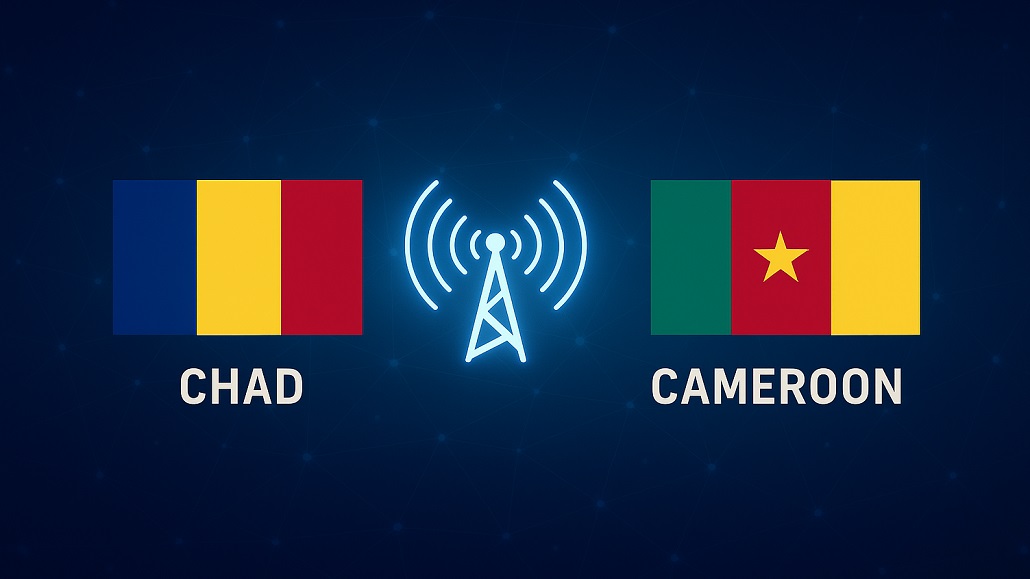
As part of a concerted bid towards enhancing digital sovereignty and enhancing telecommunication infrastructure, Chad and Cameroon concluded a collaborative technical mission that sought to resolve cross-border signal interference. 

The mission conducted by Chad’s Electronic Communications and Postal Regulatory Authority (ARCEP) and Cameroon’s Telecommunications Regulatory Agency (ART), was on frequency coordination and minimising radio signal interference along their common border.

Carried out from June 30 through July 8, 2025, the mission preceded the June 16 high-level commitments. Participating key actors included Idriss Béchir Soumaine, Director of Radiocommunications and Normalization, ARCEP Chad, and Mouhamadou Awallou, Technical Advisor #1, ART Cameroon. 

The representatives of prominent telecom operators like Airtel Chad, Moov Africa Chad, MTN Cameroon, Orange Cameroon, and CAMTEL facilitated their participation, hence ensuring high public-private alignment in running regional telecom firms.

The technical experts conducted extensive fieldwork in the form of drive tests and signal analysis in border areas such as N’Djamena and Kousseri, where cross-border signal interference was prevalent. Their primary purpose was to scan for and clear signal overlap among 2G, 3G, and 4G technologies in the urban areas.

Key Highlights from the Mission:

  • Telecom operators in Cameroon made technical adjustments that successfully stopped their signals from spilling into N’Djamena.
  • Chadian signals were found extending into Kousseri, prompting immediate commitments from stakeholders to resolve the issue.
  • Both sides agreed on clear signal strength limits going forward, ensuring better control and preservation of each country’s radio spectrum rights.

The mission also facilitated evaluation of technical readiness for the new Chad-Cameroon Free Roaming agreement. With Technical preparations ongoing, deployment is anticipated by August 11, 2025. While some parts of the contract are still being finalized, the foundation for moving forward is already in place.

Bilateral Commitments at the Mission’s Conclusion:

  • Both countries pledged to strictly follow agreed-upon signal strength limits near the border.
  • Efforts will be made to remove any unauthorised cross-border signal interference.
  • Work is now underway to finalise and formally sign a new Border Frequency Coordination Agreement to guide future collaboration.

Haliki Choua Mahamat, Director-General of ARCEP Chad, recognised the technical expertise and spirit of cooperation demonstrated during the mission. He added that the results mark a new phase in subregional cooperation, aiming to improve service quality for citizens living in border communities and reinforce digital sovereignty.

This joint response shows an emerging regional strategy to the protection of telecoms ecosystems through advanced infrastructure monitoring and automation over control of signals.

2026 Advertising Opportunities

Tele Info Today

Put your brand in front of professionals across telecommunications, digital infrastructure, and enterprise IT.

With our 2026 Media Pack, you can:

  • Reach operators, vendors, and enterprise technology decision-makers
  • Promote solutions across 5G, cloud, edge, and next-generation networks
  • Engage audiences shaping connectivity and digital transformation

Latest stories

Related stories

Cloud and Edge Networks Accelerated by Optical Links

The synergy between centralized data centers and decentralized edge nodes is critical for the next wave of digital transformation. By utilizing high-capacity optical links, operators are achieving the ultra-low latency and massive data transfer speeds required to support real-time applications and seamless global connectivity across diverse industries.

Optical Sensing Technologies Advancing Smart Networks

The integration of sophisticated sensors into the global fiber optic footprint is turning passive cables into an active, intelligent nervous system. These optical sensing technologies provide real-time monitoring of physical environments, enhancing the security and efficiency of smart networks while offering a scalable solution for modern telecom infrastructure health.

High Speed Data Centers Leveraging Optical Interconnects

The rapid expansion of cloud computing and artificial intelligence has pushed traditional data center architectures to their physical limits. By replacing copper-based connections with high-performance optical interconnects, modern facilities are achieving the throughput and efficiency required to handle massive workloads while maintaining the scalability necessary for future enterprise IT growth.

Optical Wireless Communication Expanding Network Reach

Moving beyond the constraints of the radio frequency spectrum, light-based wireless systems are unlocking a new era of high-speed connectivity. Optical wireless communication offers a secure, interference-free, and high-capacity alternative for expanding network reach in dense urban environments, industrial sites, and beyond the reach of traditional fiber infrastructure.

Subscribe

- Never miss a story with notifications

- Gain full access to our premium content

- Browse free from any location or device.

Media Packs

Expand Your Reach With Our Customized Solutions Empowering Your Campaigns To Maximize Your Reach & Drive Real Results!

– Access the Media Pack Now

– Book a Conference Call

Leave Message for Us to Get Back

Translate »