



















The evolution of wireless communications has traditionally been measured by improvements in speed, capacity, and coverage. As the industry moves toward sixth-generation (6G) networks, however, the focus is shifting from network performance alone to network intelligence. Artificial intelligence is becoming an integral part of telecommunications infrastructure, enabling networks to analyse, adapt, and optimise operations in real time. At the centre of this transformation is AI RAN Technology, an emerging approach that integrates artificial intelligence directly into radio access networks to create more autonomous, efficient, and responsive wireless systems.
Unlike previous network generations, where artificial intelligence primarily supported network management tools, AI RAN Technology embeds intelligence into the radio access layer itself. This enables networks to make faster operational decisions, improve spectrum utilisation, reduce energy consumption, and automatically adapt to changing traffic conditions without constant human intervention. As wireless networks continue supporting billions of connected devices and increasingly complex enterprise applications, intelligent automation is becoming a fundamental requirement rather than an optional capability.
The growing importance of AI RAN Technology also reflects broader changes in the telecommunications landscape. Emerging applications such as industrial automation, connected robotics, autonomous transportation, immersive digital experiences, and real-time edge computing demand communication networks capable of making decisions at machine speed. Artificial intelligence is expected to provide the operational intelligence required to meet these demands while supporting the scalability and reliability expected from future 6G infrastructure.
Rather than representing another incremental network upgrade, AI RAN Technology is redefining how wireless infrastructure is designed, managed, and optimised. Its integration with cloud-native architectures, edge computing, virtualization, and intelligent automation is laying the groundwork for AI-native networks that will underpin the next generation of digital connectivity.
AI RAN Technology Is Redefining Radio Access Networks
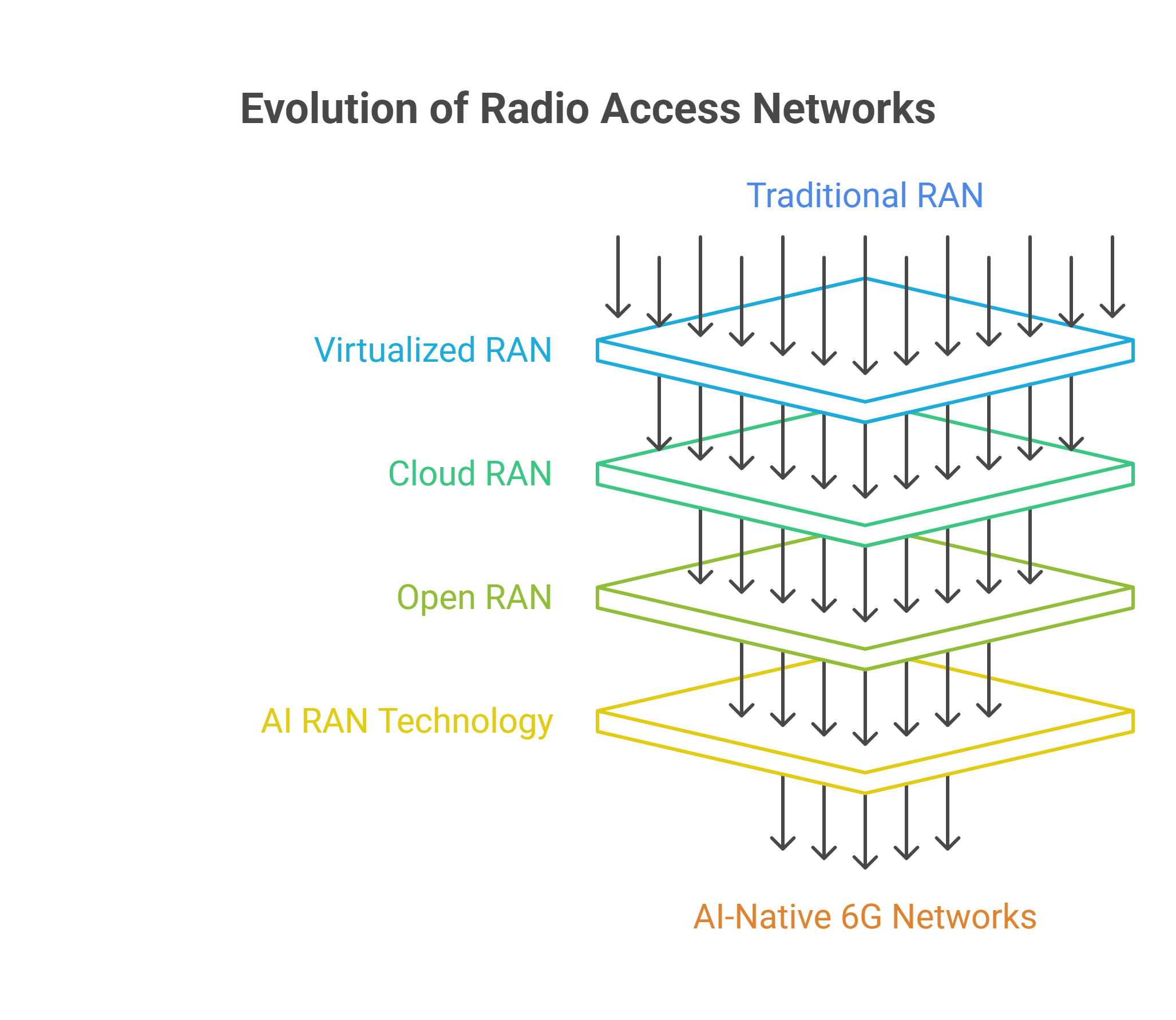
The radio access network has long served as the connection point between user devices and the broader telecommunications infrastructure. Traditionally, its primary function was to deliver reliable wireless connectivity while managing spectrum resources, signal quality, and traffic distribution. As network complexity continues to increase, however, conventional management approaches are becoming increasingly difficult to scale.
AI RAN Technology introduces intelligence directly into this critical layer of the network by enabling artificial intelligence models to continuously analyse operational conditions and optimise network performance in real time. Instead of relying solely on predefined rules and manual configuration, AI-powered radio access networks can dynamically adjust resource allocation, optimise spectrum usage, predict traffic demand, and respond automatically to changing network conditions.
This transition represents a significant departure from earlier network architectures. Rather than treating artificial intelligence as a separate operational tool, AI RAN Technology integrates intelligent decision-making into the network itself. The result is a more adaptive communications environment capable of improving efficiency while reducing operational complexity.
As enterprise connectivity expands and wireless infrastructure becomes increasingly software-defined, intelligent radio access networks are expected to play a central role in supporting next-generation communication services. This evolution is transforming the radio access network from a passive connectivity layer into an active intelligence platform capable of continuously learning and improving network performance.
Why 6G Networks Require AI-Native Intelligence?
The transition from 5G to 6G is expected to involve far more than higher data speeds or increased network capacity. Future wireless networks will be required to support billions of connected devices, autonomous systems, immersive digital environments, industrial robotics, and intelligent machines that generate and process enormous volumes of real-time information. Managing this level of complexity using conventional network operations would be impractical.
This is where AI RAN Technology becomes particularly significant. By embedding artificial intelligence into radio access networks, operators can automate many of the functions that currently require manual optimisation. Traffic balancing, interference management, spectrum allocation, fault detection, and network optimisation can all be performed continuously through AI-driven decision-making, allowing networks to adapt instantly to changing operating conditions.
AI-native networks also support more efficient resource utilisation. Instead of allocating network capacity using static configurations, AI RAN Technology enables intelligent resource scheduling based on user demand, application requirements, and network performance. This allows communication infrastructure to operate more efficiently while maintaining the reliability required for mission-critical services.
As industries increasingly depend on autonomous operations and real-time communications, AI-native networking is expected to become one of the defining characteristics of 6G. Rather than viewing artificial intelligence as an external management tool, future wireless infrastructure is being designed with AI as a core architectural capability that continuously enhances performance, efficiency, and operational resilience.
AI RAN Technology Is Advancing Intelligent Network Automation
One of the most significant advantages of AI RAN Technology is its ability to automate network operations that have traditionally required continuous monitoring and manual intervention. Modern telecommunications networks generate enormous volumes of operational data every second, making it increasingly difficult for conventional management systems to identify performance issues, predict failures, and optimise resources quickly enough to meet enterprise requirements.
By integrating machine learning into radio access networks, AI RAN Technology enables continuous analysis of network behaviour and automatic optimisation of critical functions. Intelligent algorithms can detect unusual traffic patterns, predict congestion before it occurs, optimise radio resources, and improve spectrum efficiency while maintaining service quality. This level of automation allows operators to focus less on routine maintenance and more on strategic network planning and innovation.
The benefits extend beyond operational efficiency. Intelligent automation also contributes to improved energy management, faster fault resolution, reduced operational costs, and greater network resilience. As wireless infrastructure continues to expand, AI-driven automation is expected to become one of the defining capabilities that differentiates AI-native 6G networks from previous generations.
Cloud RAN and Open RAN Are Strengthening AI RAN Technology
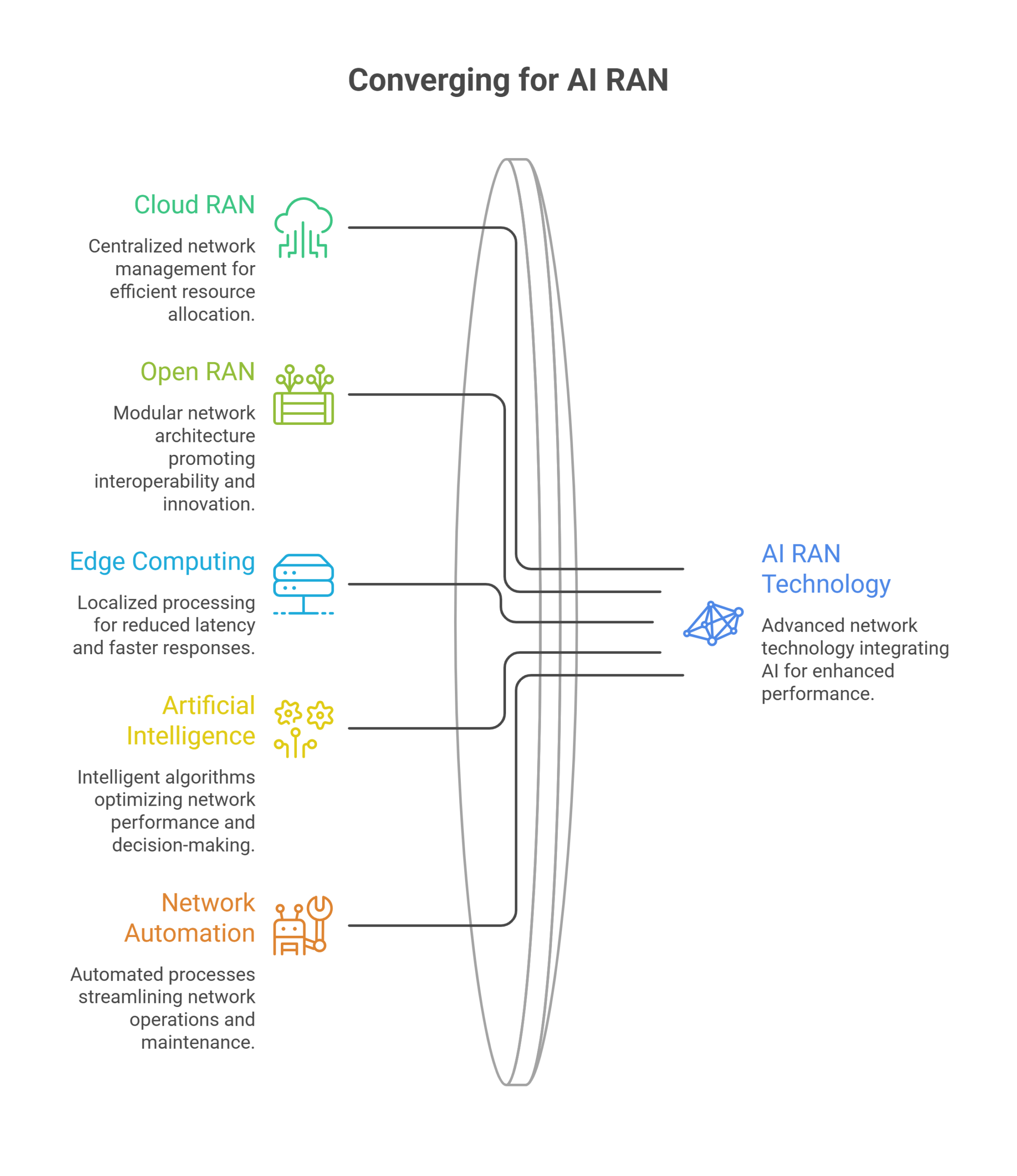
The continued advancement of AI RAN Technology depends on a network architecture capable of supporting intelligent automation, scalability, and real-time data processing. Traditional radio access networks were built using tightly integrated hardware and software, making upgrades and innovation relatively slow. As wireless infrastructure becomes increasingly software-driven, cloud-native and open architectures are creating the flexibility needed to support AI-powered network operations.
Cloud RAN enables radio network functions to be virtualized and processed using centralized cloud infrastructure instead of dedicated hardware at every site. This architectural shift allows network resources to be allocated more efficiently while simplifying software upgrades and improving operational scalability. For AI RAN Technology, cloud-based infrastructure provides the computing capability required to analyse large volumes of network data and execute AI models with greater speed and efficiency.
Open RAN further complements this transformation by promoting interoperability between hardware and software components developed by different vendors. Greater openness enables network operators to introduce AI capabilities more rapidly while encouraging innovation across the broader telecommunications ecosystem. As AI becomes increasingly embedded within wireless infrastructure, flexible architectures supported by Cloud RAN and Open RAN are expected to accelerate the deployment of AI RAN Technology across future networks.
AI RAN Technology Is Enabling Intelligent Enterprise Networks
The impact of AI RAN Technology extends well beyond traditional telecommunications services. Enterprise networks are becoming increasingly dependent on intelligent connectivity capable of supporting automation, real-time analytics, and mission-critical communications across multiple industries. As digital transformation accelerates, AI-powered radio access networks are emerging as an important foundation for next-generation enterprise applications.
Manufacturing environments are expected to benefit from AI-enabled wireless networks that support connected robotics, predictive maintenance, and automated production systems requiring ultra-low latency communications. In logistics and transportation, AI RAN Technology can improve asset tracking, optimize network performance for connected fleets, and support autonomous operations across distributed environments. Utilities, healthcare organizations, ports, airports, and smart city infrastructure can similarly benefit from intelligent wireless networks capable of adapting dynamically to changing operational conditions.
By combining artificial intelligence with advanced radio access infrastructure, AI RAN Technology allows enterprise networks to become more responsive, resilient, and efficient. Instead of simply transporting data between connected devices, future wireless networks will increasingly analyse, prioritise, and optimise communications in real time, enabling organizations to respond more quickly to operational demands.
Industry Considerations for AI RAN Technology Adoption
Despite its significant potential, the widespread adoption of AI RAN Technology presents several technical and operational considerations. Integrating artificial intelligence directly into wireless infrastructure requires substantial computing resources capable of processing complex AI models while maintaining the low latency expected from modern communication networks. Expanding cloud-native infrastructure, edge computing capacity, and high-performance processing environments will therefore remain important priorities.
Cybersecurity is another critical consideration. As AI RAN Technology automates a growing number of network functions, protecting AI models, operational data, and communication infrastructure becomes increasingly important. Organizations must ensure that intelligent automation enhances network resilience without introducing new vulnerabilities that could affect service continuity or data security.
Interoperability will also influence future adoption. AI-powered networks must operate seamlessly across diverse radio technologies, cloud platforms, and communication standards while maintaining consistent performance across increasingly complex enterprise environments. Achieving this level of interoperability will require continued collaboration between standards organizations, technology providers, and the wider telecommunications industry.
Rather than representing barriers to adoption, these considerations highlight the importance of developing AI RAN Technology through open, standardized, and scalable architectures capable of supporting long-term innovation.

AI RAN Technology Is Shaping the Future of 6G
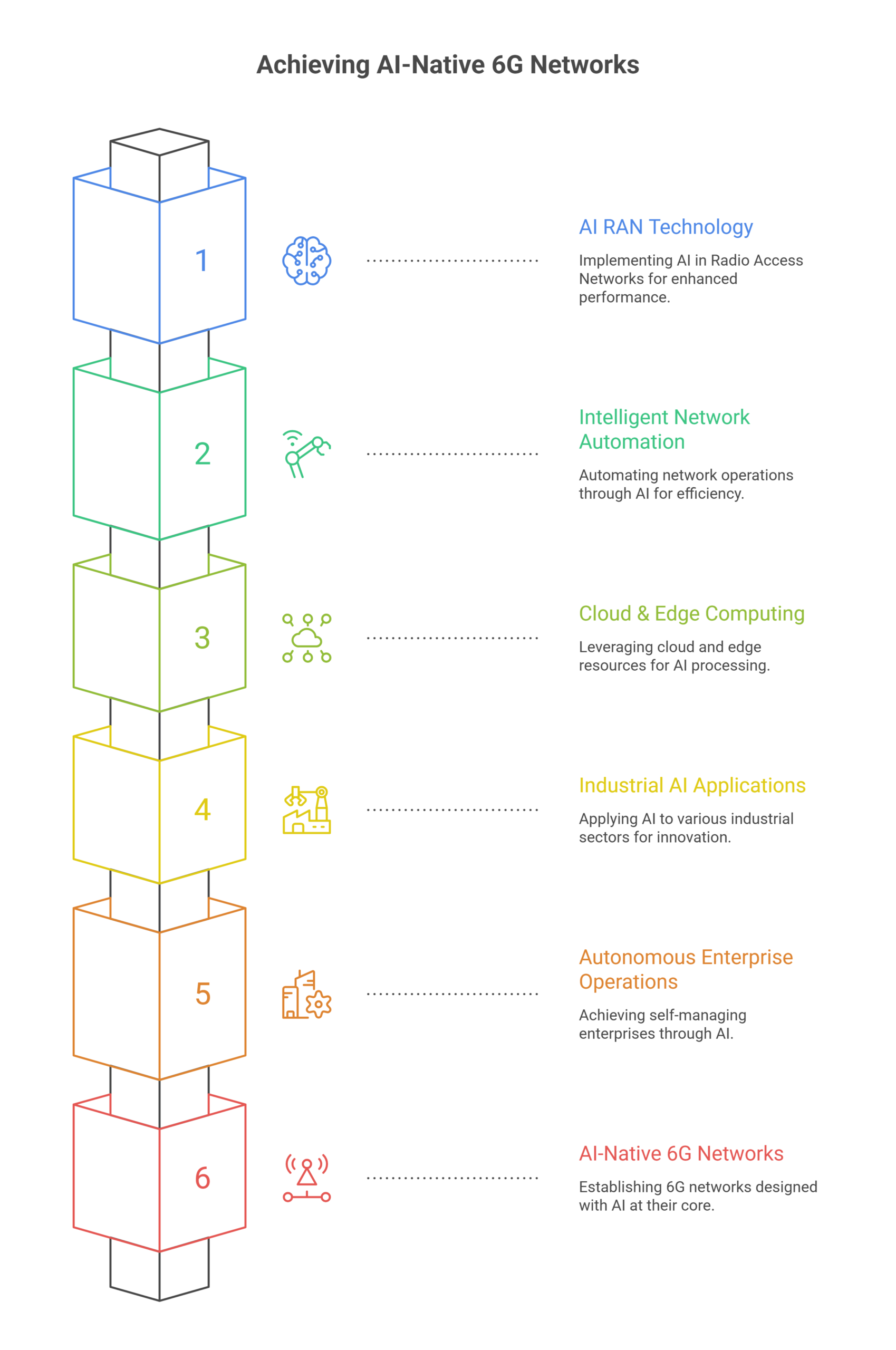
Although commercial 6G deployments remain several years away, many of the technologies expected to define future wireless networks are already being developed and evaluated. Artificial intelligence is emerging as one of the most significant architectural changes, positioning AI RAN Technology as a key component of next-generation telecommunications infrastructure rather than simply another network enhancement.
Future wireless networks will likely support far greater levels of automation than previous generations, requiring continuous optimisation across spectrum management, energy efficiency, traffic engineering, security, and service delivery. AI RAN Technology provides the intelligence needed to coordinate these functions while enabling networks to learn from operational data and adapt dynamically to changing conditions.
As digital ecosystems continue expanding across industries, AI RAN Technology is expected to support increasingly sophisticated applications ranging from industrial automation and autonomous systems to immersive digital environments and intelligent public infrastructure. By embedding artificial intelligence directly within the radio access network, future communications systems will be better equipped to deliver the performance, flexibility, and operational efficiency required by AI-native 6G environments.
Conclusion
The evolution of wireless infrastructure is no longer being defined solely by higher speeds or greater network capacity. Instead, AI RAN Technology is introducing intelligence directly into the radio access network, enabling communication systems to analyse, optimise, and adapt in real time. By combining artificial intelligence with cloud-native architectures, edge computing, and open network frameworks, AI RAN Technology is laying the foundation for more autonomous, efficient, and resilient wireless networks.
While challenges surrounding infrastructure, interoperability, cybersecurity, and large-scale AI integration remain, the continued advancement of AI RAN Technology reflects a broader transformation in how future communication networks will be designed and operated. As the telecommunications industry moves toward AI-native 6G architectures, intelligent radio access networks are expected to play a central role in supporting the next generation of enterprise connectivity, digital services, and intelligent wireless innovation.