

















Energy is becoming a more important economic variable for telecom operators as networks carry more traffic, add more radio capacity and support increasingly demanding digital services. For operators, the challenge is no longer simply keeping network equipment running. It is finding ways to match energy consumption with actual network demand while maintaining coverage, capacity and service quality.
That makes AI energy management increasingly relevant to network economics. Instead of relying only on fixed energy-saving schedules, AI can analyse traffic patterns and determine when network resources can enter lower-power states, when they need to return to normal operation and how neighbouring cells should be coordinated.
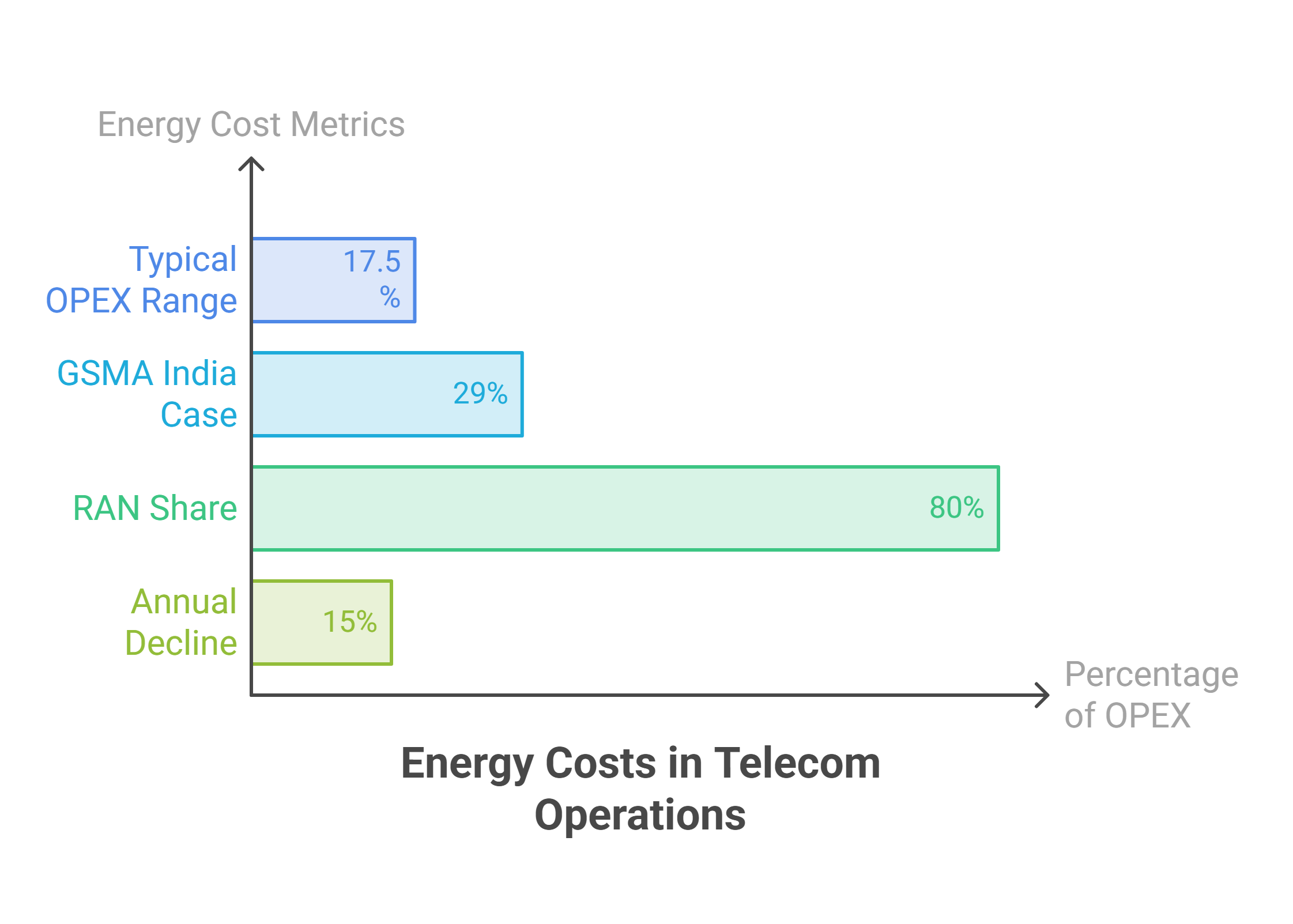
The financial incentive is significant. GSMA research says energy accounts for around 15% to 20% of a typical telecom operator’s operational expenditure, while a more specific GSMA case study from India reports that energy represents about 29% of annual network OPEX, with roughly 80% of that attributed to RAN network elements. The figures vary by operator and methodology, but they point to the same issue: network energy is a material operating cost.
The pressure is likely to increase as networks expand. Ericsson’s June 2026 research describes energy efficiency as a defining constraint for mobile-network development toward 2030, arguing that operators need to deliver growing traffic without allowing energy consumption to rise at the same rate.
Network Energy is Becoming a Dynamic Cost
Traditional network energy-saving mechanisms often operate within predefined time windows. That approach can work when traffic patterns are predictable, but it can also leave resources consuming power when demand is low or keep capacity in a higher-power state for longer than necessary.
AI changes the calculation by using network data to predict demand. GSMA identifies traffic forecasting, dynamic shutdown, sleep modes and load balancing as areas where AI can improve network energy efficiency.
A GSMA case study of an AI and machine-learning deployment in India illustrates the model. The system analyses cell-level traffic patterns and identifies suitable periods for extending energy-saving windows, allowing network resources to be powered down when demand is low while preserving the user experience. The solution has been developed for both 4G and 5G networks and rolled out across India.
The economics become clearer when the network is viewed in terms of energy intensity, rather than electricity consumption alone. GSMA’s 2026 Mobile Net Zero research found that energy intensity of data transmission across 18 operators fell by an average of 15% per year between 2019 and 2025. Yet the report also warns that network electricity consumption can still rise as traffic, network densification and the number of antenna elements increase.
That creates a key challenge for operators: becoming more efficient per unit of data while continuing to manage the absolute cost of running a larger network.
Key takeaway: Telecom operators are already improving energy efficiency, but energy remains a meaningful operating expense and network growth makes further optimisation economically important.
The opportunity for AI energy management is therefore not simply to switch equipment off. It is to make network power consumption more responsive to demand, so that operators can reduce unnecessary energy use without sacrificing the capacity and performance customers expect.
AI is Turning Energy Management into a Network Economics Decision
The economics of AI energy management become clearer when network power consumption is treated as a variable that can respond to demand. Mobile networks do not carry the same amount of traffic at every hour or at every site, yet network resources have traditionally had to maintain enough capacity to accommodate changing demand. AI can help close that gap by predicting traffic and adjusting network resources accordingly.
One of the clearest examples comes from a live trial in Japan, where an AI-driven system predicted traffic patterns across radio access network sites and cells and automatically powered down radio resources during low-demand periods. The trial reported up to 50% lower power consumption in low-traffic environments and up to 20% lower consumption per cell, while maintaining network performance and avoiding traffic overflow into neighbouring cells.
That matters because energy efficiency is becoming increasingly tied to network economics. Operators are not simply trying to consume less electricity. They need to reduce the energy required to deliver each unit of traffic while still maintaining coverage, throughput and quality of service. GSMA’s 2026 research found that mobile-network energy intensity had fallen by an average of 15% per year between 2019 and 2025 across the 18 operators it analysed. At the same time, total electricity demand can continue rising as traffic and network capacity expand.
The commercial opportunity therefore sits in the difference between network capacity that is available and capacity that is actually being used.