



















Artificial intelligence is changing what telecom infrastructure needs to do. Networks were built primarily to move data between users and centralised computing systems. As AI applications increasingly depend on real-time inference, that model is beginning to shift. More processing is moving closer to where data is generated, putting the telecom edge in a more important position in the AI infrastructure stack.
This is the thinking behind edge AI. Instead of sending every piece of data to a distant cloud or central data centre for processing, AI workloads can be placed closer to users, devices and machines. In telecom networks, that can mean deploying computing resources at or near radio access network sites, distributed data centres and other network-edge locations. GSMA identifies edge computing as a core component of AI-ready networks because processing workloads closer to their source can reduce latency, backhaul requirements and, in some cases, operating costs.
The change is significant because telecom operators already control much of the physical infrastructure required to connect distributed computing locations. Their networks include fibre backhaul, sites, power systems, regional facilities and data-centre infrastructure. Rather than treating these assets purely as connectivity infrastructure, operators are increasingly exploring how they can support AI workloads as well.
The investment trend is beginning to reflect that shift. Technology Business Research estimates that spending by telecom operators, cable companies and hyperscalers on telecom edge-computing infrastructure will grow at a 13.4% compound annual growth rate between 2024 and 2029, reaching US$52.5 billion by 2029. The research attributes much of the investment to network transformation and the search for economic value from AI and other distributed-computing workloads.
AI is Moving Closer to Where Data is Generated
The need for distributed computing is becoming more apparent as AI workloads grow. Inference, which is the process of running trained AI models against live data, can require rapid responses and significant amounts of data processing. Sending all of that information to a centralised facility can add latency and consume backhaul capacity.
A network with compute capabilities closer to the point where data is produced can change that architecture. When data is generated by a connected device, machine or industrial system, it can be processed closer to its point of origin through telecom edge infrastructure. Rather than sending all of that data to a distant centralised cloud environment, the network edge can perform AI inference locally and return the result with lower latency.
This model is particularly relevant for applications such as industrial automation, robotics and real-time computer vision, where an AI decision may need to be made quickly. By placing computing capabilities closer to the device, telecom infrastructure can become part of the AI processing layer, rather than simply acting as the connection between the device and a remote data centre.
That model is particularly relevant to applications such as industrial automation, robotics, computer vision and real-time monitoring, where the value of an AI decision can depend on how quickly it is delivered. GSMA research on distributed inference identifies the network edge, including RAN sites and distributed data centres, as potential locations for processing AI workloads closer to their source.
The infrastructure is therefore evolving in two directions at once. Telecom networks need to carry the growing amount of data generated by AI, while parts of the network can also provide the computing resources needed to process that data.
This is increasingly visible in the development of AI-RAN, where accelerated computing infrastructure can support both radio-access workloads and AI applications. Recent industry demonstrations have been testing AI applications across distributed edge networks and exploring how computing resources located at telecom sites can support inference workloads.
The result is a gradual convergence of connectivity and compute. Telecom infrastructure is no longer being designed only around where users need coverage. Increasingly, the location of AI processing is becoming another consideration.
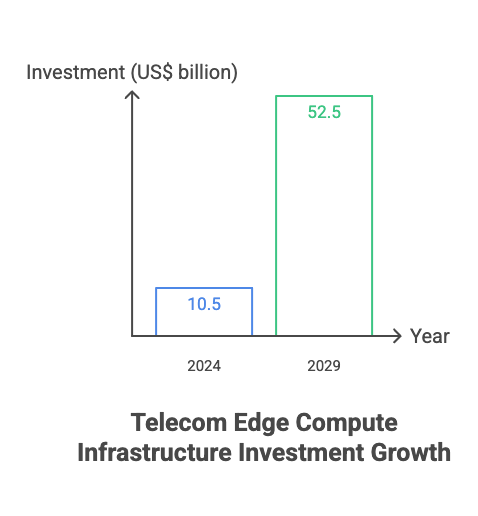
Key takeaway: Telecom edge infrastructure is becoming a significant investment area as operators and other infrastructure providers prepare networks for distributed AI and computing workloads.
The shift does not mean every mobile site will become a data centre. Instead, it points toward a more selective architecture in which strategically located telecom infrastructure provides connectivity and compute together, bringing AI processing closer to the devices and systems that need it.
Telecom Sites are Evolving into Distributed AI Infrastructure
The shift toward edge AI is changing the role of telecom infrastructure itself. Instead of treating the network simply as a pathway between devices and centralised cloud systems, operators are beginning to place computing resources closer to where data is generated. That can allow AI inference to happen within the network edge, reducing the distance data has to travel before an AI system can respond.
This matters most for workloads where latency, data volume or data locality make centralised processing less suitable. GSMA identifies enterprise edge AI, telco data-infrastructure AI, telco RAN AI and device-edge AI as four areas where distributed inference can develop across the telecom ecosystem. It also identifies lower backhaul requirements, faster inference, data sovereignty and potential cost savings as key reasons for bringing AI workloads closer to the network edge.
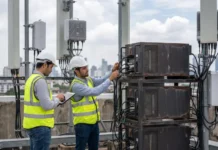
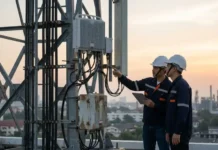
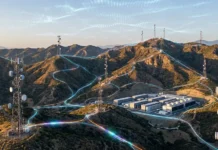
The physical footprint already exists in many cases. Telecom networks have extensive sites, fibre connections, aggregation facilities and distributed computing locations. The challenge is adapting selected parts of that infrastructure to support AI workloads without compromising their core connectivity role.
That transition is becoming more visible. In June 2026, GSMA said China Tower had completed a national upgrade involving 5.6 million base stations and 2.1 million tower sites, converting them into intelligent edge-computing hubs for the AI era. That does not mean every tower is operating as a conventional data centre, but it demonstrates how telecom infrastructure is being repositioned as part of a distributed computing layer.
The investment market is moving in the same direction. TBR forecasts that spending by telcos, cable companies and hyperscalers on telecom edge-compute infrastructure will reach US$52.5 billion by 2029, representing a projected 13.4% CAGR from 2024 to 2029. TBR also notes that adoption has been slower than originally expected because proven revenue-generating use cases remain limited.
That qualification is important. The emergence of distributed AI infrastructure does not mean every telecom site will become a compute hub. The economics will depend on where sufficient power, connectivity, cooling and computing capacity can be combined with workloads that genuinely benefit from local inference.
AI is Moving Closer to the Network Edge
The case for distributed inference becomes clearer when the architecture is considered from the perspective of the application.
A connected machine, camera or industrial system can generate data that needs to be processed quickly. Sending every data stream to a distant data centre adds network transit and backhaul requirements and can introduce additional latency. With suitable computing resources at the network edge, some of that processing can take place much closer to the source.
GSMA research says AI inference at the telecom edge can reduce compute processing time, improve bandwidth efficiency and reduce backhaul congestion. It also identifies use cases such as robotics, security cameras, industrial automation, AI agents and real-time video processing where proximity to the workload can have particular value.
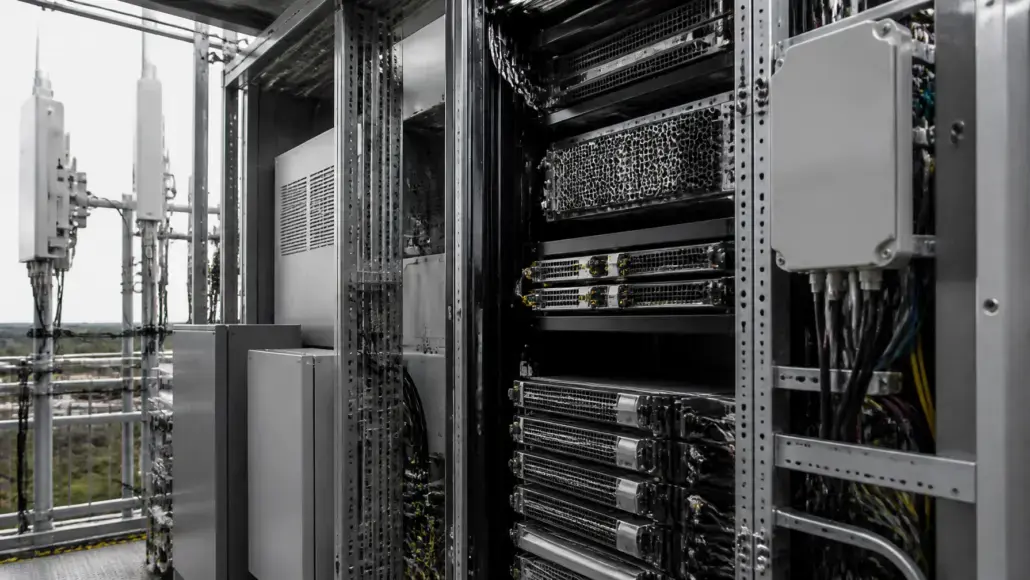
The infrastructure requirement is therefore changing. Telecom sites increasingly need to support more than radios, transmission equipment and power systems. Selected locations may also need accelerated computing, storage, local orchestration and stronger power and cooling capabilities to support AI inference.
This is where AI-RAN becomes relevant. Industry deployments are exploring how accelerated computing can support both radio workloads and AI applications within distributed network infrastructure, creating a closer relationship between connectivity and computing. GSMA’s 2025 Telco AI Cloud pilot demonstrated a blueprint for running AI workloads on-premises and at the network edge, with the stated objectives of reducing latency and operational costs while supporting real-time AI services.
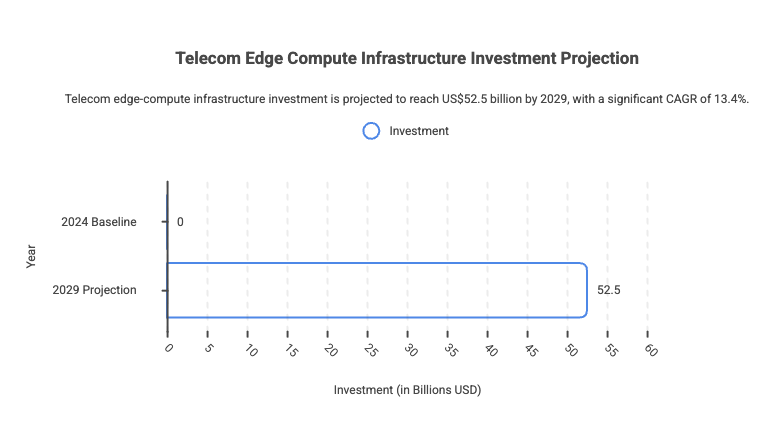
Key takeaway: Telecom edge infrastructure is becoming a significant investment category as networks evolve to support distributed AI workloads.