


















Ericsson and Finland’s Erillisverkot have demonstrated how 5G networks can be used to detect, locate and track drones, showing how 5G ISAC can add a sensing capability for public safety and critical infrastructure protection.
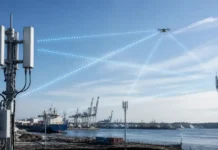
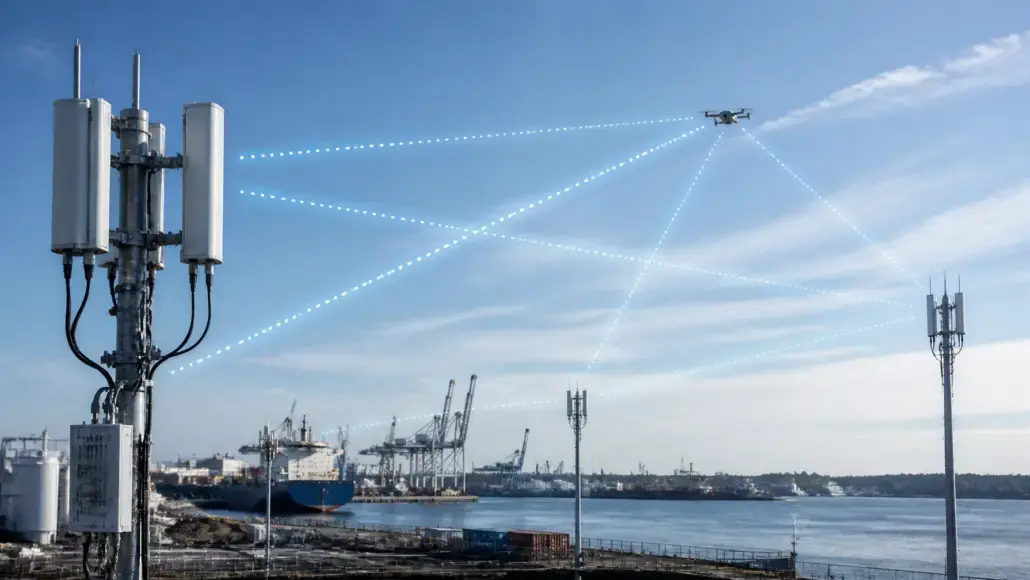
The companies conducted the demonstration from September 16 to 18 in Helsinki, including a live trial at Vuosaari Harbor. The test used Integrated Sensing and Communication, or 5G ISAC, to monitor drone activity and build a broader view of the surrounding area through multiple network points.
The technology is being explored as a way to extend situational awareness in environments where small, low-altitude drones can be difficult to detect, particularly when they are not connected to a network or transmitting wireless signals.
5G Network Infrastructure Gains a Sensing Role
5G ISAC combines communications and sensing by using radio-signal reflections and cooperating mobile network base stations to identify, locate and track moving objects. During the Finnish demonstration, several network points gathered sensing information simultaneously, allowing the system to create a more complete picture of activity across the test area.
For authorities, the approach could provide earlier awareness of potential risks and support decisions on when and where to respond. Ericsson and Erillisverkot said the capability could be used around ports, airports, borders, critical infrastructure and major public events, while also complementing established sensing and counter-drone technologies.
The demonstration also highlights a broader change in the role of mobile infrastructure. Instead of being used only to provide connectivity, 5G network sites can potentially support distributed sensing functions that use existing communications infrastructure and telecommunications systems.
Ericsson said its 5G ISAC development combines its Massive MIMO 5G radio platform and beam steering with specialised edge computing, signal processing and sensing software. Artificial intelligence and machine learning can also be applied to enhance target detection and classification.
Finnish Authorities Explore Public Safety Applications
For Erillisverkot, the demonstration is focused on how mission-critical communications infrastructure can support wider security and preparedness requirements. The company works with Ericsson on Finland’s next-generation public safety network, Virve 2.0, providing an established foundation for their work together on secure and resilient communications.
The latest 5G ISAC test points toward potential applications in low-altitude airspace, where authorities increasingly require continuous awareness around sensitive locations. At Vuosaari Harbor, the companies were able to examine how network-based sensing could operate in a complex environment with multiple potential sources of activity.
The technology is still emerging. Ericsson positions 5G ISAC as part of the evolution toward 5G Advanced and future 6G networks, with early applications expected to focus on defence and public safety before wider commercial adoption develops alongside standards and the broader ecosystem.
The demonstration therefore represents a practical step in evaluating how existing mobile network infrastructure can support sensing alongside communications. Further development will determine how the technology can be integrated with existing sensors, command and control systems and operational requirements.