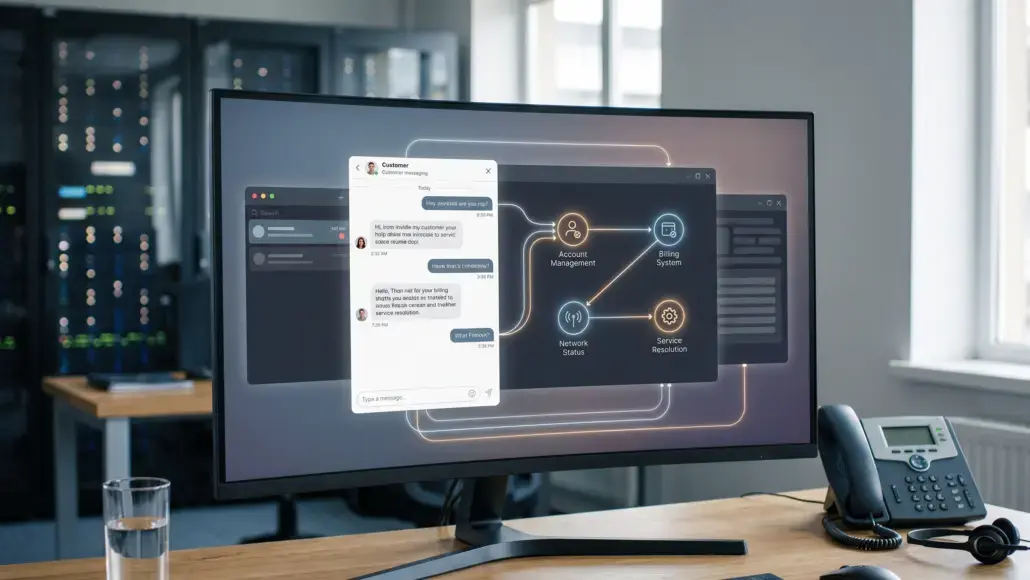
Telecom customer service is moving from systems designed primarily to answer questions toward AI that can understand customer requests, access relevant information and perform actions across service workflows. Traditional chatbots have improved automated support by handling frequently asked questions and predefined requests, while generative AI has made conversations more flexible. The next development is the use of agents that can connect those conversational capabilities with the systems needed to actually complete customer tasks.
This is giving AI customer service agents a broader role in telecom support. Instead of responding with information and leaving the customer to complete the next step, an agent can potentially retrieve account details, check service information, troubleshoot an issue and initiate an approved workflow within the same interaction. The difference is therefore less about how naturally the system talks and more about what it can do after understanding the customer’s objective.
AI Agents are Moving Telecom Customer Service Beyond Chatbots
The distinction becomes clearer when customer service is viewed as a sequence of tasks. A conventional chatbot may identify an intent, retrieve an answer and direct a customer toward the appropriate process. An agentic system can potentially break a request into multiple steps, access different tools, evaluate the information returned and continue until the task is completed or requires human intervention.
This model is already being explored within the telecom industry. TM Forum’s agentic AI work has examined systems in which multiple AI agents can interact across business domains and access different business systems, moving beyond isolated applications such as chatbots and ticket triage. One of its documented initiatives brought together 10 communications service providers and technology participants to examine more connected agentic customer experiences.
The significance of AI customer service agents therefore lies in their ability to connect conversation with execution. A customer asking why a bill has changed, for example, could potentially receive an explanation based on current account information and have an authorised corrective action initiated without beginning a separate support workflow.
From Conversational Support to Task Completion
This shift also changes how customer-service performance should be measured. A chatbot can appear effective when it handles a large number of conversations, but conversation volume does not show whether the underlying customer problem was resolved. Agentic systems create the possibility of evaluating customer service through task completion, first-contact resolution, escalation rates, handling time and repeat contacts.
The technology is still developing, and the ability of an agent to take action depends on permissions, data access, system integration and human oversight. Not every interaction can or should be automated.
AI customer service agents are nevertheless establishing a new direction for telecom support by linking natural-language interaction with systems capable of retrieving information and executing approved actions. This moves customer service beyond the traditional chatbot model and toward a more action-oriented operating framework.
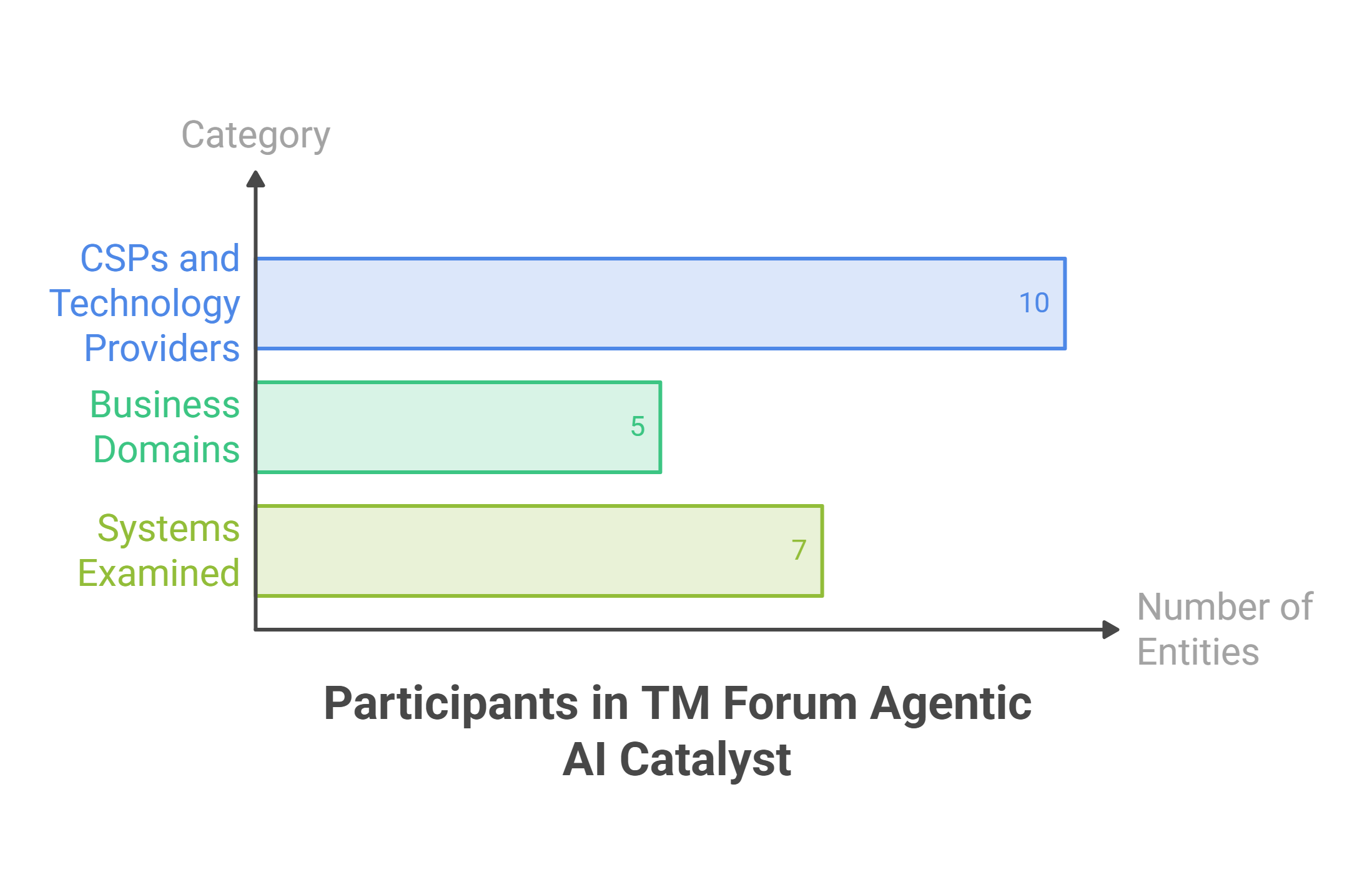
Key Takeaway: Telecom AI experimentation is moving beyond isolated conversational tasks toward connected agentic workflows that can interact across business systems and domains.
The transition is still at an emerging stage, but the direction is clear. AI customer service agents are beginning to connect customer conversations with the operational systems required to complete service tasks, creating a foundation for more context-aware, proactive and integrated customer care.
AI Agents are Connecting Customer Conversations with Telecom Systems
The ability of an AI agent to resolve a customer request depends on more than conversational intelligence. Telecom support involves information spread across billing platforms, customer relationship systems, order management, service assurance and network operations. Connecting an agent to these systems can allow it to move from understanding a request to gathering the information and completing the actions required to resolve it.
This is making AI customer service agents increasingly dependent on secure access to telecom data and operational systems. A customer interaction may require several separate checks before a resolution is possible, particularly when the issue involves both account information and network conditions.
AI Agents are Connecting Customer Conversations with Telecom Systems
A billing enquiry illustrates the difference. An agent may need to retrieve the current invoice, compare it with previous charges, identify a change in the customer’s plan or usage and determine whether the charge is valid. A conventional chatbot can explain billing policies, but an agent connected to the relevant systems can potentially work through the individual case and initiate an authorised action.
The same principle applies to technical support. A customer reporting poor connectivity may require checks against service status, known incidents, account information and device or network data. Bringing those sources together can reduce the need for customers to repeat information across separate support channels.
TM Forum’s agentic AI work is exploring this kind of system integration, with agents operating across business domains rather than remaining confined to a single conversational interface. This makes AI customer service agents increasingly dependent on APIs, tool access and clearly defined permissions.
Data Access is Becoming a Core Agent Capability
System integration also changes the importance of data quality. An agent can only make a reliable decision when the information it retrieves is current, relevant and presented in a form it can interpret correctly. Outdated account records, inconsistent service information or incomplete case histories can therefore affect the quality of the agent’s response or action.
This is particularly important when an agent is given permission to modify customer services. Access to billing or account information is different from authority to issue a credit, change a plan or cancel a service. Agentic customer care consequently requires controls that separate information access from action authority.
Human oversight can remain important for higher-risk decisions. An agent might gather the necessary information and prepare a recommended action while a human representative approves the final step. This allows automation to handle routine work without assuming that every customer-service decision should be fully autonomous.
The operational objective is therefore not simply to give AI access to more systems. It is to create controlled connections between the conversational layer and the systems that contain the information and tools needed to resolve requests.
Context is Turning Conversations into Workflows
As these integrations mature, customer interactions can increasingly become multi-step workflows. The agent can retrieve information, interpret it, call another system, confirm the result and continue until the request is completed or escalated.
This creates a more direct relationship between customer conversation and telecom operations. AI customer service agents can potentially reduce the number of separate steps required to resolve routine issues, while maintaining escalation paths where automation reaches the limits of its authority.
The broader development is therefore about integration rather than conversation alone. AI customer service agents are becoming a layer through which customers can interact with multiple telecom systems without needing to understand the underlying architecture. That shift creates the foundation for the more context-aware and proactive customer-service models explored elsewhere in this series.
Customer Service is Moving from Answers Toward Actions
Telecom customer care is increasingly moving beyond systems that simply provide information toward AI that can interpret requests, retrieve relevant data and execute authorised service workflows. The shift depends on integrating customer-service interfaces with billing, account, order and network systems.
This makes AI customer service agents increasingly relevant to the next stage of telecom support. Their value will depend on how reliably they can use current information, follow defined permissions and complete tasks without creating additional work for customers or human service teams.
As these capabilities mature, AI customer service agents could make routine support more direct by connecting customer conversations with the operational systems required for resolution. The transition is therefore less about replacing chatbots and more about turning automated customer interactions into increasingly capable, system-connected service workflows.