




















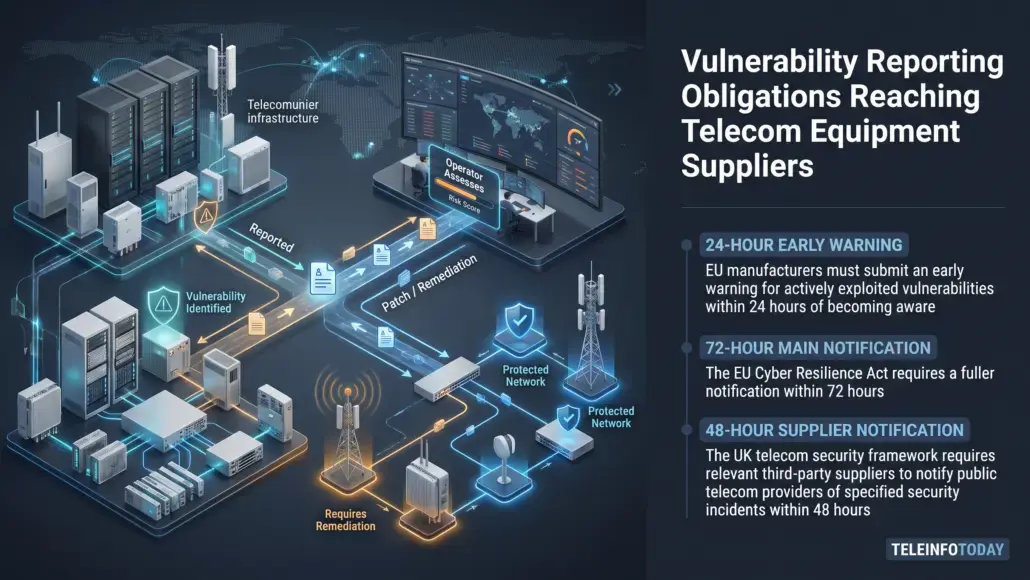

Telecom security responsibility is increasingly extending beyond network operators to the equipment, software and suppliers that support communications infrastructure. Network products can remain in service for years, creating ongoing requirements around vulnerability discovery, disclosure, patching and remediation. Telecom vulnerability reporting is therefore becoming part of a broader supply-chain security model in which manufacturers, suppliers and operators have more clearly defined responsibilities. TeleInfoToday is tracking how these requirements are developing across telecom and digital-security frameworks.
Telecom Equipment is Entering a Wider Security Perimeter
Mobile and fixed networks depend on hardware, software and firmware supplied by third parties, meaning a weakness in one component can create security implications across connected infrastructure. The UK’s revised Telecommunications Security Code of Practice 2026 requires public telecom providers to manage supplier security risks and contractually require third-party network-equipment suppliers to maintain vulnerability disclosure policies. It also requires suppliers to support investigations and remediation when their products contribute to a security compromise.
This is making telecom vulnerability reporting part of a wider supplier-governance process. Operators need timely information on affected products, while suppliers need processes for communicating security incidents, identifying root causes and supporting corrective measures throughout the equipment lifecycle.
Reporting Requirements are Becoming More Time-Bound
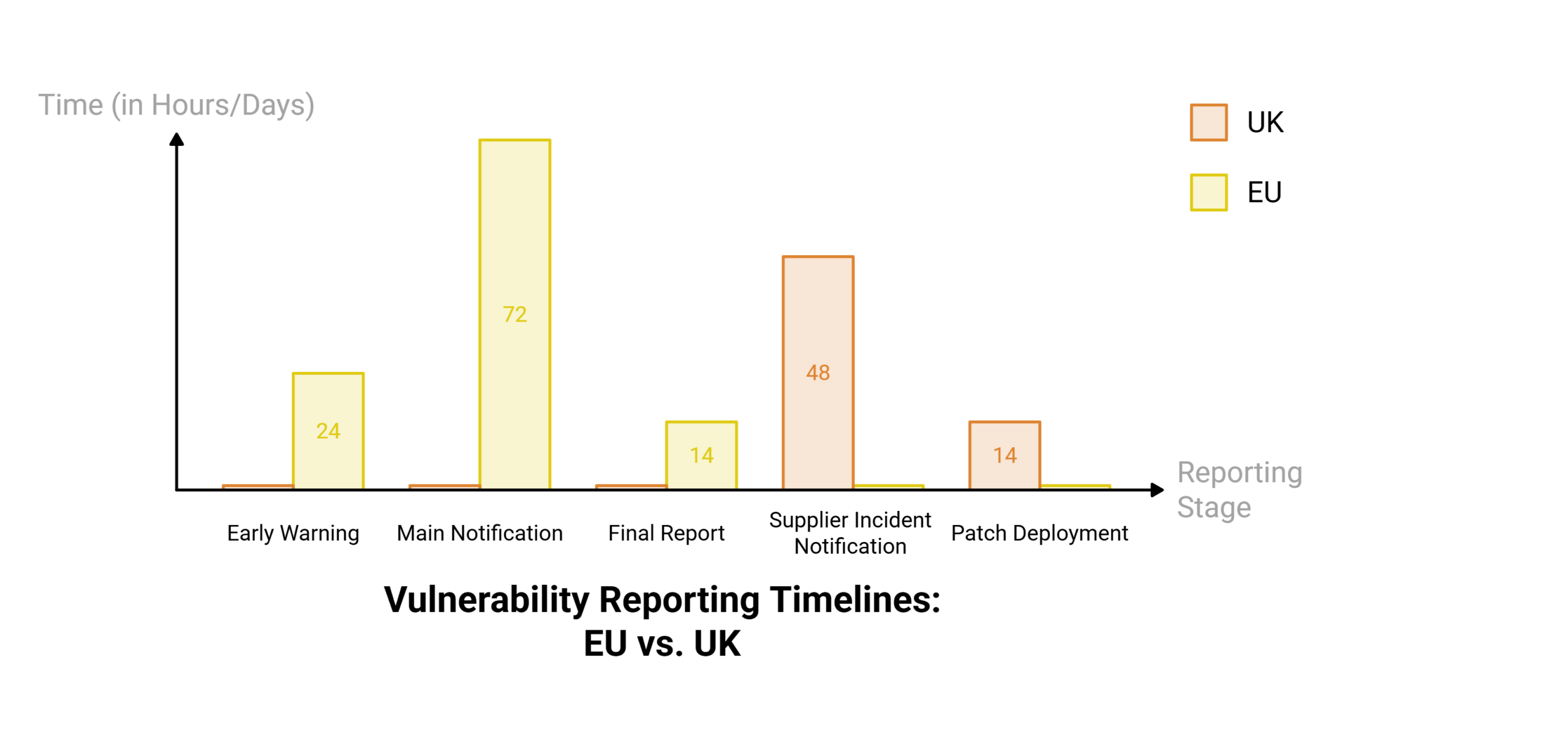
The regulatory direction is also becoming more explicit around reporting speed. Since 11 September 2026, manufacturers covered by the EU Cyber Resilience Act have been required to report actively exploited vulnerabilities and severe incidents affecting products with digital elements through ENISA’s Single Reporting Platform. The framework requires an early warning within 24 hours and a fuller notification within 72 hours.
As disclosure becomes more structured, security attention also moves toward network signalling mechanisms, where weaknesses in network communication and fallback processes can create additional exposure. Telecom vulnerability reporting is consequently becoming part of a security lifecycle linking manufacturers, suppliers and operators.
Key Takeaway: Vulnerability management is becoming more time-bound, with reporting, supplier notification and remediation increasingly built into telecom security responsibilities.
Supplier Vulnerability Management is Becoming More Structured
The expansion of vulnerability reporting requirements is changing how telecom operators manage relationships with equipment suppliers. Security expectations increasingly extend into procurement, contractual controls, disclosure procedures, patch management and incident response. Suppliers are being asked to provide clearer information about vulnerabilities and support operators in addressing issues that could affect live networks.
This is making telecom vulnerability reporting more closely connected with supplier governance. A notification has limited operational value if an operator cannot determine which products are affected, how exposed they are or what remediation is available. The process therefore needs to connect vulnerability information with asset inventories, software versions and remediation workflows.
Supplier Security Requirements are Moving into Contracts
Contracts can translate security expectations into specific responsibilities. The UK’s revised Telecommunications Security Code of Practice 2026 requires public telecom providers to contractually oblige relevant third-party suppliers to report certain security incidents within 48 hours, support investigations and identify root causes. It also requires providers to verify that network-equipment suppliers maintain vulnerability disclosure policies.
These requirements make telecom vulnerability reporting part of an ongoing relationship between operators and suppliers rather than an isolated notification event. A supplier may need to identify affected products, provide technical details, support impact assessments and help determine corrective action.
Remediation is Becoming Part of the Reporting Lifecycle
The next step after disclosure is determining how quickly and safely a vulnerability can be addressed. Telecom networks can contain large numbers of distributed equipment instances, and operators may need to test patches, schedule deployments and maintain service continuity while remediation takes place.
The UK’s 2026 code states that patches addressing exposed, actively exploited vulnerabilities should be deployed as soon as reasonably achievable and at most within 14 days of release. Asset visibility is therefore important because operators need to know where affected products are deployed.
Coordinated Disclosure is Connecting the Mobile Ecosystem
Security researchers, manufacturers, operators and industry bodies can hold different pieces of information about a vulnerability. The GSMA Coordinated Vulnerability Disclosure programme provides a structured route for researchers to report vulnerabilities affecting the mobile ecosystem and supports collaboration among operators, suppliers and standards bodies on fixes and mitigating actions.
The wider objective is to make vulnerability information actionable across the industry. Telecom vulnerability reporting increasingly needs to connect discovery with assessment, communication, remediation and verification, creating a lifecycle that extends from a supplier’s development environment to equipment operating inside a live telecom network.