











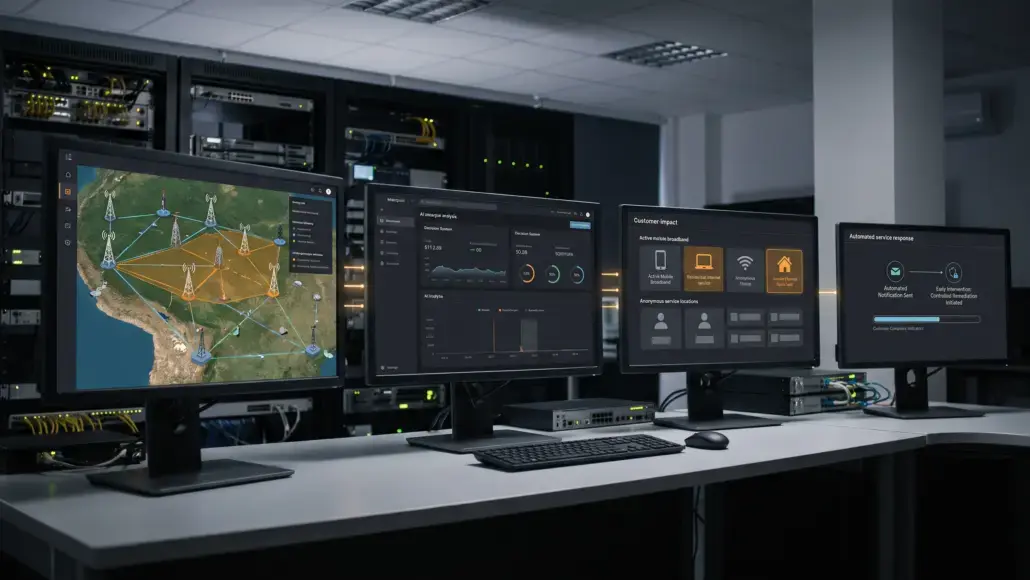

Network Intelligence is Enabling More Proactive Customer Care
The value of proactive customer service depends on connecting network intelligence with customer-impact information. Detecting a fault is only the first step. Operators also need to understand which services and customers may be affected, how significant the impact could be and whether an intervention is appropriate. AI can help connect these signals and support decisions before a network problem becomes a customer complaint.
This is making proactive telecom AI increasingly relevant to the evolution of autonomous network operations. TM Forum’s current work describes Level 4 autonomous networks as using predictive analysis and closed-loop management for service- and customer-experience-driven operations. The objective is to move from reacting to degraded service toward anticipating and addressing issues earlier.
Network Events are Becoming Customer-Service Signals
A network event does not affect every customer in the same way. A localised degradation may affect a specific group of mobile users, while a broader outage can create a much larger service impact. Connecting network events with customer and service information allows an AI system to distinguish between these situations and prioritise responses accordingly.
For example, if network monitoring identifies deteriorating performance in a specific area, an AI system could match that information with the customers and services operating there. Customer-care teams could then receive an earlier indication of potential impact, while customers could potentially receive an appropriate notification before contacting support.
This creates a different relationship between network operations and customer care. Proactive telecom AI can act as a bridge between technical signals and customer experience, translating network conditions into information that can support service decisions.
Closed-Loop Automation is Moving Toward Prevention
The next stage is connecting detection with controlled remediation. TM Forum’s CX Optimization via AI-Driven SOC Catalyst is designed around closed-loop automation in which AI agents analyse live network events, formulate remediation plans, validate potential actions through digital twins and deploy approved responses. The stated goal is to predict, prevent and resolve customer-experience issues before customers are impacted.
This model reduces the distance between detecting a network problem and acting on it. Instead of generating an alert that requires a separate team to investigate, the system can potentially determine the likely customer impact, identify an appropriate response and execute a defined remediation workflow.
Human oversight can still remain important, particularly when an action could affect a large customer population or alter network behaviour. The role of AI is therefore not necessarily unrestricted autonomy, but faster interpretation and execution within controlled operational boundaries.
Autonomous Networks are Creating a Larger Role for Customer Experience
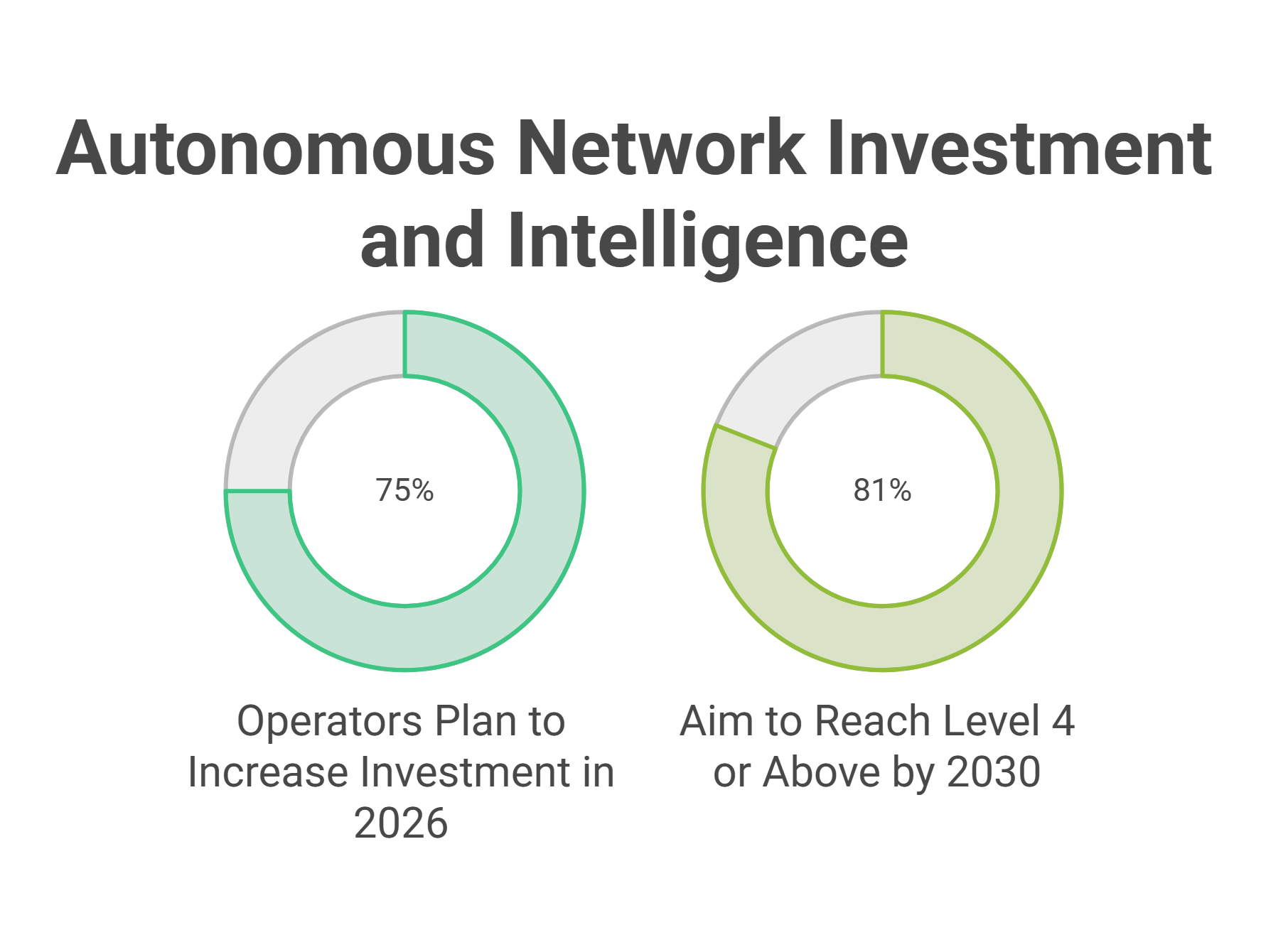
The broader investment in autonomous networks also indicates that proactive customer outcomes are becoming part of the industry’s automation agenda. TM Forum reported in June 2026 that 75% of operators planned to increase autonomous-network investment in 2026, while 81% aimed to reach Level 4 or above by 2030. The same initiative links higher levels of network autonomy with improvements in customer experience and service resilience.
Proactive telecom AI fits into this wider shift because customer experience can become an operating input rather than simply an outcome measured after an incident. Network decisions can increasingly consider whether a change will prevent service degradation, reduce customer impact or improve perceived service quality.