
















Tuesday, September 22, 2026

Subscriber Identity Controls Becoming a Greater Telecom Security Priority

Note* - All images used are for editorial and illustrative purposes only and may not originate from the original news provider or associated company.

Related stories

Signalling Fallback Exposing Gaps in Mobile Roaming Protection

Mobile roaming is increasingly operating across a mix of...

Vulnerability Reporting Obligations Reaching Telecom Equipment Suppliers

Telecom security responsibility is increasingly extending beyond network operators...

VodafoneThree Brings Ericsson Cloud Native 5G Core Live

VodafoneThree and Ericsson have reached a significant milestone with...

Mobile networks increasingly depend on digital credentials that determine whether a subscriber, device or service is authorised to connect. As networks become more distributed and digital services rely more heavily on mobile identities, protecting these credentials is becoming a broader security requirement. Tele Info Today notes that the challenge now extends beyond the physical SIM to authentication, eSIM provisioning, subscriber identifiers and the systems responsible for managing them.

5G is Strengthening Subscriber Identity Protection

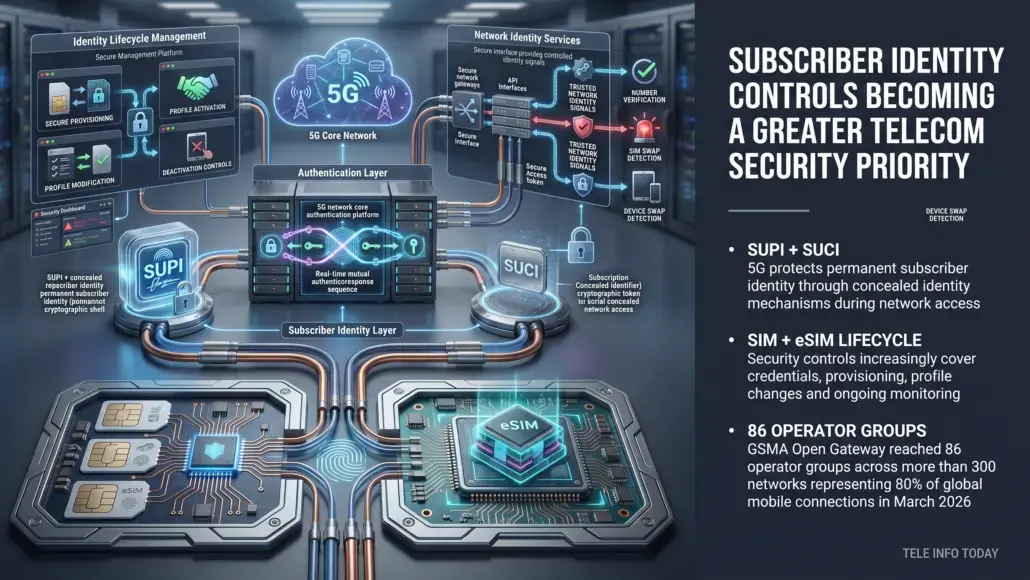
5G introduced stronger mechanisms for protecting permanent subscriber identity. Instead of transmitting the permanent identifier directly over the radio interface, 5G can use the Subscription Concealed Identifier, or SUCI, to conceal the Subscription Permanent Identifier, or SUPI, using the home network’s public-key infrastructure. This reduces unnecessary exposure of the permanent identity during initial network access.

The change is particularly relevant to roaming because subscriber identity can cross network boundaries. 5G also introduced additional mechanisms designed to strengthen authentication and home-network control when users connect through visited networks.

This makes subscriber identity security more than a question of protecting an identifier in transit. Operators also need to protect the credentials and systems that allow those identities to authenticate against the network.

SIM and eSIM Security is Becoming a Lifecycle Issue

The subscriber identity stored within a SIM or eSIM is supported by cryptographic material used for network authentication. A compromise can therefore affect network access and subscriber confidentiality. The UK’s Telecommunications Security Code of Practice 2026 requires public telecom providers to manage SIM-related security risks, review existing profiles and address vulnerabilities against current GSMA recommendations.

The guidance also highlights risks associated with profile-modifiable SIMs and eSIMs. Providers are expected to ensure that only trustworthy services can add, remove or modify eSIM profiles, while profile changes should be logged and monitored. This reflects a shift from treating SIM security as a fixed hardware property toward managing subscriber credentials throughout their lifecycle.

For subscriber identity security, that lifecycle includes provisioning, activation, authentication, profile modification, replacement and deactivation. Each stage creates opportunities for controls that can protect the subscriber and network.

Identity Controls are Expanding with Digital Services

Mobile identity is also increasingly relevant beyond basic network access. SIM and device relationships can influence account recovery, authentication and fraud controls for external digital services. A weakness in subscriber identity management can therefore have consequences beyond the telecom network itself.

As operators strengthen controls around SIM credentials, eSIM provisioning and subscriber identifiers, subscriber identity security is becoming a broader component of telecom cybersecurity. The next development is extending trusted identity information into controlled digital interfaces, allowing other services to use relevant network signals without receiving unrestricted access to subscriber data.

Identity Controls are Expanding Beyond the SIM

Subscriber identity security is increasingly extending beyond the credentials stored on a SIM or eSIM. As digital services use mobile numbers and device relationships for authentication, operators are developing ways to provide trusted identity signals without exposing underlying subscriber information. These signals can help external services determine whether a number is genuinely associated with a device, whether a recent SIM change has occurred or whether a device relationship has changed.

This is making subscriber identity security increasingly relevant beyond network access. The operator’s role can extend from protecting subscriber credentials to providing controlled signals that help banks, fintechs and other digital services assess identity-related risk.

SIM Swaps are Becoming a Security Signal

A SIM swap can change the relationship between a customer’s mobile number and the SIM or eSIM used to access the network. That creates a potential account-takeover risk when the mobile number is also used for authentication or account recovery. Instead of relying only on post-event investigation, digital services can use operator-provided signals to determine whether a recent SIM change should influence a transaction or authentication decision.

Number Verification can similarly confirm whether the mobile number used by a digital service corresponds with the number associated with the device and network session. These capabilities can reduce dependence on SMS-based verification in some scenarios while keeping the operator involved in establishing the relationship between the subscriber, device and number.

For subscriber identity security, this creates a transition from static credentials toward continuously evaluated identity relationships. It also establishes a bridge between telecom security and network based identity verification. The next step is allowing these signals to reach authorised external services through standardised network APIs.

Mobile Identity APIs are Scaling Globally

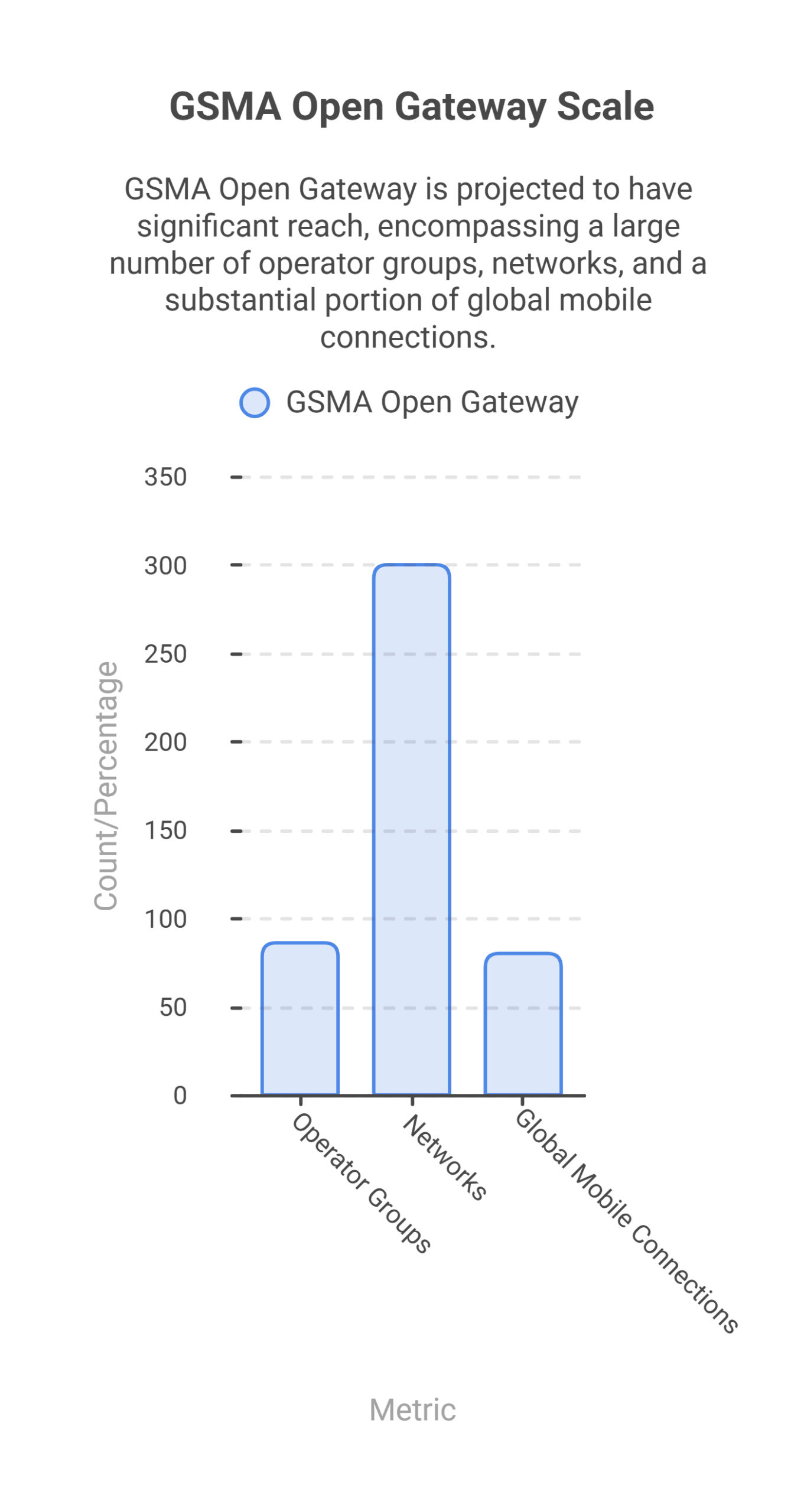
GSMA Open Gateway provides evidence of this broader development. In March 2026, GSMA reported that 86 operator groups, representing more than 300 networks and 80% of global mobile connections, were aligned around its common API framework. Identity-related services include Number Verification and SIM Swap capabilities, alongside other network APIs.

The scale of the framework indicates that mobile identity signals are becoming part of a wider network-API ecosystem rather than remaining confined to individual operator systems. This can create a more direct connection between telecom infrastructure and external fraud-prevention or authentication services.

However, access to identity signals still requires appropriate authorisation, data protection and clear limits on how information can be used. Subscriber identity security therefore increasingly involves both protecting the underlying credential and controlling how trusted identity signals are exposed to external systems.
Tele Info Today brings together the global telecoms industry — from network operators and connectivity providers to technology innovators and digital services leaders — through trusted editorial, market intelligence, and digital engagement.

Our 2026 Media Pack offers integrated solutions to reach your audience:

  • Magazine & Digital Editions Showcase your brand within premium telecoms industry coverage read by executives and decision-makers worldwide.
  • Industry Insights & Reports Align with data-driven analysis, trend reports, and regional roundups across the global telecommunications and digital services value chain.
  • Brand Authority & Credibility Position your company as a thought leader through expert commentary, interviews, and special features.

Subscribe

- Never miss a story with notifications

- Gain full access to our premium content

- Browse free from any location or device.

Media Packs

Expand Your Reach With Our Customized Solutions Empowering Your Campaigns To Maximize Your Reach & Drive Real Results!

– Access the Media Pack Now

– Book a Conference Call

Leave Message for Us to Get Back

Latest stories

Related stories

Signalling Fallback Exposing Gaps in Mobile Roaming Protection

Mobile roaming is increasingly operating across a mix of...

Vulnerability Reporting Obligations Reaching Telecom Equipment Suppliers

Telecom security responsibility is increasingly extending beyond network operators...

VodafoneThree Brings Ericsson Cloud Native 5G Core Live

VodafoneThree and Ericsson have reached a significant milestone with...

Ericsson and Erillisverkot Demonstrate 5G ISAC Drone Detection...

Ericsson and Finland’s Erillisverkot have demonstrated how 5G networks...

Subscribe

- Never miss a story with notifications

- Gain full access to our premium content

- Browse free from any location or device.

Media Packs

Expand Your Reach With Our Customized Solutions Empowering Your Campaigns To Maximize Your Reach & Drive Real Results!

– Access the Media Pack Now

– Book a Conference Call

Leave Message for Us to Get Back

Translate »