
















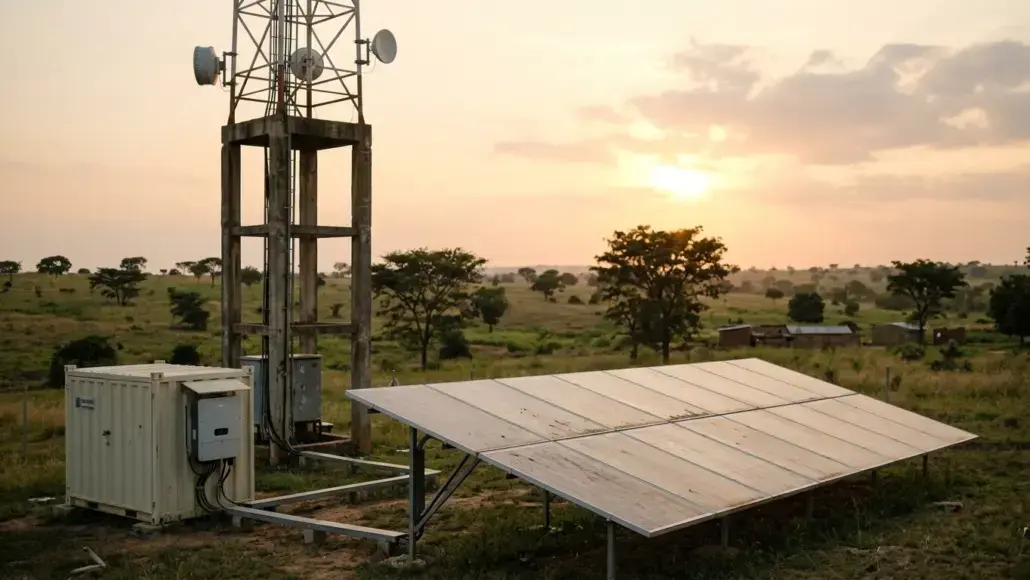

The Nigerian Communications Commission (NCC) and the Rural Electrification Agency (REA) have formed a strategic partnership to deliver renewable energy for telecom infrastructure, reducing operators’ reliance on diesel generators while supporting broadband expansion across underserved communities. Formalised through a Memorandum of Understanding (MoU) at the NCC–REA Stakeholder Forum in Abuja, the initiative will enable telecom base stations to access electricity from existing and planned renewable energy mini-grids.
Partnership Supports Broadband Expansion
The collaboration aims to address two critical challenges simultaneously, reliable electricity and digital connectivity. Speaking at the forum, NCC Executive Vice Chairman Aminu Maida, represented by Executive Commissioner of Technical Services Abraham Oshadami, said access to electricity and broadband must advance together to support inclusive economic growth.
Many communities with limited broadband coverage also experience unreliable power supply. By providing renewable energy for telecom infrastructure, the partnership seeks to lower operating costs for network operators while improving connectivity in off-grid and underserved regions.
To support implementation, the NCC and REA will share geospatial data identifying locations where electrification projects and broadband deployment overlap. The REA will contribute information on existing and planned renewable energy projects, while the NCC will provide data from Universal Service Provision Fund deployments to create a unified infrastructure map.
Renewable Energy Mini-Grids Reduce Diesel Dependence
According to Umar Abdullahi, Executive Director of Technical Services at the REA, rising diesel costs remain one of the biggest barriers to expanding telecom networks into remote areas. Many telecom towers continue to rely on diesel generators, making network expansion financially challenging.
The agencies believe renewable energy mini-grids offer a practical alternative. Telecom towers provide stable, round-the-clock electricity demand, making them ideal anchor loads for off-grid renewable energy systems. Technical teams have already identified priority locations where renewable energy mini-grids can be integrated with existing telecom infrastructure, enabling operators to transition away from diesel-powered sites.
Pilot Projects Planned Following Site Assessments
Umar Sani-Abdullahi, Special Adviser (Technical) to the NCC Executive Vice Chairman, confirmed that both organisations have completed site assessments, developed an implementation dashboard, and validated the commercial viability of the initiative.
The next phase will focus on pilot deployments, ongoing performance monitoring, and data standardisation. If successful, the model could be replicated across other African countries seeking cost-effective solutions for expanding broadband access while improving energy reliability through renewable energy for telecom infrastructure.