




















Commercial rollouts of dense 5G radio grids, fiber access nodes, and distributed multi-access edge computing platforms are compelling communications service providers to adopt zero touch network provisioning at an unprecedented scale. Expanding next-generation telecommunications networks requires activating tens of thousands of distributed physical and virtual appliances, rendering manual on-site configuration economically unsustainable.
Historically, commissioning a cellular base station or optical network terminal demanded coordinated multi-step procedures. Skilled field engineers transported pre-staged equipment to remote sites, connected laptops via local serial console cables, manually loaded firmware images, and typed hundreds of command lines. Any typographical error or firmware mismatch triggered repeated truck rolls, delayed commercial service readiness, and inflated initial capital deployment costs.
Technical Foundations of Zero-Touch Workflows
Modern zero touch network provisioning eliminates localized staging bottlenecks by combining standardized hardware call-home protocols, cryptographically verified hardware identity, and centralized declarative cloud orchestration. The physical installation process is decoupled completely from software configuration and operational commissioning.
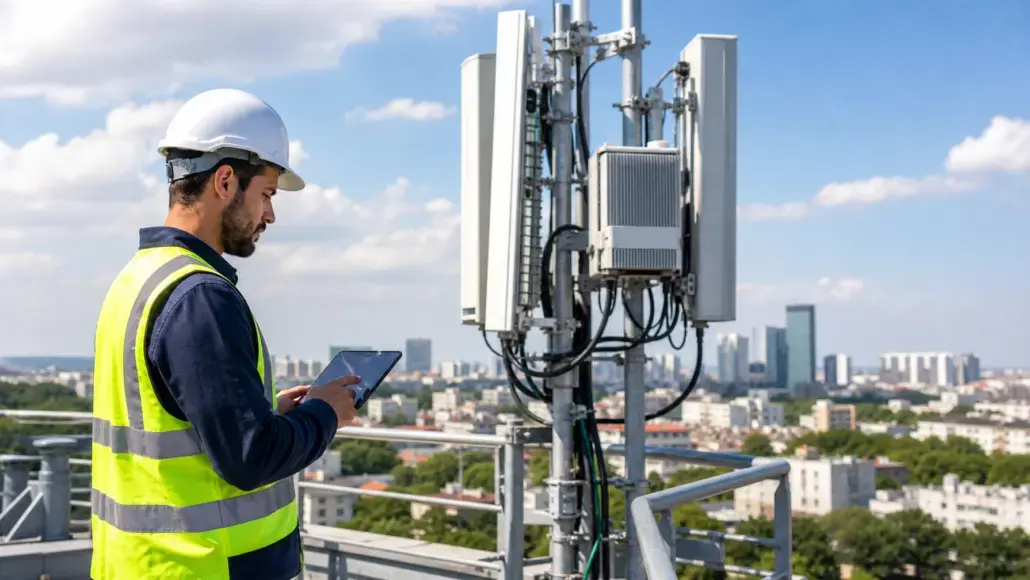
When an unconfigured bare-metal server, small cell radio, or edge router arrives at a remote site, field technicians simply mount the physical hardware, connect optical backhaul cabling, and power on the system. The device initiates a secure automated bootstrap sequence that establishes connectivity with the central network management system without requiring local operator intervention.
The standardized zero-touch provisioning workflow follows a precise operational sequence:
- The unprovisioned device boots into a minimal secure operational environment and uses DHCP option 66 or 67 to acquire temporary network addressing and orchestrator contact parameters
- The hardware verifies its cryptographically sealed identity against a centralized public key infrastructure using on-board Trusted Platform Module chips and IEEE 802.1AR factory certificates
- A mutually authenticated, encrypted TLS session connects the hardware to a centralized staging and provisioning server
- The central orchestrator queries network asset inventories, validates hardware serial numbers, and pushes certified baseline firmware updates
- Declarative configuration templates and tenant-specific policies compile dynamically and download to the node, initiating verified operational launch
By converting provisioning into an automated software transaction, operators compress node commissioning time from several hours or days to less than fifteen minutes. Field technicians focus solely on physical mounting, mechanical alignment, and power verification, enabling crews to activate significantly more sites per work shift.
Quantifiable Rollout Efficiencies and Economic Impact
The commercial value of automated commissioning is reflected in expanding capital investments across both public cellular and private industrial enterprise networks. Market valuation figures from Fortune Business Insights value the global zero-touch provisioning market at 4.38 billion dollars in 2026, forecasting sustained expansion toward 10.62 billion dollars by 2034.
This rapid market adoption stems from the urgent necessity to compress time-to-market while curbing field labor expenses. Tier-1 network operators deploying Open RAN architectures and nationwide 5G standalone small cells report that automated provisioning workflows reduce field engineering site visits by more than 80 percent.
Key operational metrics documented across recent automated rollout programs include:
- A reduction in average cell site commissioning duration from 18 hours across multiple manual visits to under 30 minutes of automated execution
- Elimination of human configuration errors, reducing initial provisioning defect rates from historic averages of 12 percent down to less than 0.5 percent
- Accelerated revenue generation by bringing commercial radio sites online weeks ahead of traditional project schedules
- A 65 percent reduction in staging warehouse footprint, as devices ship directly from original equipment manufacturers to remote tower locations without pre-configuration
For operators constructing nationwide edge computing architectures, these operational gains prove transformative. Activating hundreds of regional micro-data centres to support low-latency enterprise applications requires rolling out synchronized compute clusters across diverse geographical jurisdictions without burdening localized IT staff.
Security Architecture and Supply Chain Integrity
Because zero-touch devices connect to public and enterprise backhaul networks before receiving hardened configurations, maintaining absolute cryptographic integrity across the bootstrapping phase is an essential security requirement. Untrusted bootstrap environments present potential attack surfaces if malicious actors attempt to redirect call-home requests or inject unauthorized configuration payloads.
To counter these vulnerabilities, carriers utilize hardened zero-trust onboarding frameworks. Embedded hardware security chips such as TPM 2.0 generate cryptographically verifiable identity tokens that cannot be extracted, duplicated, or spoofed. Hardware manufacturers sign factory certificates during fabrication, creating an immutable chain of trust that central provisioning servers verify before transmitting sensitive network keys or topology configurations.
Configuration payloads themselves are encrypted in transit and signed with operator private keys. If a newly installed router or baseband unit detects firmware tampering or signature invalidation during the bootstrap sequence, the device enters a quarantined state, halts booting, and triggers an immediate security alert in the centralized security operations center.
Automating individual site activations yields localized speed, yet turning remote nodes into commercial revenue requires end-to-end policy synchronization where Cross-Domain Network Automation Simplifies End-to-End Service Management across the entire radio, optical transport, and core topology.
Managing Hardware Heterogeneity Across Open Architectures
The transition toward Open RAN and disaggregated cloud infrastructure complicates zero-touch provisioning by breaking proprietary single-vendor stacks into multi-vendor components. An operator may deploy radio units from one supplier, distributed baseband software from another, and commercial off-the-shelf bare-metal servers from a third hardware manufacturer.
Standardized orchestration interfaces established by the O-RAN Alliance, such as the O1 and O2 management specifications, provide the necessary common ground. The O2 interface allows cloud management systems to provision containerized compute pools dynamically, while the O1 interface automates parameter configuration across disaggregated physical and virtual radio elements.
By decoupling software provisioning from underlying hardware abstractions, carriers deploy uniform zero-touch onboarding pipelines regardless of vendor combinations. Automated test routines verify interface compatibility immediately following installation, confirming that third-party radio units synchronize timing protocols with central baseband pools prior to entering production service.
GitOps Integration and Ongoing Lifecycle Maintenance
The business benefits of zero touch network provisioning extend far beyond greenfield deployments into ongoing operational lifecycle maintenance. Progressive communications service providers are integrating provisioning pipelines with GitOps operational models, treating infrastructure configurations as version-controlled software code stored in centralized Git repositories.
When network engineering teams update security policies, routing protocols, or quality of service parameters, they commit validated code updates to the version control system. Automated deployment controllers detect repository changes, compare declared configurations against current operational states, and automatically push updates to thousands of distributed production nodes without manual CLI commands.
If an unexpected software regression occurs, operational teams execute automated rollbacks by reverting Git commits, prompting provisioning systems to restore previously validated configuration states across affected nodes within minutes. This declarative approach eliminates configuration drift, guarantees absolute synchronization between engineering documentation and active networks, and establishes an auditable record of every operational modification across the network lifespan.
Operational consistency achieved through version-controlled deployment pipelines also transforms security auditing. Telecommunications compliance frameworks increasingly mandate strict verification of network element provenance and baseline integrity. By maintaining complete configuration histories within cryptographic repositories, service providers verify regulatory compliance across thousands of remote cell nodes without dispatching manual audit teams or extracting local device logs.