















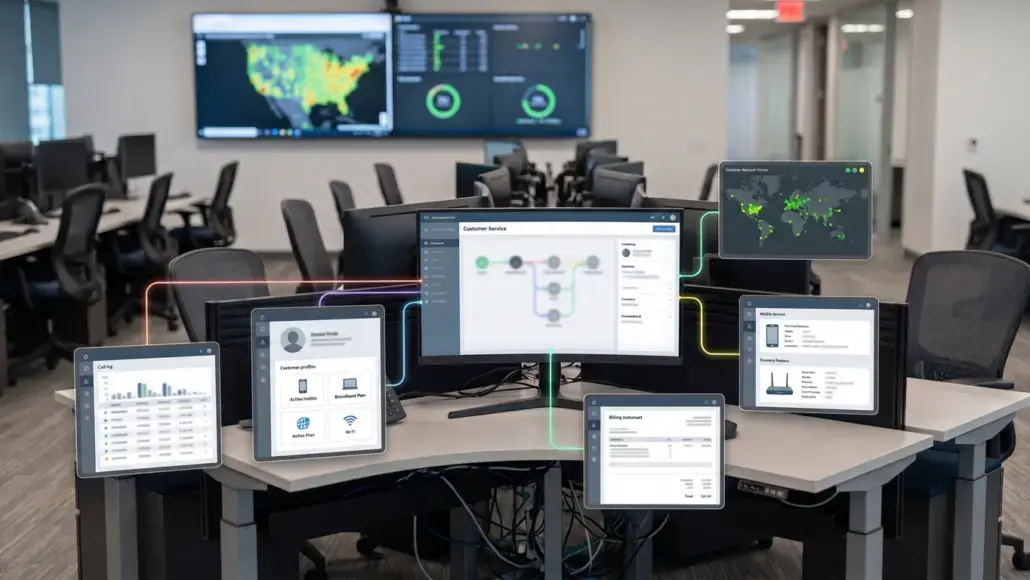
Telecom customer care is moving toward a model in which artificial intelligence can understand more than the immediate question being asked. Traditional customer-service systems often rely on predefined customer profiles and scripted workflows, while newer AI systems can combine information from previous interactions, active services and current service conditions to build a more complete picture of the customer’s situation.
This is making context aware telecom AI increasingly relevant to personalised customer care. Instead of treating every interaction as a new request, an AI system can potentially understand what has already happened, what services the customer uses and what information is relevant to the current problem. The result can be a more targeted response that reflects the customer’s actual circumstances.
Personalisation is Becoming More Contextual
Traditional personalisation often relies on relatively fixed attributes such as customer segments, tariff plans or account history. These inputs can be useful, but they may not explain what a customer needs at a particular moment. A customer experiencing a service problem, for example, may require a very different response from the same customer asking about an upgrade.
Context-aware systems can combine information around the specific interaction. This can include previous support conversations, unresolved cases, current products, billing information, device details and service conditions. Bringing these elements together allows an AI system to interpret the request within a broader operational context.
This is where context aware telecom AI differs from basic recommendation or segmentation tools. The objective is not simply to identify what type of customer is making the request. It is to understand the circumstances surrounding the request and use that information to determine a more relevant response.
Customer History is Becoming Part of the Interaction
Interaction history can be particularly valuable when customers contact support repeatedly. Without access to previous information, a new conversation may begin with the same questions and troubleshooting steps that the customer has already completed. A context-aware system can potentially carry that history into the next interaction and avoid unnecessary repetition.
For example, a customer reporting a broadband issue could be connected to information showing that the problem has already been reported, a troubleshooting step was previously attempted and a known service incident is affecting the area. The response can then begin with the actual state of the case rather than a generic troubleshooting script.
Context aware telecom AI can also support more useful handoffs to human representatives. Instead of transferring only the customer’s latest message, the system can provide relevant interaction history, account context, actions already attempted and information gathered during the automated conversation.
From Customer Profiles to Situational Understanding
The broader shift is therefore from static personalisation toward situational understanding. AI systems can potentially combine customer information with operational context and the immediate purpose of the interaction, creating a more complete basis for decision-making.
This approach still depends on reliable data access, appropriate permissions and accurate information. More context does not automatically produce better service if the information is outdated or irrelevant.
As telecom operators connect more customer and service information, context aware telecom AI is becoming a potential foundation for more relevant customer interactions. The development is moving personalisation beyond customer profiles toward systems capable of understanding the circumstances surrounding each service request.
Context-Aware AI is Connecting Customer and Service Data
Personalisation becomes more useful when customer context can be combined with information about the service itself. Telecom interactions often involve more than account details: a customer may be affected by a network incident, using a particular device, waiting for an unresolved order or contacting support after previous troubleshooting attempts. Bringing these signals together allows an AI system to interpret the request against the current state of the customer and the service.
This makes context aware telecom AI dependent on access to multiple sources of operational information. Customer relationship management systems can provide interaction history, while billing, order management, device and service-assurance systems can add the information needed to understand what is happening at the time of the interaction.
Customer Context is Expanding Beyond Account History
A customer profile provides only part of the information needed for relevant support. A mobile customer might have a long interaction history but still require a different response depending on whether they are reporting poor coverage, questioning a charge or considering a plan change.
Context-aware systems can combine these different signals rather than treating them independently. Previous conversations can show what has already been discussed, account information can establish which services are active, and network or service data can indicate whether an issue is broader than the individual customer.
This approach can also improve continuity between automated and human support. An AI system that retains the relevant history can pass the customer representative a clearer picture of the issue, including the original request, information already collected and troubleshooting steps that have been completed. TM Forum’s work on context-aware agentic AI similarly focuses on combining real-time data access with conversation history and telecom systems to support more relevant decisions.
Context is Becoming a Data Integration Challenge
The quality of personalisation therefore depends on how effectively different information sources can be connected. Telecom environments often contain fragmented data across CRM, OSS and BSS platforms, making it difficult for AI systems to build a consistent view of the customer.
This is one reason telecom-specific agentic architectures are placing greater emphasis on real-time access and system integration. In one TM Forum Catalyst, an agentic system was designed to access CRM and operational systems while using conversation history to support decisions during live customer interactions. The architecture was intended to combine customer records, network states and workflow actions rather than treating the AI layer as a standalone chatbot.
A broader industry challenge is that telecom AI deployments still face fragmented data and legacy infrastructure. GSMA and TM Forum have identified these structural issues as barriers to scaling AI beyond individual use cases.
Personalisation Still Requires Data Boundaries
More context does not automatically mean better customer care. AI systems need to distinguish between information that is necessary for the interaction and information that should remain restricted. Customer data can include sensitive account details, payment information and service records, making permissions, data minimisation and auditability important parts of the architecture.
This creates a balance between relevance and control. A system may need current network information to explain a service problem, but it does not necessarily need unrestricted access to unrelated customer records. Context aware telecom AI therefore needs structured access to relevant information rather than unrestricted visibility across every telecom platform.
The direction of travel is toward customer interactions that are informed by a much wider operational context. Context aware telecom AI can combine customer history, service information and real-time conditions to make support more relevant, while controlled data access determines how safely that personalisation can be delivered.
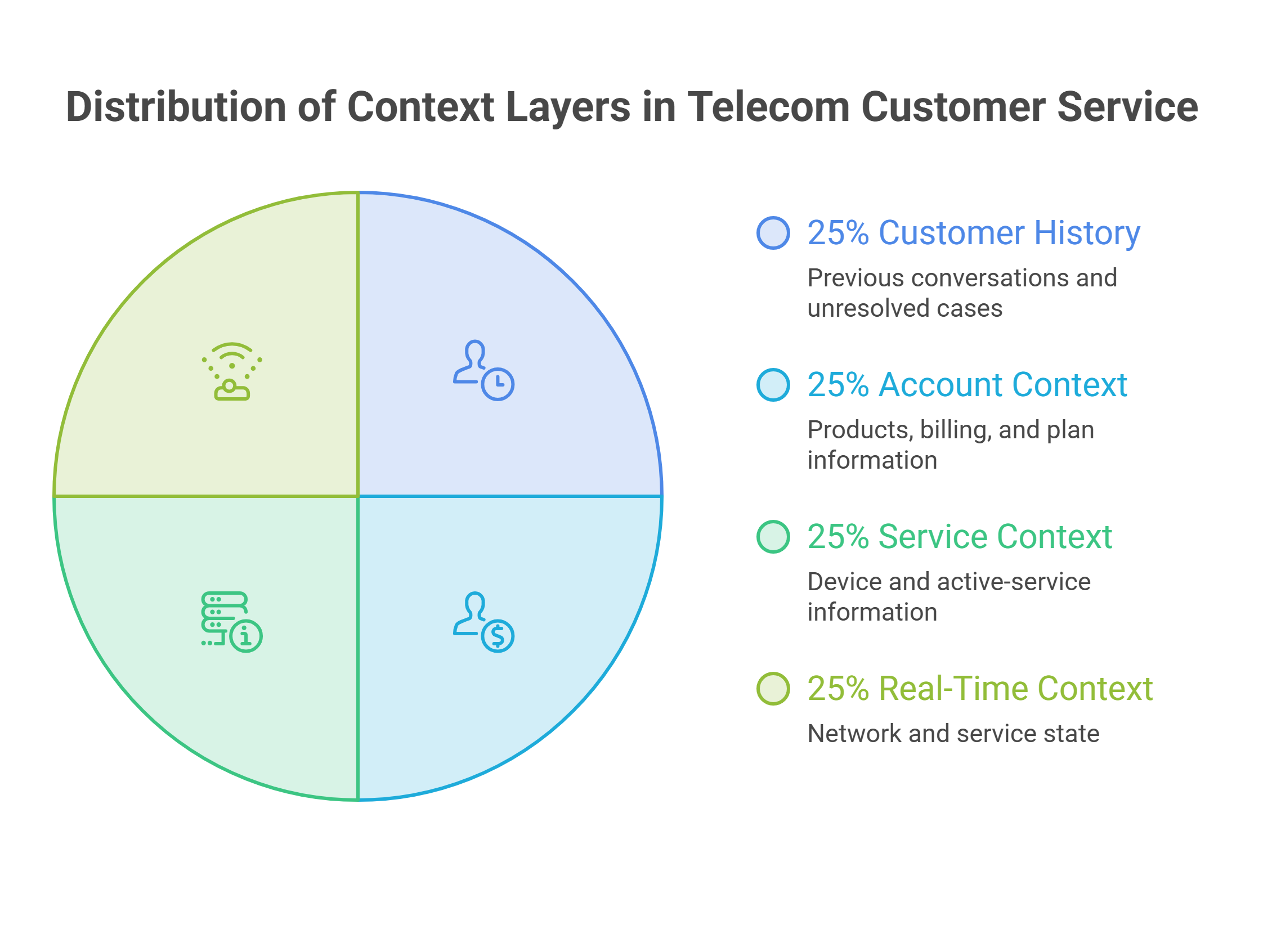

Key Takeaway: Personalised telecom support increasingly depends on combining customer history with account, service and real-time operational context rather than relying on static customer profiles alone.
Context is Becoming Central to Telecom Customer Care
Telecom personalisation is moving beyond static customer profiles toward systems that can understand the circumstances surrounding each interaction. Combining customer history with account, service and real-time network information can help AI distinguish between routine enquiries and issues that require a more specific response.
This makes context aware telecom AI increasingly relevant as operators connect customer-service platforms with broader operational data. The value comes from giving AI access to the information needed to understand the situation, while maintaining clear controls over what data can be accessed and how it can be used.
As these integrations develop, context aware telecom AI could make customer interactions more continuous, relevant and responsive. The next step will be extending this contextual understanding into proactive service, where network intelligence can help identify and address customer issues before they become direct support requests.