
















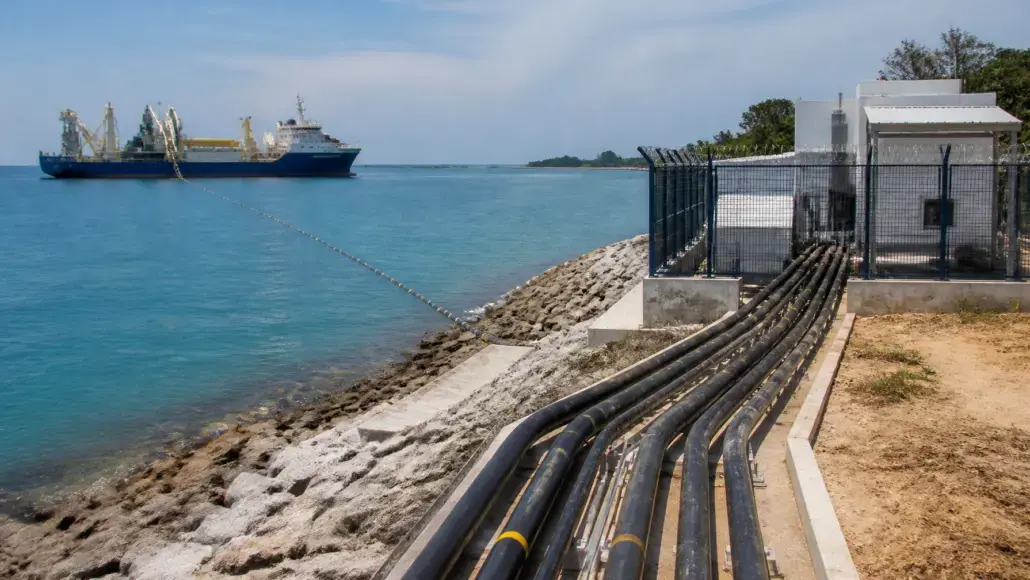

XLSMART has reached a significant construction milestone on its CANDLE subsea cable network, completing the landing of the Golden Buoy at Tanjung Bemban in Batam, Indonesia, on September 11, 2026. The achievement represents measurable progress for the approximately 8,000-kilometer submarine cable system that has been under active development since December 2024 and is now advancing through its physical build-out phase.
The CANDLE project is designed as a large-scale fibre-optic connectivity system planned to link Indonesia, Singapore, Malaysia, the Philippines, Taiwan and Japan. Once commercially operational, the subsea cable network is targeted to provide an additional route for regional data traffic and significantly expand international connectivity capacity across some of Asia’s fastest-growing digital economies.
Golden Buoy Landing Positions Batam as a Key Connectivity Hub
The selection of Tanjung Bemban in Batam as a landing site holds particular strategic relevance for the broader project. Batam’s geographic proximity to Singapore positions it as a valuable international connectivity point, capable of serving as a gateway for submarine cable traffic flowing between Southeast Asia and Northeast Asia. The successful Golden Buoy landing represents a visible and concrete step forward in the physical construction of the telecom infrastructure required to bring the CANDLE system closer to its operational target.
XLSMART is not developing the project in isolation. The subsea cable network is being built through a consortium that includes Meta, Globe Telecom, Telekom Malaysia, SoftBank and IPS Inc. NEC has been appointed as the system technology provider, contributing its established expertise in submarine cable engineering and deployment. This multi-partner approach reflects the considerable scale and complexity involved in deploying fibre-optic connectivity across multiple national jurisdictions and thousands of kilometers of ocean floor, requiring coordination across regulatory, technical and logistical domains.
Project Timeline and the Forces Driving Regional Demand
The CANDLE system is targeted to become commercially operational in 2028. Regulatory and permitting processes across the countries along the cable route remain part of the ongoing project development, with each jurisdiction presenting its own requirements. The full 8,000-kilometer subsea cable network is not yet complete, and substantial construction work continues across multiple planned segments of the route.
The project’s development aligns with intensifying demand for international connectivity driven by the rapid expansion of cloud computing services, data centre deployments and artificial intelligence workloads across Asia. These demand drivers are placing increasing pressure on existing submarine cable routes, making additional telecom infrastructure a priority for network operators and hyperscale technology companies operating throughout the region.
The CANDLE subsea cable network, once operational, would add meaningful fibre-optic connectivity capacity to the growing web of submarine cable systems connecting Southeast Asia with key markets in Northeast Asia. The consortium’s progression from initial project development in late 2024 to physical construction milestones in 2026 suggests the effort is advancing toward its stated commercial timeline, though considerable engineering and construction work remains before the full system enters service.