


















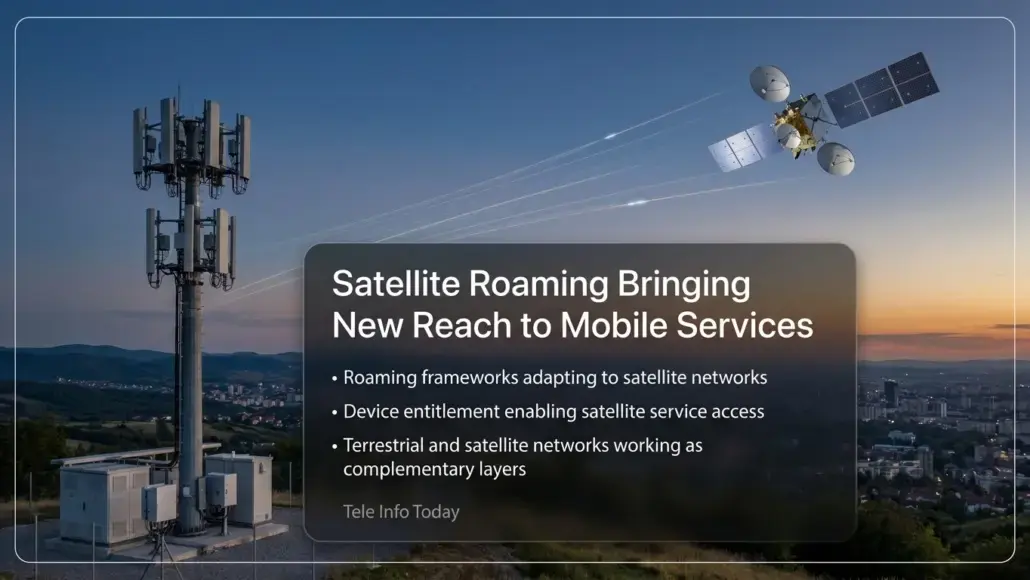

Satellite roaming is becoming part of the framework for extending mobile services beyond terrestrial coverage. The approach is moving from simple satellite partnerships toward arrangements in which an existing mobile subscriber can access an eligible non-terrestrial network (NTN) when a terrestrial connection is unavailable. For operators, this creates another access layer that can complement cellular networks without requiring customers to establish an entirely separate connectivity relationship.
The Global System for Mobile Communications (GSM) Association (GSMA) is adapting established roaming processes to accommodate satellite and space-based networks. Its Permanent Reference Document (PRD) IR.21, formally the International Roaming Industry Specification Number 21, provides a framework for exchanging network and roaming information between operators. The complementary Roaming Agreement Exchange (RAEX) system standardises the electronic exchange of this information, with recent updates introducing more specific classifications for satellite and space-based networks.
- Satellite networks are being incorporated into established mobile roaming frameworks.
- New classifications can distinguish satellite and space-based networks from conventional visited networks.
- Roaming frameworks are beginning to account for different forms of network participation.
- The mobile operator can remain central to the subscriber relationship.
Roaming Frameworks Adapting to Satellite Networks
The development of satellite roaming involves more than allowing a device to establish a connection with a satellite. Operators need mechanisms for identifying participating networks, exchanging technical and operational information, managing subscriber access and determining which services a device is entitled to use. Recent GSMA framework updates include a dedicated satellite and space-based network classification, while also accounting for inbound-only roaming operators. These changes indicate that established mobile roaming infrastructure is being adapted for a more diverse set of network providers.
- Network identification needs to account for satellite and space-based networks.
- Roaming data must support relationships between different types of network operators.
- Device entitlement can determine whether compatible equipment is authorised to access NTN services.
- Charging, settlement and commercial agreements remain important parts of the roaming model.
For subscribers, the objective is ultimately a simpler experience: when terrestrial coverage disappears, an eligible device can obtain service through a satellite network while remaining connected to its existing mobile service relationship. That transition still depends on regulation, agreements, device compatibility and network integration, but satellite roaming is becoming an important part of the infrastructure needed to make this model possible.
Roaming Data Bringing Satellite Networks into Mobile Systems
The development of satellite roaming is requiring established mobile roaming processes to accommodate a wider range of network types. The Global System for Mobile Communications (GSM) Association (GSMA) has updated its International Roaming Industry Specification Number 21 (IR.21) and Roaming Agreement Exchange (RAEX) framework to include satellite and space-based networks more explicitly. This gives operators a more structured way to exchange information about networks that may participate in roaming arrangements.
- Satellite and space-based networks can now be identified more specifically within roaming information.
- The framework includes a dedicated “Satellite/Space” network classification.
- Coverage information can be represented using a “Global” option where applicable.
- The updated approach also accounts for inbound-only roaming operators.
Device Entitlement Supporting Access Across Network Types
For satellite roaming to work from the subscriber’s perspective, network-side roaming arrangements need to be matched by device-side authorisation. An eligible handset must be able to identify and access an approved non-terrestrial network while retaining the appropriate relationship with its home mobile operator. GSMA’s work on device entitlement provides mechanisms for identifying non-terrestrial networks and determining whether a device is authorised to use their services.
- Entitlement systems can help determine whether a device is eligible for satellite connectivity.
- Network identification can help devices distinguish satellite access from terrestrial mobile networks.
- Standardised application programming interfaces (APIs) can support communication between devices and entitlement systems.
- Operator-controlled service policies can determine when and how satellite access becomes available.
Commercial Roaming Extending Beyond Network Authentication
The technical ability to recognise a satellite network is only one part of satellite roaming. Operators also need commercial and operational arrangements covering service access, charging, settlement and network coordination. This makes satellite roaming a broader interoperability process involving mobile operators, satellite providers and supporting roaming platforms. The long-term objective is to make satellite access function more like an additional network option within the mobile ecosystem, while still maintaining the commercial and regulatory controls associated with roaming.
- Roaming agreements need to define responsibilities between participating networks.
- Charging and settlement mechanisms must reflect the services delivered through satellite access.
- Network information needs to remain consistent as satellite coverage and participating providers change.
- Interoperability can reduce friction as more satellite and terrestrial networks enter the roaming ecosystem.
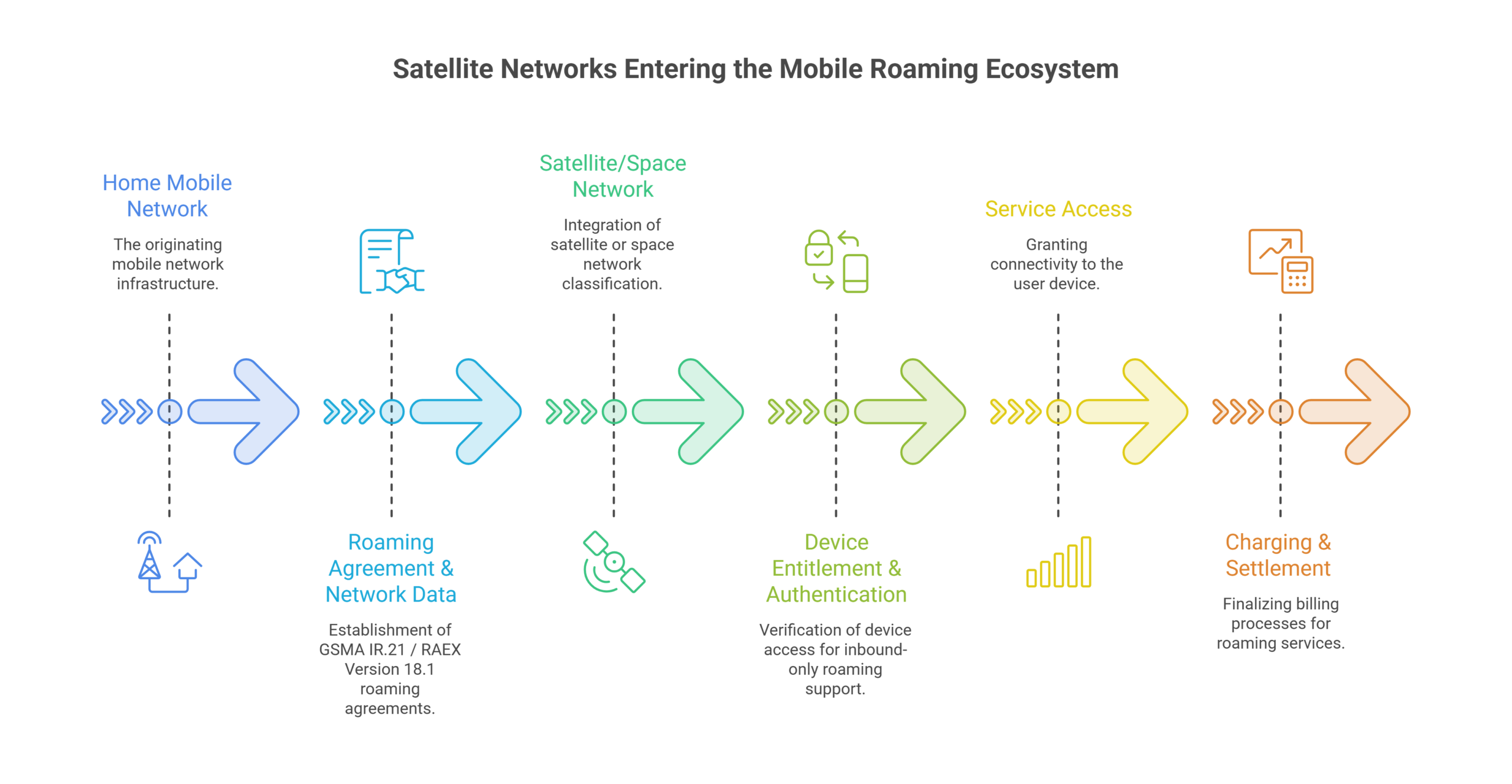
The process shows how satellite networks are being incorporated into the operational, technical and commercial structures that support mobile roaming.
As these frameworks mature, the next challenge is enabling connected devices switching between terrestrial and satellite networks.
Satellite Roaming Moving Toward Seamless Network Access
Satellite roaming is moving beyond the concept of satellite connectivity as a standalone service toward a model in which satellite networks can become another access option within the mobile ecosystem. Updates to roaming frameworks, device entitlement processes and network identification are helping establish the infrastructure needed for operators to manage satellite access alongside terrestrial networks.
The model is not yet universal. Regulatory approvals, network agreements, device compatibility, spectrum arrangements, satellite capacity and commercial settlement will determine how widely these services can be offered. The near-term direction is therefore less about replacing terrestrial networks and more about giving subscribers another connectivity layer when conventional coverage is unavailable.
The expansion of satellite access to a wider range of endpoints will determine how this model develops next: connected devices switching between terrestrial and satellite networks.
References
- GSMA – Keeping Devices Connected Wherever They Go – 2026
- GSMA – Taking Entitlement Into the Skies – 2026
- GSMA – Combining Satellite and Cellular Connectivity – 2026