





















The history of media is a story of constant technological evolution, from the first radio broadcasts and black-and-white television to the current era of 4K streaming and social media. However, the upcoming transition to the sixth generation of wireless technology represents a paradigm shift that will fundamentally alter the way we create, distribute, and consume content. The emergence of broadcasting media tech 6G era promises to bridge the final gap between the screen and the viewer, enabling a world of “sensory” media where sight, sound, and touch are combined into a single, immersive experience. This is not just about a clearer picture; it is about a new dimension of storytelling that will redefine the relationship between the creator and the audience, turning passive consumption into active participation.
The Architecture of Immersive Streaming and Volumetric Video
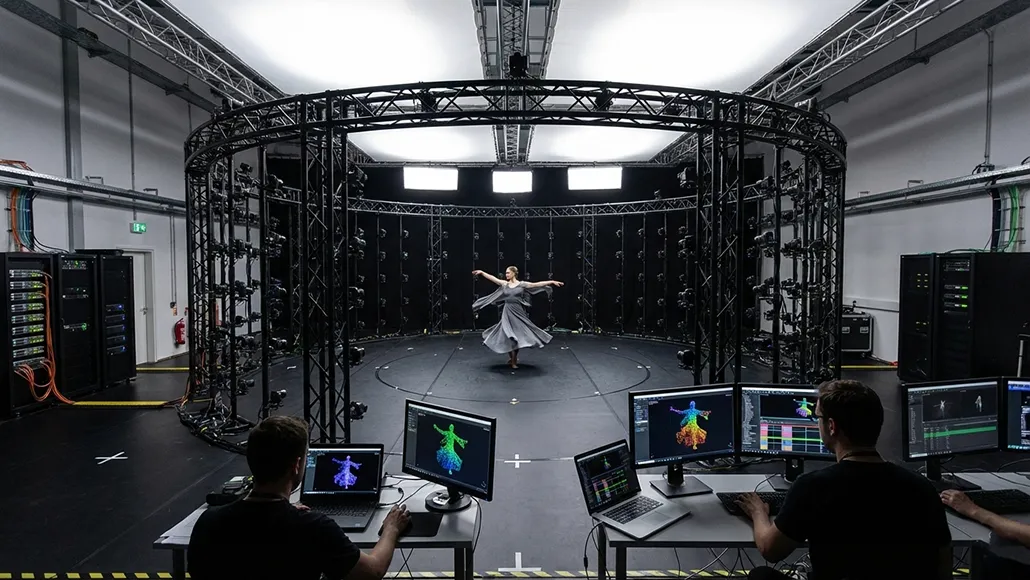
The defining characteristic of broadcasting media tech 6G era is the move toward fully immersive content. While 4K and 8K video provide incredible detail, they are still two-dimensional projections. 6G will enable “volumetric video” content that is recorded in three dimensions and can be viewed from any angle. Imagine watching a football match where you can virtually walk onto the field and stand next to the quarterback, or a concert where you can fly through the crowd. This requires a massive leap in data throughput, far beyond the capabilities of 5G. 6G, with its potential for Terabit-per-second speeds, will allow these massive 3D data files to be streamed in real-time to holographic displays or advanced AR/VR headsets, providing a level of realism that is currently only possible in the highest-end film production studios.
AI Content Production and the Automation of Creativity
At the same time that the delivery of content is being revolutionized, the production of content is undergoing its own AI-driven transformation. In the broadcasting media tech 6G era, artificial intelligence will be integrated into every stage of the creative process. AI production tools will be able to handle the labor-intensive tasks of video editing, color grading, and even character animation, allowing creators to focus on the high-level vision. Furthermore, AI can generate “personalized” versions of a broadcast in real-time. For a global sporting event, the AI could automatically generate commentary in dozens of languages, adjust the camera angles based on individual viewer preferences, and even insert targeted advertisements that are seamless parts of the virtual environment. This level of AI content production ensures that media is more relevant, engaging, and accessible than ever before.
Edge Content Delivery and the End of Buffering
To support the massive data requirements of immersive media, the distribution network must be completely redesigned. The traditional model of a few central data centers serving a global audience is no longer viable. Broadcasting media tech 6G era will rely on edge content delivery, where the processing and storage of media are moved to the extreme edge of the network often within the same neighborhood or even the same building as the viewer. By caching content closer to the user and utilizing the “intelligent reflecting surfaces” of 6G architecture, broadcasters can ensure that even the most complex 3D streams are delivered with near-zero latency. This means an end to buffering and a level of responsiveness that allows for true “interactive” broadcasting, where the viewer’s actions can influence the live stream in real-time.
Next Generation Broadcasting and the Rise of Holographic Displays
One of the most anticipated breakthroughs of the 6G era is the perfection of holographic display technology. For decades, holograms have been a staple of science fiction, but the technical requirements for realistic, mid-air 3D images have remained elusive. Broadcasting media tech 6G era provides the missing pieces of the puzzle: the bandwidth to transmit the data and the low latency to synchronize it. In this future, the “screen” as we know it may disappear entirely, replaced by volumetric displays that project 3D images into the center of a room. This will revolutionize everything from news broadcasting where a reporter could appear to be standing in your living room to education, where students can interact with 3D models of historical artifacts or scientific phenomena as if they were physically present.
Digital Media Innovation and the Convergence of Gaming and Media
The 6G era will witness the final convergence of the gaming and broadcasting industries. We are moving toward a world of “persistent virtual environments” where a live broadcast and a multiplayer game are one and the same. For example, a popular science fiction series could be broadcast as a live event within a virtual world, with millions of viewers participating as characters in the story. This level of digital media innovation requires a network that can handle both the high-bandwidth requirements of 8K video and the low-latency requirements of interactive gaming simultaneously. 6G is the only technology capable of providing this “dual-use” connectivity, enabling a new genre of interactive entertainment that is part-movie, part-game, and entirely immersive.
The Role of 6G in Live Events and Remote Production
The logistics of live broadcasting from awards shows to political conventions are notoriously complex and expensive. Broadcasting media tech 6G era will simplify these operations through “remote production.” With the high-speed and ultra-reliable connectivity of 6G, the dozens of cameras and microphones at a stadium can send their raw signals directly back to a central production hub thousands of miles away. This eliminates the need for massive “outside broadcast” (OB) vans and allows a single production team to manage multiple events simultaneously. This efficiency not only reduces costs but also significantly lowers the carbon footprint of the media industry, as there is less need to transport equipment and personnel around the world for every event.
Addressing the Challenges of Privacy and Content Integrity
As media becomes more immersive and AI-driven, the challenges of privacy and content integrity become more urgent. In the broadcasting media tech 6G era, the ability to create “deepfakes” hyper-realistic but entirely fake videos will reach a point where it is almost impossible for the human eye to detect the difference. This makes the verification of content a critical component of next generation broadcasting. Blockchain technology may play a key role here, providing a transparent and immutable record of a video’s origin and any edits that have been made to it. Furthermore, as the network becomes aware of the viewer’s physical environment and emotional state to optimize the immersive experience, protecting the privacy of this personal data must be the highest priority for the media industry.
Building the 6G-Ready Media Organization
The transition to the 6G era will be a period of intense competition and creative disruption. The media organizations that succeed will be those that view themselves as technology companies as much as storytellers. This requires a commitment to investing in 6G media technology and upskilling the workforce to work with AI production tools and 3D design software. The future of media is not just about what we see on a screen, but about the total sensory experience that a broadcaster can provide. By embracing the possibilities of the 6G era, the media industry can create a new world of wonder and information that is more inclusive, more interactive, and more impactful than anything we have seen before.
Key Takeaways:
- 6G technology will enable a move from 2D video to fully immersive, volumetric content that can be streamed instantly, bridging the final gap between the digital and physical worlds.
- The integration of AI into every stage of the production process will democratize creativity and allow for a level of personalized content delivery that was previously unimaginable.
- Edge delivery and holographic displays will redefine the physical experience of media, turning traditional broadcasting into a seamless, interactive sensory journey.