



















Tuesday, September 29, 2026

Full Fibre Adoption Moving Beyond Coverage Toward Take Up

Note* - All images used are for editorial and illustrative purposes only and may not originate from the original news provider or associated company.

Related stories

Optical Sensing Expanding Fibre Networks Beyond Connectivity

Fibre networks are increasingly being considered for functions beyond...

Network Route Diversity Becoming Central to Fibre Resilience

As fibre becomes more central to broadband, cloud and...

Fibre Network Upgrades Bringing Greater Focus to Efficiency

The expansion of fibre infrastructure is bringing a new...

The fixed broadband industry is entering a more mature phase as full fibre adoption becomes increasingly important alongside network coverage. In many established markets, operators have already made substantial progress in extending fibre to homes and businesses, shifting the commercial question from where fibre can be deployed to how effectively available connections are converted into active subscriptions. The distinction matters because a network can pass a large share of premises without achieving the same level of customer migration. This is creating greater emphasis on adoption, utilisation and the commercial performance of infrastructure that has already been built.

European data illustrates the gap. The FTTH Council Europe reported approximately 295 million homes passed by FTTH or FTTB networks across EU39 in September 2025, representing around 79% household coverage. At the same time, the region had approximately 160 million subscribers and an average take up rate of about 54%. These figures show that availability and active usage are developing at different speeds. The result is a shift in focus for operators, with full fibre adoption becoming increasingly relevant to decisions about customer migration, service positioning and network utilisation.

The UK provides another indication of this transition. Ofcom reported that full fibre was available to 82% of UK homes by January 2026, while full fibre connections across residential and commercial premises reached 12.4 million. Ofcom also identifies factors such as customer awareness and existing broadband contracts as reasons adoption can lag behind availability. This means that full fibre adoption depends on more than physical network reach. Retail offers, migration timing, customer communications and competing network choices can all influence how quickly available fibre capacity becomes active service.

As markets move deeper into this adoption phase, operators are also considering how to make better use of fibre infrastructure already in place, particularly where overlapping networks or slower migration leave capacity underused.
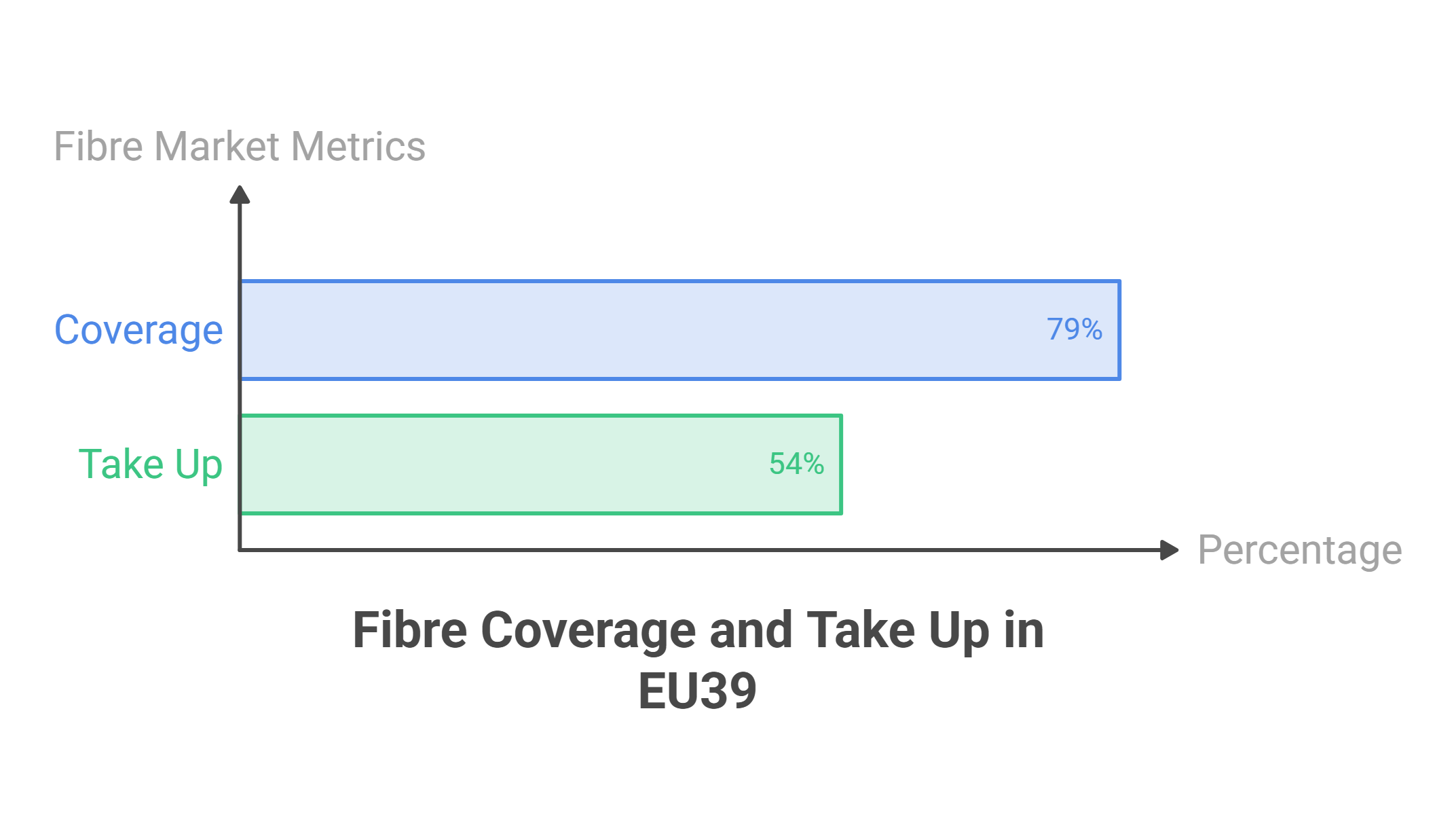
Key Takeaway: Fibre availability is ahead of active adoption across European markets, increasing the importance of customer conversion and network utilisation as deployment matures.

Customer Migration Becoming Central to Fibre Network Economics

Once fibre is available, operators face a different set of challenges from those associated with network construction. Full fibre adoption depends on whether customers move from existing broadband services to fibre connections, making retail migration and service activation increasingly important to the economics of completed networks. Existing contracts can delay switching, while customers may also require clearer information about service differences, installation requirements and pricing before moving. In markets with competing fibre networks, operators must also compete for customers across infrastructure that may already pass the same premises.

This creates a closer relationship between network investment and customer acquisition. The FTTH Council Europe has identified a growing emphasis on network utilisation and monetisation as fibre markets mature, reflecting the need to generate active subscriptions from infrastructure that has already been deployed. A network with extensive coverage but relatively lower take up can leave part of its potential capacity unused, affecting the pace at which operators can recover deployment costs. Full fibre adoption therefore becomes a commercial measure alongside coverage, particularly in markets where construction has progressed significantly.

The United Kingdom illustrates how customer behaviour can influence the timing of migration. Ofcom has identified customer awareness and existing broadband contracts among the factors that can delay take up after full fibre becomes available. This means operators may need to coordinate network readiness with retail campaigns, service upgrades and installation capacity rather than assuming that availability will automatically result in migration. The process can be further complicated where households have several competing connectivity options.

Competitive conditions also influence how effectively fibre assets are utilised. Overlapping networks can give customers more choice, but they can also mean that individual networks serve only part of the premises they pass. The relationship between coverage, take up and network overlap therefore becomes important when operators assess the performance of their installed infrastructure. Full fibre adoption can also support the later retirement of legacy access networks by increasing the number of customers that have already migrated to fibre, reducing the remaining base that needs to be transferred before older infrastructure can be withdrawn.

For operators, this changes the role of deployment metrics. Homes passed remains important for measuring network reach, but active subscriptions provide a clearer indication of how much of the available infrastructure is being used. The transition from coverage to adoption therefore brings sales, customer management, wholesale relationships and service migration closer to the centre of fixed-network planning.

Fibre Adoption Becoming a Measure of Network Utilisation

The growing emphasis on full fibre adoption reflects a broader change in how mature broadband markets assess network progress. Coverage remains essential, but the commercial value of fibre increasingly depends on converting available infrastructure into active connections and sustained network usage. Customer migration can be influenced by contracts, pricing, awareness, installation requirements and competing networks, meaning availability alone does not determine adoption.

As fibre coverage expands, operators therefore need to balance continued deployment with efforts to increase utilisation of the networks already built. This also creates a link between customer migration and the eventual retirement of legacy infrastructure, as higher fibre adoption can reduce the number of services remaining on older networks. The shift from measuring homes passed toward measuring active connections does not eliminate the importance of rollout, but it adds a new dimension to how the progress and economics of fibre investment are assessed.

Tele Info Today brings together the global telecoms industry โ€” from network operators and connectivity providers to technology innovators and digital services leaders โ€” through trusted editorial, market intelligence, and digital engagement.

Our 2026 Media Pack offers integrated solutions to reach your audience:

  • Magazine & Digital Editions Showcase your brand within premium telecoms industry coverage read by executives and decision-makers worldwide.
  • Industry Insights & Reports Align with data-driven analysis, trend reports, and regional roundups across the global telecommunications and digital services value chain.
  • Brand Authority & Credibility Position your company as a thought leader through expert commentary, interviews, and special features.

Subscribe

- Never miss a story with notifications

- Gain full access to our premium content

- Browse free from any location or device.

Media Packs

Expand Your Reach With Our Customized Solutions Empowering Your Campaigns To Maximize Your Reach & Drive Real Results!

โ€“ Access the Media Pack Now

โ€“ Book a Conference Call

โ€“ Leave Message for Us to Get Back

Latest stories

Related stories

Optical Sensing Expanding Fibre Networks Beyond Connectivity

Fibre networks are increasingly being considered for functions beyond...

Network Route Diversity Becoming Central to Fibre Resilience

As fibre becomes more central to broadband, cloud and...

Fibre Network Upgrades Bringing Greater Focus to Efficiency

The expansion of fibre infrastructure is bringing a new...

Fibre Networks Expanding Their Role in AI Infrastructure

AI infrastructure is becoming increasingly distributed across data centres,...

Subscribe

- Never miss a story with notifications

- Gain full access to our premium content

- Browse free from any location or device.

Media Packs

Expand Your Reach With Our Customized Solutions Empowering Your Campaigns To Maximize Your Reach & Drive Real Results!

โ€“ Access the Media Pack Now

โ€“ Book a Conference Call

โ€“ Leave Message for Us to Get Back

Translate ยป