


















Close
SATEXPO 2026
Thursday, May 14, 2026
CIOE 2026

Small Cell Forum 5G Indoor Enterprise Use Cases to Enable the Industrial Internet of Things

Note* - All images used are for editorial and illustrative purposes only and may not originate from the original news provider or associated company.

Subscribe

- Never miss a story with notifications

- Gain full access to our premium content

- Browse free from any location or device.

Media Packs

Expand Your Reach With Our Customized Solutions Empowering Your Campaigns To Maximize Your Reach & Drive Real Results!

โ€“ Access the Media Pack Now

โ€“ Book a Conference Call

โ€“ Leave Message for Us to Get Back

Related stories

Photonics Packaging Advancing Telecom Device Efficiency

The evolution of high-speed telecommunications is increasingly dependent on the physical housing and interconnection of optical components. Advanced packaging techniques are now central to achieving the compact integration and thermal stability required for the next generation of global networks, ensuring that signal performance remains optimal as device density increases.

Smart Broadband Infrastructure Supporting Digital Expansion

The global demand for high-speed internet is no longer just about entertainment; it is a foundational requirement for economic growth and social inclusion. Smart broadband infrastructure provides the scalable and resilient foundation needed to support digital expansion, ensuring that modern telecom growth reaches every corner of the globe with faster and more reliable connectivity solutions.

Cloud and Edge Networks Accelerated by Optical Links

The synergy between centralized data centers and decentralized edge nodes is critical for the next wave of digital transformation. By utilizing high-capacity optical links, operators are achieving the ultra-low latency and massive data transfer speeds required to support real-time applications and seamless global connectivity across diverse industries.

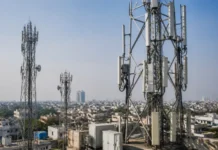
Small Cell Forum (SCF), the telecoms organization making mobile infrastructure solutions available to all, has published the commercial and technical realities of deploying dense indoor 5G networks, which will be essential to support varied requirements, in particular foƒr Industrial Internet of Things (IoT) networks. The paper details how a flexible network with ubiquitous coverage and low cost of deployment will be essential to fulfil the enterprise potential of 5G and drive new revenues for vertical industries and for their service providers – which may be mobile operators, neutral hosts or enterprise specialists.

As service providers contemplate not only the dizzying array of IoT use cases, but also the uncertainties at this early stage about business models and architecture choices, the SCF paper provides an invaluable starting point and a practical, business-focused blueprint to help members start on their IoT journey. It also helps stakeholders decide on their first priorities for addressing this new opportunity, and advocates a platform approach which will maximize the return on investment in IoT and enterprise small cells, and avoid technology or commercial dead ends.

The technical paper, 5G era IoT use cases and enterprise small cell (SCF 198), a three-part series addressing the three cornerstones of the 5G business model. Previously in the series focus on enhanced mobile broadband (mmw 5G-eMBB use cases and small cell based hyperdense networks, SCF 197) and ultra-reliable low latency communications (URLLC and slicing in 5G small cell networks, SCF 199). Together the papers make up a commercial and technical deployment map for dense 5G networks, covering the specific implications for small cells of the three main use case categories.

SCF198 is particularly focused on enterprise networks, particularly indoors, which will have to behave very differently from 3G or 4G systems if they are to support IoT applications effectively. These are challenging environments, involving huge numbers of devices, low power consumption, and a wide variety of network traffic patterns ranging from low bandwidth, low latency monitoring applications to machine-to-machine video.

“Small cells are the only way to support all the many connectivity requirements of different IoT services cost-effectively. They can be used to fill gaps and achieve true universal coverage, including indoors,” said David Orloff, Chair of Small Cell Forum. “Critically, they can provide hotspots of capacity where huge numbers of sensors and devices need to be supported in a small area, and their low power levels fit well with the low energy nature of many IoT use cases.”

Never miss a telecoms headline

The telecoms industry moves fast โ€” stay on top of it with our must-read briefings.

  • The top telecoms and technology stories, straight to your inbox
  • The biggest news, features, interviews, and analysis
  • Dedicated coverage of the key developments driving global telecoms and digital connectivity

Latest stories

Related stories

Photonics Packaging Advancing Telecom Device Efficiency

The evolution of high-speed telecommunications is increasingly dependent on the physical housing and interconnection of optical components. Advanced packaging techniques are now central to achieving the compact integration and thermal stability required for the next generation of global networks, ensuring that signal performance remains optimal as device density increases.

Smart Broadband Infrastructure Supporting Digital Expansion

The global demand for high-speed internet is no longer just about entertainment; it is a foundational requirement for economic growth and social inclusion. Smart broadband infrastructure provides the scalable and resilient foundation needed to support digital expansion, ensuring that modern telecom growth reaches every corner of the globe with faster and more reliable connectivity solutions.

Cloud and Edge Networks Accelerated by Optical Links

The synergy between centralized data centers and decentralized edge nodes is critical for the next wave of digital transformation. By utilizing high-capacity optical links, operators are achieving the ultra-low latency and massive data transfer speeds required to support real-time applications and seamless global connectivity across diverse industries.

High Speed Data Centers Leveraging Optical Interconnects

The rapid expansion of cloud computing and artificial intelligence has pushed traditional data center architectures to their physical limits. By replacing copper-based connections with high-performance optical interconnects, modern facilities are achieving the throughput and efficiency required to handle massive workloads while maintaining the scalability necessary for future enterprise IT growth.

Subscribe

- Never miss a story with notifications

- Gain full access to our premium content

- Browse free from any location or device.

Media Packs

Expand Your Reach With Our Customized Solutions Empowering Your Campaigns To Maximize Your Reach & Drive Real Results!

โ€“ Access the Media Pack Now

โ€“ Book a Conference Call

โ€“ Leave Message for Us to Get Back

Translate ยป