




















AST SpaceMobile has gone ahead and amassed billion dollars in revenue commitments, it has revealed in a week in which it simultaneously went ahead and shared the details of a raft of new operator customers related to the direct-to-cell offer, which is most likely slated for the commercial launch later in 2026.
Having spent the last couple of years talking up the capabilities related to its planned LEO satellite-based mobile broadband service, AST is now coming up with a major prospective customer base one of the reasons that it has billion dollars in revenue commitments. Operator partnerships as well as trials are now bound to happen in many European markets along with Asia and Africa as well as North America.
One of the latest customer announcements comes from Telus from Canada, which has inked a commercial agreement in order to launch its direct-to-device (D2D) service. As per the terms of the deal we do not have a valuation Telus is going to invest in ground-based satellite infra and is going to become an equity shareholder when it comes to AST SpaceMobile.
Starting late 2026, the customers from Telus are going to be able to make phone calls, send text messages, and make use of data through the satellite operator in some of the most remotely situated locations across Canada, remarked the company.
The fact is that the late 2026 date is important, as AST SpaceMobile has recently committed to bringing commercial services to market in 2026. But it’s worth noting that the Telus announcement does not necessarily notify if this is going to be a commercial launch or a trial launch. One will have to wait longer for this information, in addition to details on pricing, etc.
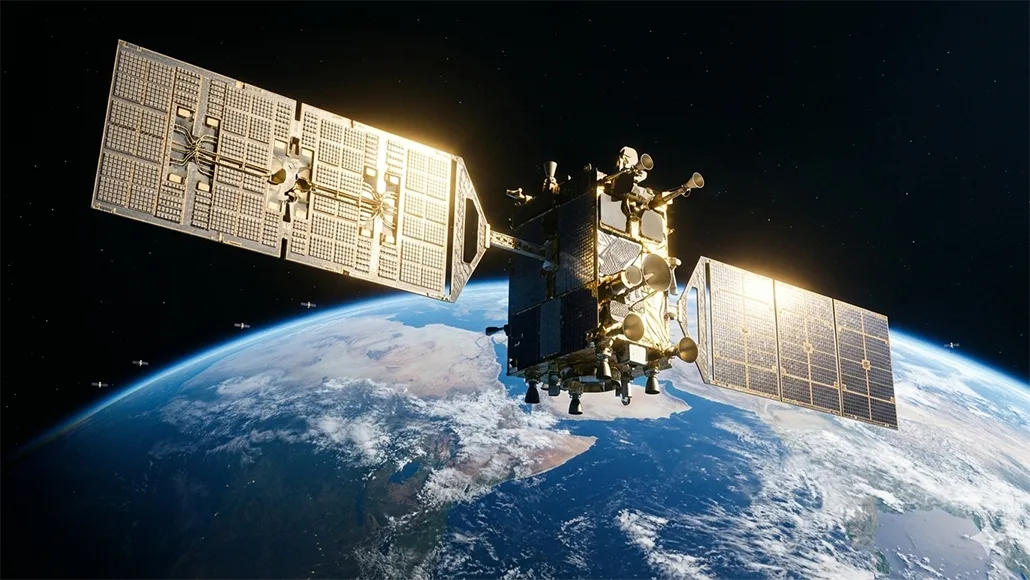
The commercial services pledge by AST SpaceMobile hinges in part on its capacity to get more satellites into orbit. It at present has just one second-generation satellite in space, which is called BlueBird 6, and as a matter of fact aimed to add BlueBird 7 into the product mix before February 2026, but it remains on the ground.
In its full-year results announcement that came to effect earlier, AST SpaceMobile went on to share that BlueBird 7 is at Cape Canaveral and is most likely going to launch sometime in March 2026. It also pushed its plan to launch somewhere between 45 and 60 satellites in 2026 alone.
BlueBird 8 to BlueBird 29 happen to be in various stages of production, it went on to add, noting that it has gone on to increase its manufacturing space via acquisition of a fourth site located in Texas. Apparently, none of this comes easy and cheap, so it does not come as a surprise that the 2025 balance sheet of AST SpaceMobile showcases hefty losses. The bottom line of the company came to $341.9 million in 2025, which was greater as compared to 2024 – a time when it was a shade over $300 million.
In the fourth quarter alone, its net loss amounted to $74 million, or 26 cents per share, which was more than double the $35.9 million figure that it reported in the year-earlier period and also behind the analysts’ anticipations; apparently Zacks had anticipated a loss of 18 cents.
Naturally, AST SpaceMobile was indeed bent toward focusing on the positives, underscoring its $3.9 billion in cash and cash equivalents on its balance sheet, along with its first-ever revenue-generation position. Reported revenue was at $70.9 million in 2025, driven by mobile network operator partners as well as the US government, said the company. That figure went on to beat the expectations from analysts.
Product revenue came from the delivery of 15 gateways across the world, it said, whereas the service revenue got generated by way of multiple contracts as well as use cases under development with the government. It anticipates increasing the revenue in 2026 ahead of the commercial services launch, on the back of a backlog of MNO partner revenue along with certain other government contract landmarks.
And more importantly, AST SpaceMobile remarked that it had secured more than $1.2 billion of the aggregate contracted revenue commitments when it comes to commercial partners. That figure happens to include a $175 million commitment that comes from the STC Group of Saudi Arabia, which inked a 10-year deal along with the satellite firm in November 2025, and also a $30 million contract with the US Space Development Agency when it comes to the use of its BlueBird constellation by the HALO Europa programme. And then there happen to be the telcos. For the majority, one doesn’t have the access to financial details of arrangements made by AST SpaceMobile along with mobile operators. However, what one does know is that the partnership announcements are coming fast.
The company started the Mobile World Congress with the news that it is going to be working with Orange and Telefonica in Spain, Germany, and Romania as well as certain other European markets through Satellite Connect Europe JV along with Vodafone. These happen to be collaboration announcements at this stage; however, they should lead to service launches as well.
In a similar way, Satellite Connect Europe went on to reveal that it has gone ahead and collaborated along with Sunrise in order to gauge how its open access D2D offer could as well go in sync with terrestrial 4G and 5G mobile networks of the Swiss telco.
And it also went on to disclose that it is going to start trials with CK Hutchison this year’s summer in both Austria and Italy, with a standpoint to launch the D2D services there, along with the telco groups’ operations based in Denmark and Ireland as well as Sweden, at a date that’s not specified.
Furthermore, Taiwan Mobile also went ahead and inked what it has termed as a Strategic Cooperation Memorandum along with AST SpaceMobile with a view to integrating the direct-to-cell into the portfolio. And Axian Telecom from Africa has also announced a D2D deal with the company at the Congress.
In order to use its own words, AST SpaceMobile also went ahead and progressed initiatives with Vodafone, which is another of the investors it has as well as its open access JV partner.
The news of trials with Vodafone 3 in the UK in the summer of 2026 was indeed widely anticipated; however, the company also went ahead and shared that it has come together with Vodafone in Romania, Ukraine as well as Ireland on a direct-to-device. Testing has already begun in Ireland, it remarked, with Vodafone having secured the first test and trial license in the country.
Satellite Connect Europe went on to say that it, Vodafone, along with other collaborating operators, is going to work with the EU in order to develop a harmonized European framework when it comes to satellite D2D, such as a simplified authorization process.
All this should indeed be music to the ears of the GSMA, which has also managed to have its say when it comes to D2D at MWC. It is well to be noted that the industry body went ahead and published a new position paper that was called ‘Regulatory Preparedness for Satellite Services,’ wherein it urged policymakers to go ahead and simplify the regulatory process while the LEO services happen to be in their infancy.
According to the Chief Regulatory Officer of the GSMA, John Giusti, “Establishing comparable requirements for mobile and satellite providers delivering similar services will help ensure consistent consumer protection, support sustainable long-term investment across communications networks, and safeguard national sovereignty – all while delivering greater value, quality, and trust for users.”
If the 2026 MWC is anything to go with, national regulators will have to get themselves rolling on if they have not already sorted out the D2D regs. Starlink has started making its mark across a number of markets, and it has also made news in Barcelona, and now AST SpaceMobile looks to be on the verge of indeed going ahead and taking the sector by storm.