





















The role of telecom in the enterprise market is changing. Connectivity remains the foundation for businesses, but enterprise customers are increasingly looking for services that support security, cloud, artificial intelligence, data management and wider digital operations. This is creating a broader opportunity for enterprise telecom, as operators move closer to the technology needs that sit around the network.
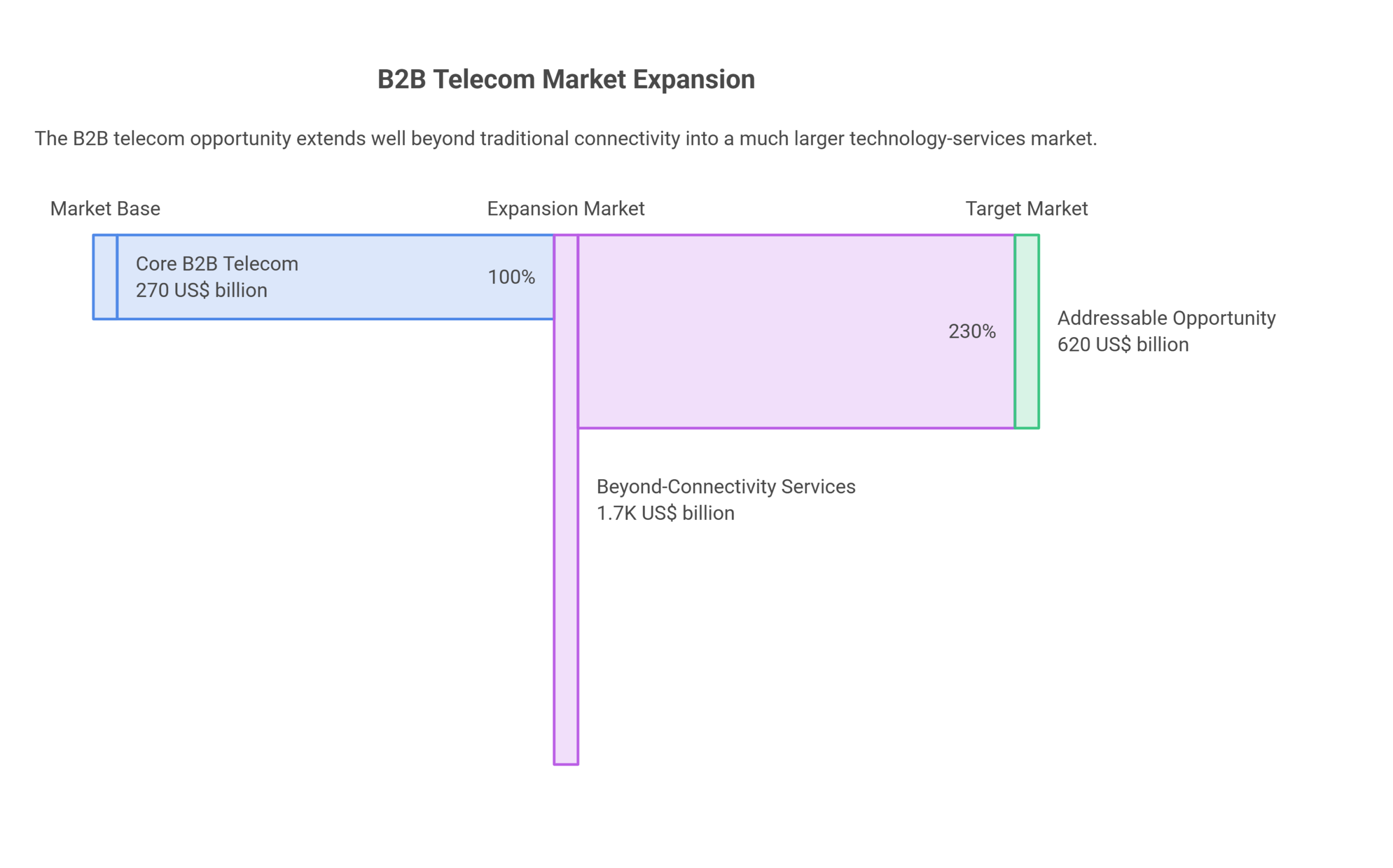
The size of that opportunity shows why the shift matters. Recent global industry analysis estimates the core B2B telecom market at around US$270 billion in 2026, while the broader technology-services market beyond connectivity is expected to exceed US$1.7 trillion. Around US$620 billion of that wider market is estimated to be potentially addressable by telecom operators. For enterprise Telecom, this creates a much larger space for growth beyond traditional connectivity services.
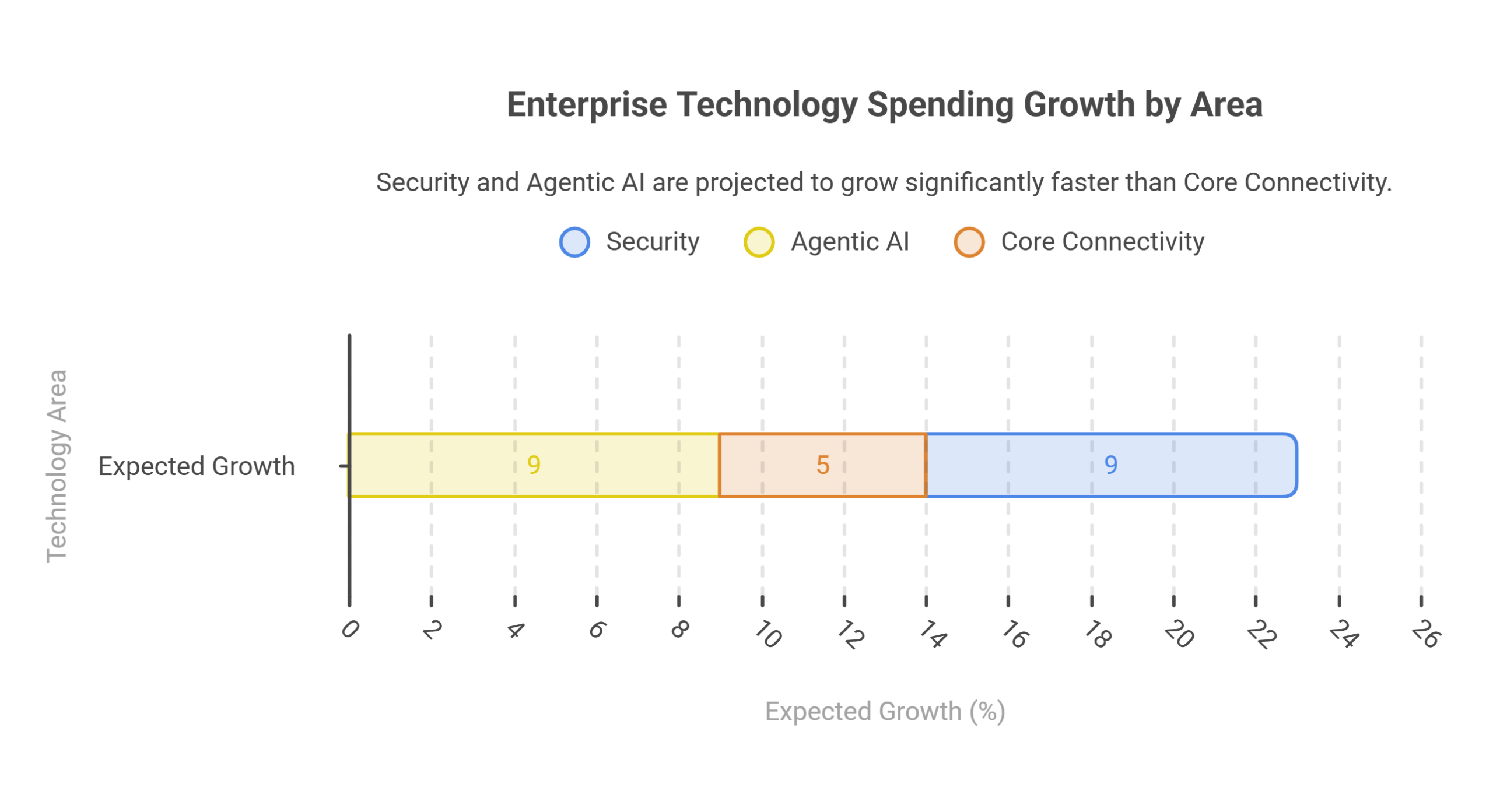
At the same time, enterprise technology spending continues to expand. Global research covering more than 3,000 enterprise decision-makers across 18 countries found that more than 60% of businesses plan to increase technology and telecommunications spending. Security and agentic AI are expected to grow by more than 9%, while core connectivity is expected to grow by less than 5%.
This does not mean connectivity is becoming less important. It means the value built around connectivity is increasing. Businesses are connecting cloud platforms, applications, devices, industrial systems and AI workloads through increasingly complex digital environments. As that happens, enterprise telecom is becoming less about providing a connection and more about helping businesses build, secure and manage the technology that depends on it.
Enterprise Spending Is Moving Beyond Core Connectivity
The change in enterprise telecom is becoming clearer in the way businesses are allocating technology budgets. Connectivity still supports almost every enterprise digital service, but faster-growing areas are increasingly being built around the network. Security and agentic AI are expected to see stronger spending growth than core connectivity, showing where enterprise technology priorities are moving.
Security has become particularly important as enterprise networks support more cloud platforms, connected devices, applications and critical business systems. A network that simply carries data is no longer enough for many organisations. Businesses also need stronger protection, identity controls, data management and resilience across the environments connected to that network.
AI is creating another layer of demand. Enterprises are moving from early experimentation toward wider use of AI across operations, customer services and decision-making. This creates opportunities for enterprise telecom providers that can combine network infrastructure with capabilities such as secure connectivity, cloud access, edge infrastructure and managed services.
The opportunity is therefore moving upward through the technology stack. The network remains central, but the commercial relationship is increasingly shaped by what telecom providers can build around it.
Enterprise Expectations Are Expanding the Role of Telecom Providers
The broader enterprise telecom opportunity is not only about adding new services. It is also about changing the role telecom providers play in the relationship with business customers. Recent global enterprise research shows that buyers increasingly see telecom operators as capable of supporting wider technology needs, moving beyond the traditional role of connectivity provider.
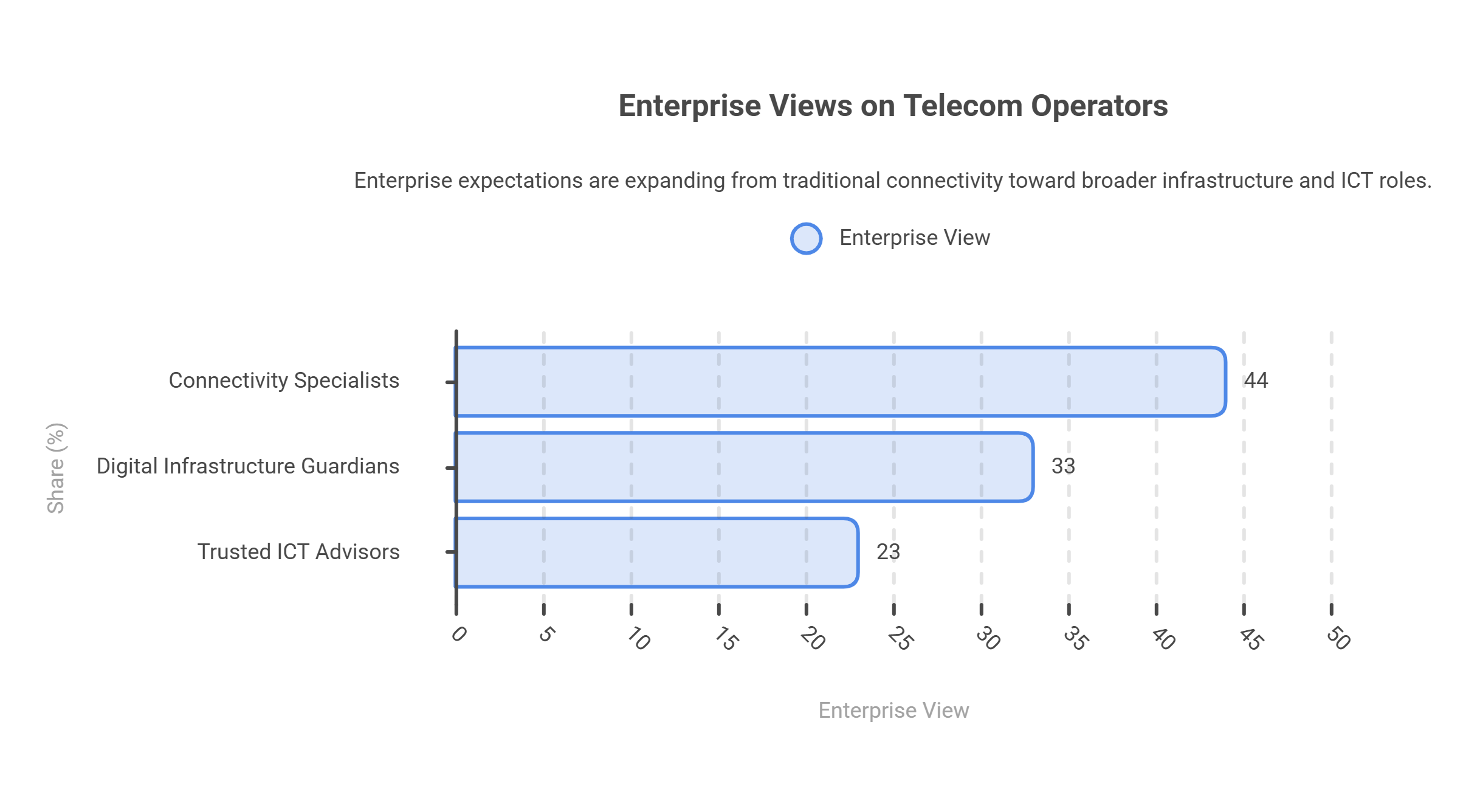
A global survey of 1,590 enterprises across 25 countries found that 44% of respondents still view telecom operators primarily as connectivity specialists. Another 33% see them as digital infrastructure guardians, while 23% already view them as trusted ICT advisors. Together, that suggests a sizeable share of enterprise buyers are already open to a broader role for telecom providers.
That broader role also changes what customers expect from their suppliers. Businesses are looking for providers that understand their technology priorities, offer stronger support after deployment and provide access to expertise when requirements become more complex. For enterprise telecom, the ability to build a strong customer relationship can therefore become as important as the individual service being sold.
Enterprise Buyers Want More Support Around the Technology They Already Use
Recent enterprise research found that 53% of businesses want higher-quality after-sales experiences, while 51% want better access to technology experts and partners. Another 43% want suppliers to better understand their business and technology priorities, and the same share want more agile interactions with vendor sales teams.
These expectations point to a broader change in B2B telecom buying. Businesses are not only comparing network performance or connectivity prices. They are also looking at how easily a provider can understand their requirements, integrate with their existing environment and support the service after deployment.
That shift is particularly relevant as enterprise networks become more connected to cloud platforms, AI workloads, security systems and other digital infrastructure. A telecom provider may have strong network capabilities, but converting those capabilities into a wider enterprise relationship requires simpler buying processes, stronger technical support and a clearer connection between the service and the customer’s business needs.
For enterprise telecom, that means growth will increasingly depend on the ability to combine connectivity with services, expertise and ongoing support. The opportunity is becoming broader, but so are the expectations that come with it.
What Enterprise Customers Want From Technology Suppliers
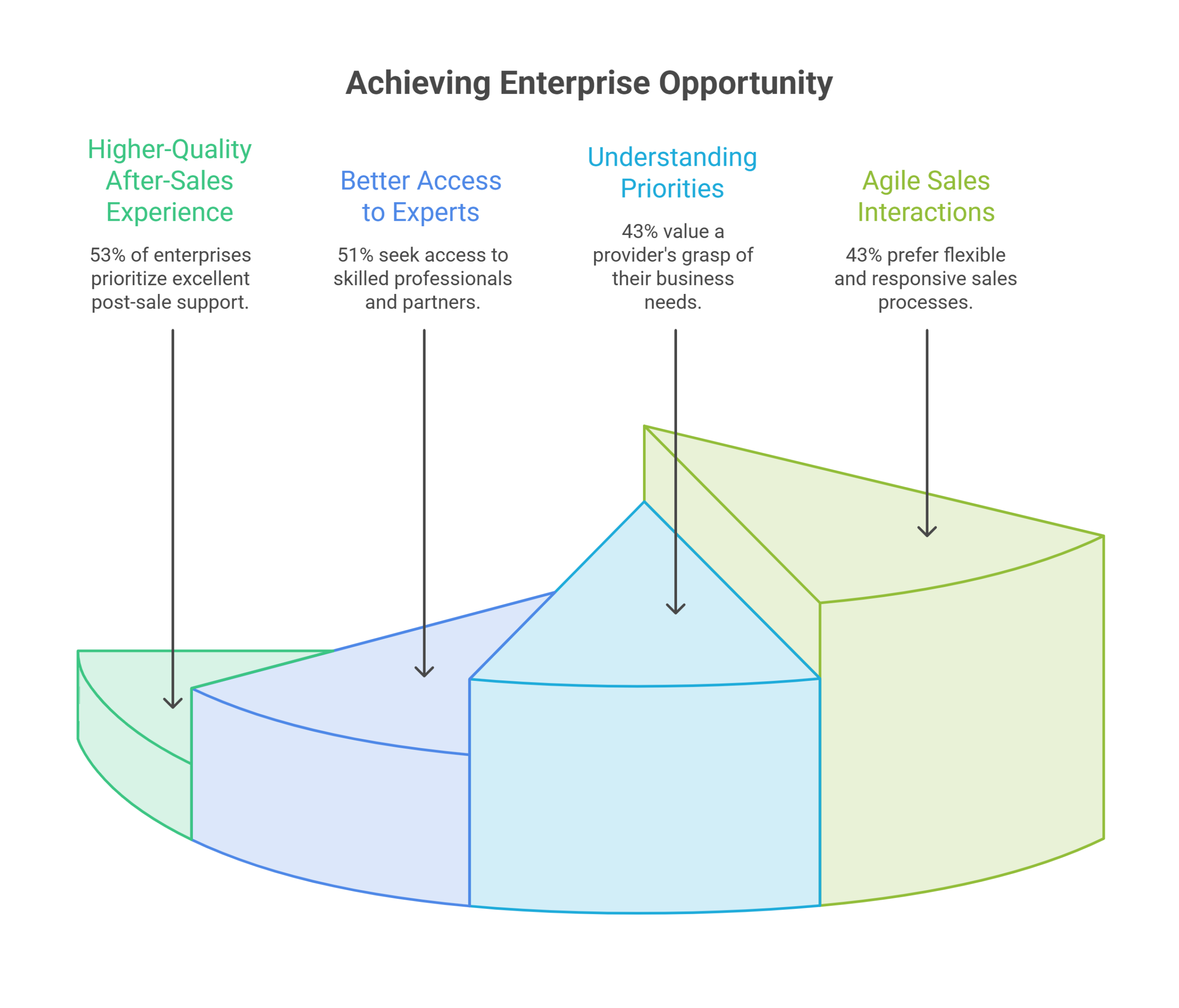
The next phase of enterprise telecom will therefore be shaped by more than network expansion. Security, cloud, AI, data governance and managed services are creating new areas of demand, but enterprise customers will expect those capabilities to be delivered as part of a simpler and more useful business relationship. The operators best positioned for this shift will be those that can connect their network strengths with the wider technology priorities of enterprise customers.
Conclusion
The role of enterprise telecom is expanding as businesses ask telecom providers to support more than connectivity. Security, cloud, AI, data management and managed services are creating new areas of demand, while enterprise customers are placing greater value on technical expertise, service quality and a stronger understanding of their business priorities.
Connectivity will remain the foundation. The opportunity is to build more value around it. For telecom providers, that means developing services that fit into wider enterprise technology environments and making those services easier for businesses to adopt, manage and scale.
The shift is already visible across enterprise spending and buyer expectations. The next phase of enterprise telecom will depend on how effectively providers can turn their network capabilities into broader technology solutions that deliver clear value for business customers.