


















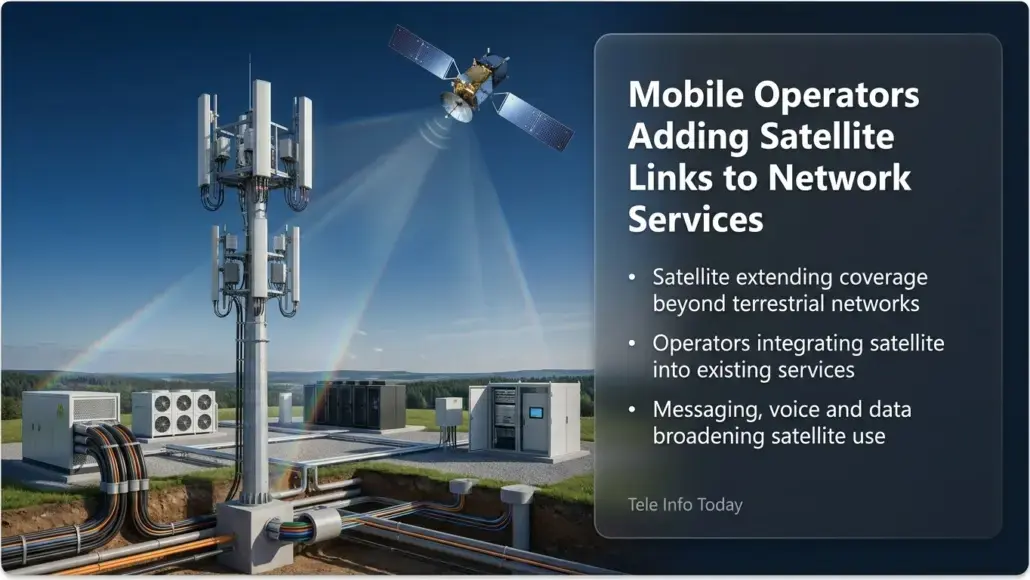

Mobile operators are increasingly incorporating satellite connectivity into their network strategies rather than treating it as a separate service layer. The approach positions satellite as a complement to terrestrial networks, helping extend coverage into areas where towers, fibre or other fixed infrastructure are difficult to deploy. This is shifting the operator role from simply partnering with satellite providers toward integrating satellite access into existing connectivity portfolios.
The growth of direct-to-device activity reflects that transition. Partnerships between operators and satellite companies are expanding across markets, while some operators have already introduced satellite messaging services and others are progressing through trials or planned deployments. The maturity of these services varies, but the direction is increasingly toward using satellite to address specific coverage gaps and strengthen network resilience.
- Satellite can extend connectivity beyond the practical reach of terrestrial infrastructure.
- Messaging and emergency communication are among the earliest commercial applications.
- Operators are progressing from trials and partnerships toward customer-facing services.
- Satellite is generally being positioned as a complementary layer rather than a replacement for terrestrial networks.
Satellite Moving into the Operator Service Portfolio
For mobile operators, the next stage involves integrating satellite capabilities more closely with existing network and customer systems. This can include mobile plans, subscriber management, device provisioning and service entitlements, allowing customers to access satellite connectivity through an operator relationship rather than through an entirely separate service. Orange, T-Mobile and other operators illustrate different stages of this development, from satellite messaging to broader direct-to-device service strategies.
- Satellite connectivity can become an additional feature within existing mobile service portfolios.
- Integration with operator infrastructure can create a more consistent customer experience.
- Voice and data services are developing alongside established messaging use cases.
- Enterprise and public-sector connectivity can expand the role of satellite beyond consumer services.
As mobile operators deepen their involvement, the focus is moving toward how satellite access can be managed alongside terrestrial connectivity as part of a broader network service. This creates a foundation for wider service integration, including roaming across satellite and mobile networks.
Integrating Satellite Access with Existing Mobile Networks
The expansion of mobile operators into satellite services increasingly depends on how closely the satellite layer can be connected with existing mobile infrastructure. Rather than creating a completely separate service environment, operators can link satellite access with their mobile core, subscriber management, device provisioning and service platforms. This allows satellite connectivity to fit more naturally into the systems already used to authenticate customers, manage plans and deliver network services.
- Mobile core integration can help coordinate satellite and terrestrial access within the same service environment.
- Subscriber and entitlement systems can determine when compatible devices can use satellite connectivity.
- SIM and eSIM capabilities can support service activation across different network access layers.
- Network management becomes important when devices move between terrestrial and satellite coverage.
Satellite Services Expanding Beyond Coverage Gaps
For mobile operators, satellite connectivity is also becoming relevant to the wider portfolio of services offered to customers and businesses. Initial deployments have largely focused on messaging and emergency communication, but developing direct-to-device capabilities could support broader voice and data applications. This creates opportunities to extend connectivity to remote locations while maintaining the operator as the primary service relationship.
- Consumer services can provide communication when terrestrial coverage is unavailable.
- Enterprise applications can use satellite connectivity for remote operations and business continuity.
- Public-sector and emergency use cases can benefit from an additional communications layer.
- Network resilience can improve when satellite access provides an alternative path during terrestrial disruptions.
The commercial models remain varied. Some mobile operators are launching satellite-enabled services, while others are still testing technologies or establishing partnerships. This difference reflects the varying availability of spectrum, compatible devices, satellite capacity and regulatory approvals across markets. As these services become more integrated with existing mobile offerings, satellite roaming across mobile services.
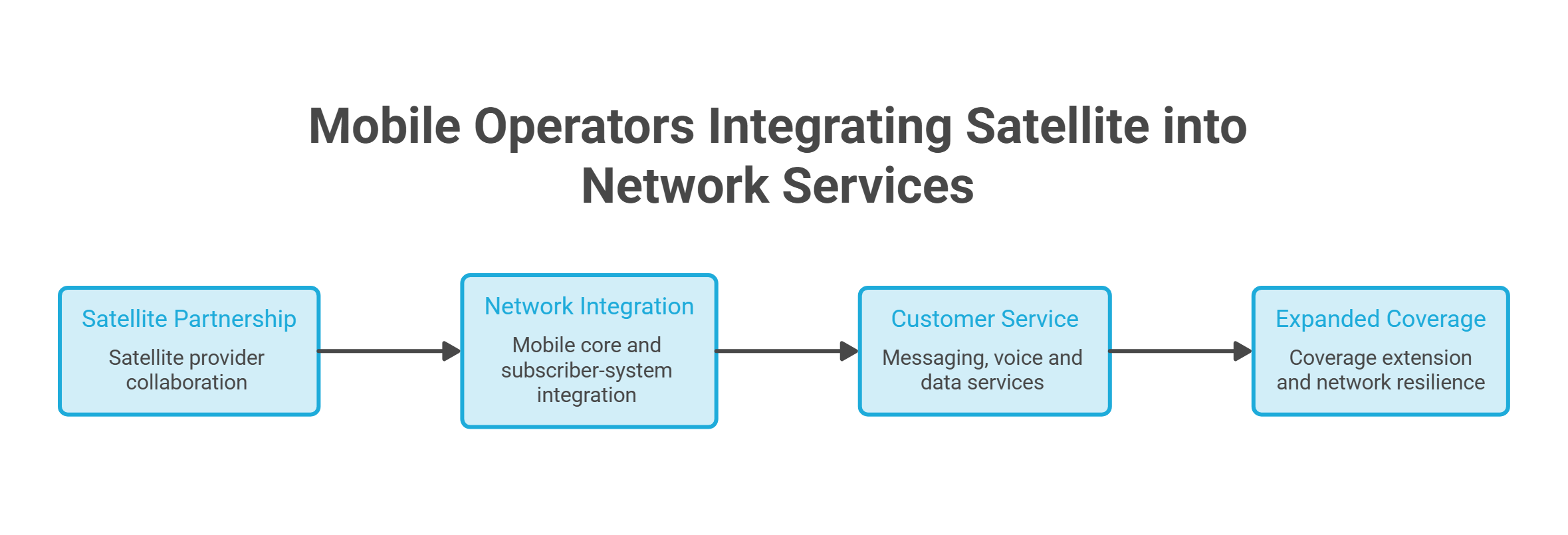
The progression illustrates how satellite connectivity is moving from external partnerships toward integration within the broader mobile service model.
Satellite Becoming Part of Mainstream Mobile Services
For mobile operators, satellite connectivity is moving from experimental partnerships toward a broader role within network service portfolios. The combination of direct-to-device technology, operator infrastructure and compatible devices can extend coverage while maintaining existing customer relationships and service systems. However, adoption will remain dependent on spectrum availability, regulation, satellite capacity, device support and the depth of integration with terrestrial networks.
The next stage will be less about simply adding satellite coverage and more about managing satellite and terrestrial access as connected parts of the same service environment.
References
- GSMA – Scaling Satellite Connectivity: Why Interoperability Matters for NTN’s Next Phase – 2026
- Global mobile Suppliers Association (GSA) – 5G Non-Terrestrial Networks (NTN) – 2026
- GSMA – Satellite Direct-to-Device (D2D) – 2026
- Orange – Direct-to-Device Satellite Connectivity Partnerships – 2026
- T-Mobile – T-Satellite – 2026