



















Close
SATEXPO 2026
Thursday, February 26, 2026
CABSAT 2026

Ericsson, Oppo launch joint 5G lab in China to drive innovation

Note* - All images used are for editorial and illustrative purposes only and may not originate from the original news provider or associated company.

Subscribe

- Never miss a story with notifications

- Gain full access to our premium content

- Browse free from any location or device.

Media Packs

Expand Your Reach With Our Customized Solutions Empowering Your Campaigns To Maximize Your Reach & Drive Real Results!

– Access the Media Pack Now

– Book a Conference Call

Leave Message for Us to Get Back

Related stories

Open RAN Architecture Transforming Telecom Markets

The telecommunications industry is currently undergoing a structural transition from proprietary, vendor-locked hardware to an open, software-defined ecosystem. By decoupling the hardware and software components of the radio access network, operators can foster a more competitive marketplace, accelerate the deployment of 5G infrastructure, and achieve a level of operational flexibility that is essential for the next generation of digital services.

5G Advanced Networks Accelerating Enterprise IoT

The evolution of 5G into its "Advanced" phase represents a critical milestone for industrial connectivity, offering the reliability and precision required for mission-critical operations. By combining dedicated private networks with edge computing and high-density sensor arrays, enterprises can create a seamless digital nervous system that drives the next wave of smart factory innovation and autonomous logistics.

6G Innovation Shaping Future Telecom Networks

The transition from the current 5G landscape to the nascent world of 6G represents a monumental shift in the fabric of global connectivity. By integrating artificial intelligence directly into the network architecture and exploring the untapped potential of the Terahertz spectrum, the next generation of wireless technology will bridge the gap between physical reality and digital simulation, enabling a truly hyperconnected world.

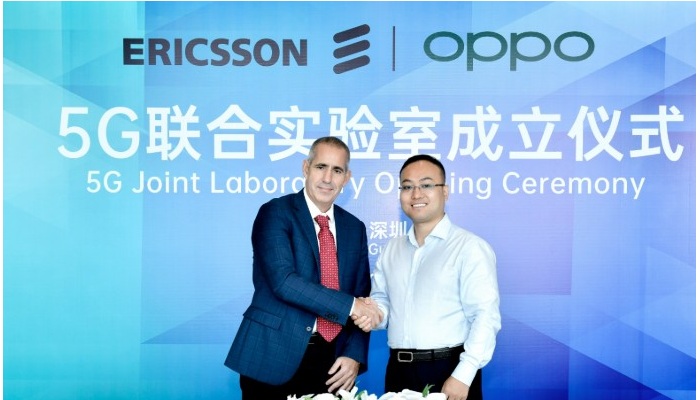
Ericsson and Chinese handset maker Oppo have established a joint lab in Shenzhen, China, focusing on 5G innovation. The companies will combine 5G technology expertise to optimize 5G products and network performance to help accelerate the large-scale global deployment of 5G.

Andy Wu, President of OPPO’s Software Engineering, said, “The initiative leverages Ericsson’s advantages in 5G network and infrastructure technologies and its global operator channels with OPPO’s experience and expertise in 5G standards development, technologies, products and application scenarios. We will work together to embrace the challenges and opportunities ahead in the 5G era in order to provide better 5G products and experiences for consumers around the world.”

Luca Orsini, Vice President and Head of Networks Market Area North East Asia, Ericsson, said that the partnership i”s of highly strategic importance for both Ericsson and Oppo.”

He added that the lab will contribute to the diversity of the 5G ecosystem and benefit from the agility of both companies to bring new use cases and customer value to the market.”

Ericsson and Oppo signed a global patent license agreement. Since the third quarter of 2018, the two partners have been running joint 5G tests on Oppo’s 5G handset and Ericsson’s 5G infrastructure with local operator partners in Sweden, Germany and China as part of an effort to accelerate the commercial availability of 5G products

The companies also worked together with Swisscom and Qualcomm to enable the Swiss communications service provider to become the first in Europe to launch commercial 5G.

Ericsson claimed that it has more than 70 commercial 5G agreements or contracts with unique communication service providers, of which 22 are live networks.

Latest stories

Related stories

Open RAN Architecture Transforming Telecom Markets

The telecommunications industry is currently undergoing a structural transition from proprietary, vendor-locked hardware to an open, software-defined ecosystem. By decoupling the hardware and software components of the radio access network, operators can foster a more competitive marketplace, accelerate the deployment of 5G infrastructure, and achieve a level of operational flexibility that is essential for the next generation of digital services.

5G Advanced Networks Accelerating Enterprise IoT

The evolution of 5G into its "Advanced" phase represents a critical milestone for industrial connectivity, offering the reliability and precision required for mission-critical operations. By combining dedicated private networks with edge computing and high-density sensor arrays, enterprises can create a seamless digital nervous system that drives the next wave of smart factory innovation and autonomous logistics.

6G Innovation Shaping Future Telecom Networks

The transition from the current 5G landscape to the nascent world of 6G represents a monumental shift in the fabric of global connectivity. By integrating artificial intelligence directly into the network architecture and exploring the untapped potential of the Terahertz spectrum, the next generation of wireless technology will bridge the gap between physical reality and digital simulation, enabling a truly hyperconnected world.

TELUS Confirms Acquisition of New 3800 MHz Spectrum...

On February 09, 2026, TELUS went on to announce...

Subscribe

- Never miss a story with notifications

- Gain full access to our premium content

- Browse free from any location or device.

Media Packs

Expand Your Reach With Our Customized Solutions Empowering Your Campaigns To Maximize Your Reach & Drive Real Results!

– Access the Media Pack Now

– Book a Conference Call

Leave Message for Us to Get Back

Translate »