






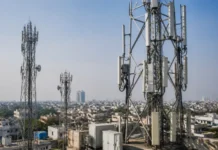









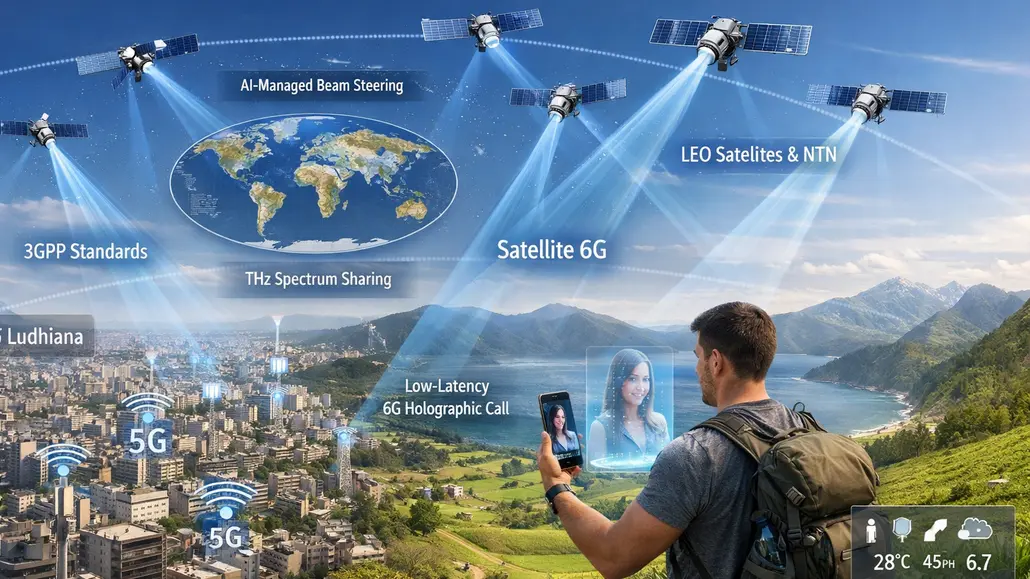

The global telecommunications landscape is currently navigating one of its most transformative eras, defined by the convergence of terrestrial and non-terrestrial assets. While the initial rollout of 5G focused heavily on urban density and the deployment of small cells to handle high-frequency spectrum, the industry has quickly realized that terrestrial infrastructure alone cannot achieve the dream of total global coverage. This realization has sparked a massive wave of innovation where satellite integration accelerating 5G and 6G networks has become the cornerstone of future-proof connectivity. By bridging the gap between urban centers and the most remote corners of the planet, the hybrid model ensures that the digital divide is finally addressed through a singular, cohesive ecosystem.
The Convergence of Space and Cellular Standards
For decades, satellite communications and mobile networks operated in separate silos, governed by different standards and utilized for distinct use cases. However, the 3rd Generation Partnership Project (3GPP) has played a pivotal role in harmonizing these worlds. Starting with Release 17 and continuing into Release 18 and beyond, the inclusion of Non-Terrestrial Networks (NTN) into the global 5G standard has allowed satellite integration accelerating 5G and 6G networks to move from a niche specialized service to a mainstream infrastructure component. This standardization allows standard smartphones and IoT devices to communicate directly with satellites, effectively turning the sky into a massive array of orbiting cell towers.
The integration process involves complex signaling protocols that allow a user equipment (UE) to switch between a gNodeB on the ground and a satellite-based node in the sky. This handoff must be seamless, requiring the network to account for the high velocity of Low Earth Orbit (LEO) satellites and the Doppler shifts associated with their movement. By embedding these capabilities into the silicon of modern modems, manufacturers are enabling a future where “no signal” becomes a legacy term. This is not merely about adding a backup link; it is about creating a three-dimensional network architecture that utilizes the vacuum of space as a high-speed transit layer for data.
Architectural Harmony in Hybrid Networks
The architectural shift required for this integration is significant. Traditional satellite systems often suffered from high latency and proprietary hardware requirements. The modern approach utilizes Low Earth Orbit (LEO) constellations that circle the planet at altitudes of 500 to 2,000 kilometers, significantly reducing signal travel time compared to traditional geostationary satellites. When these LEO systems are integrated into the core 5G telecom infrastructure, they function as a seamless extension of the terrestrial network. This hybridity allows for intelligent routing where data can switch between a fiber-connected base station and an overhead satellite based on signal strength, congestion, or geographical availability.
The physical layer of these hybrid networks must manage massive beamforming arrays that can project hundreds of individual “spot beams” onto the Earth’s surface. Each beam functions as a virtual cell, providing capacity to users within its footprint. As the satellite moves, these beams must be dynamically steered to maintain coverage over specific regions. This requires a level of synchronization and timing accuracy that was previously unnecessary in terrestrial-only deployments. The result is a network that is not only broader in its reach but also more resilient to localized disruptions, such as fiber cuts or base station power outages.
Enhancing Coverage in Underserved Regions
One of the most immediate benefits of satellite integration accelerating 5G and 6G networks is the ability to provide high-speed wireless connectivity to regions that were previously considered unreachable. Mountainous terrain, vast deserts, and oceanic routes have long been dead zones for mobile users. By leveraging satellite layers, telecom operators can offer “coverage from above,” ensuring that emergency services, maritime logistics, and rural communities enjoy the same level of network resilience as metropolitan residents. This is not merely about convenience; it is about providing a life-line of communication that is robust against terrestrial disasters such as earthquakes or floods that might disable ground-based towers.
In rural agricultural settings, this connectivity enables precision farming on a scale never before possible. Sensors in the field can relay data on soil moisture, crop health, and equipment status directly to the cloud via satellite, allowing for real-time adjustments to irrigation and harvesting schedules. In maritime environments, the integration of 5G and satellite technology allows for autonomous vessels and real-time container tracking, significantly improving the efficiency of global trade routes. These applications demonstrate that the reach of the network is directly correlated to the economic potential of a region.
Paving the Way for the 6G Revolution
While 5G is still maturing, the research community is already laying the groundwork for 6G technology. The consensus among experts is that 6G will be “satellite-native.” Unlike previous generations where satellite support was an afterthought or an add-on, 6G is being designed from the ground up to utilize a multi-layer network topology. This includes terrestrial nodes, High Altitude Platform Systems (HAPS) such as solar-powered drones or balloons, and multiple tiers of satellite constellations. Satellite integration accelerating 5G and 6G networks at this level will enable peak data rates and ultra-reliable low-latency communications that could support holographic presence and real-time remote surgery on a global scale.
The 6G era will also see the introduction of Terahertz (THz) frequencies, which offer massive bandwidth but have very short range and are easily blocked by physical obstacles. By integrating satellite nodes, the network can provide a “line of sight” from above, circumventing the limitations of terrestrial THz deployments. This vertical integration is essential for the realization of the Internet of Senses, where digital interactions become indistinguishable from physical ones. The satellite layer will act as the ubiquitous glue that holds these high-frequency, localized cells together into a cohesive global web.
The Role of Artificial Intelligence in Network Management
Managing a complex network that spans from the ground to deep orbit requires a level of sophistication beyond human intervention. AI and machine learning are being integrated into the network core to manage handovers between moving satellites and ground stations. As a user moves across a landscape, the AI must predict which satellite will provide the best throughput and preemptively establish a connection to prevent drops. This intelligent management is a vital component of satellite integration accelerating 5G and 6G networks, ensuring that the user experience remains “transparent” the user should never know whether their data is traveling through a fiber optic cable or bouncing off a satellite in space.
Furthermore, AI is being used to optimize the “on-board processing” (OBP) of modern satellites. Instead of acting as simple “bent-pipe” reflectors that just bounce signals back to Earth, modern satellites can perform packet switching and data filtering in orbit. This reduces the load on ground stations and allows for more efficient use of the available spectrum. AI algorithms can also detect and mitigate interference in real-time, ensuring that the hybrid network remains stable even as the number of devices and satellites continues to explode.
Spectrum Efficiency and Interference Mitigation
The integration of space-based assets also presents challenges in spectrum management. Both terrestrial 5G networks and satellite constellations often compete for similar frequency bands, particularly in the C-band and Ka-band ranges. Advanced beamforming and dynamic spectrum sharing are being developed to allow both layers to coexist without causing interference. By using highly directional antennas and sophisticated signal processing, satellites can target specific geographical areas with high-intensity beams while leaving adjacent areas clear for terrestrial use. This precision is what makes the large-scale satellite integration accelerating 5G and 6G networks feasible without degrading the performance of existing wireless connectivity services.
One of the most promising areas of research is the use of cognitive radio technology, which allows devices to sense the electromagnetic environment and adapt their transmission parameters on the fly. In a hybrid 5G/6G environment, this could mean a smartphone automatically selecting a frequency that is not currently being used by a nearby satellite beam. This level of coordination requires a global database of spectrum usage and a standardized set of rules that all network participants must follow. As we move closer to 2030, the development of these regulatory frameworks will be just as important as the technological breakthroughs themselves.
Future Implications for Global Industry
The economic impact of a truly global, high-speed network cannot be overstated. Industries such as autonomous transportation, global logistics, and environmental monitoring stand to gain the most. Autonomous ships and aircraft will rely on the constant, high-bandwidth link provided by satellite-integrated networks to navigate safely. Similarly, environmental sensors placed in the deep Amazon or the Arctic can relay critical climate data in real-time. Satellite integration accelerating 5G and 6G networks is not just a technological milestone; it is the physical infrastructure of the 21st-century digital economy.
The concept of the “Global Village” originally envisioned by Marshall McLuhan is finally reaching its physical realization. With a unified network that covers every inch of the planet, the barriers to education, healthcare, and economic opportunity are significantly lowered. A child in a remote mountain village could access the same educational resources as a student in a major tech hub. A doctor in a metropolitan hospital could guide a local medic through a complex procedure using a low-latency 6G link. These are the human-centric benefits that drive the industry toward deeper satellite integration.
Strategic Sovereignty and National Security
As telecommunications become the backbone of modern society, the strategic importance of satellite integration accelerating 5G and 6G networks has moved into the realm of national security. Nations are increasingly viewing their satellite constellations as critical national infrastructure, on par with power grids and water systems. The ability to maintain a secure, independent communication network that cannot be easily disabled by terrestrial conflict is a major priority for global powers. This has led to a “new space race,” focused not on landing on the moon, but on controlling the orbital data layers that will define the next century of global influence.
This sovereign focus also extends to data privacy and encryption. In a world where data may travel through satellites owned by different entities or countries, the need for robust, end-to-end encryption is paramount. The development of quantum-resistant cryptography is already being integrated into 6G research to ensure that the hybrid networks of the future are secure against the computational power of future quantum computers. The intersection of space tech, telecommunications, and cybersecurity is where the most critical battles for digital freedom will be fought.
Conclusion: The Horizon of Ubiquitous Connectivity
The journey toward full satellite integration accelerating 5G and 6G networks is still in its early chapters, but the momentum is undeniable. We are moving away from a world of fragmented, localized networks and toward a single, unified connectivity layer that envelops the Earth. This shift represents the most significant change in telecommunications since the invention of the cellular tower. By harnessing the unique strengths of both ground-based and space-based assets, the industry is creating a platform that is more inclusive, more resilient, and more powerful than anything that has come before.
As the technical hurdles of latency, spectrum sharing, and AI-driven management are overcome, the focus will shift toward creating applications that can take full advantage of this global canvas. Whether it is immersive virtual realities that span continents or massive IoT networks that monitor the health of our planet, the possibilities are limited only by our imagination. The integration of satellites into our cellular networks is not just an upgrade to our phones; it is an upgrade to our collective capability as a global civilization.