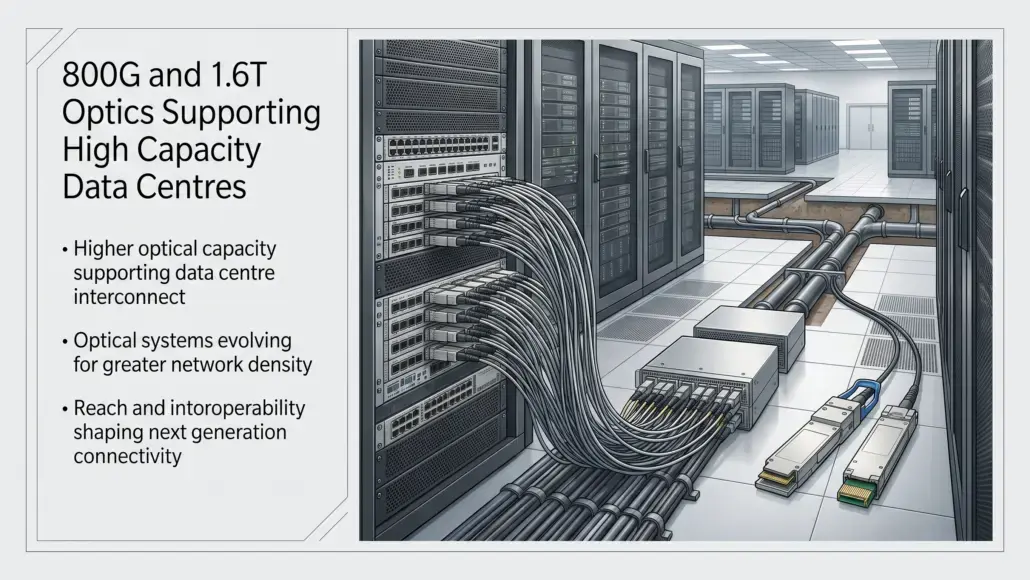
Data centre networks are moving toward higher optical capacities as growing volumes of traffic require faster connections between facilities, network switches and interconnection points. 800G and 1.6T optics are emerging within this transition as operators and data centre providers seek to increase the amount of traffic carried across each optical interface without proportionally expanding the number of links. The shift is particularly relevant to data centre interconnect, where capacity, reach and equipment density must be considered together. While 800G is moving into increasingly established deployment, 1.6T remains an emerging generation with standards and interoperability work continuing across the industry.
The technical progression is also changing the relationship between data centre switching and optical transport. The OIF’s 800ZR framework provides an interoperable coherent interface for high capacity connectivity, while IEEE development work is advancing the specifications associated with 1.6TbE and 200G per lane signalling. These developments show that 800G and 1.6T optics are not simply higher speed versions of existing modules. They require changes across electrical interfaces, optical modules, signal processing and network architecture.
1.6T Extending the Optical Capacity Roadmap
The progression from 800G toward 1.6T is also being shaped by the need to carry more traffic across metropolitan, regional and longer reach data centre connections. Commercial and technical activity already spans Europe, Asia Pacific, India, the Middle East and other markets, with operators testing or deploying high capacity coherent solutions across live networks. These developments indicate that 800G and 1.6T optics are increasingly being considered as part of the wider evolution of data centre connectivity rather than as isolated technology demonstrations.
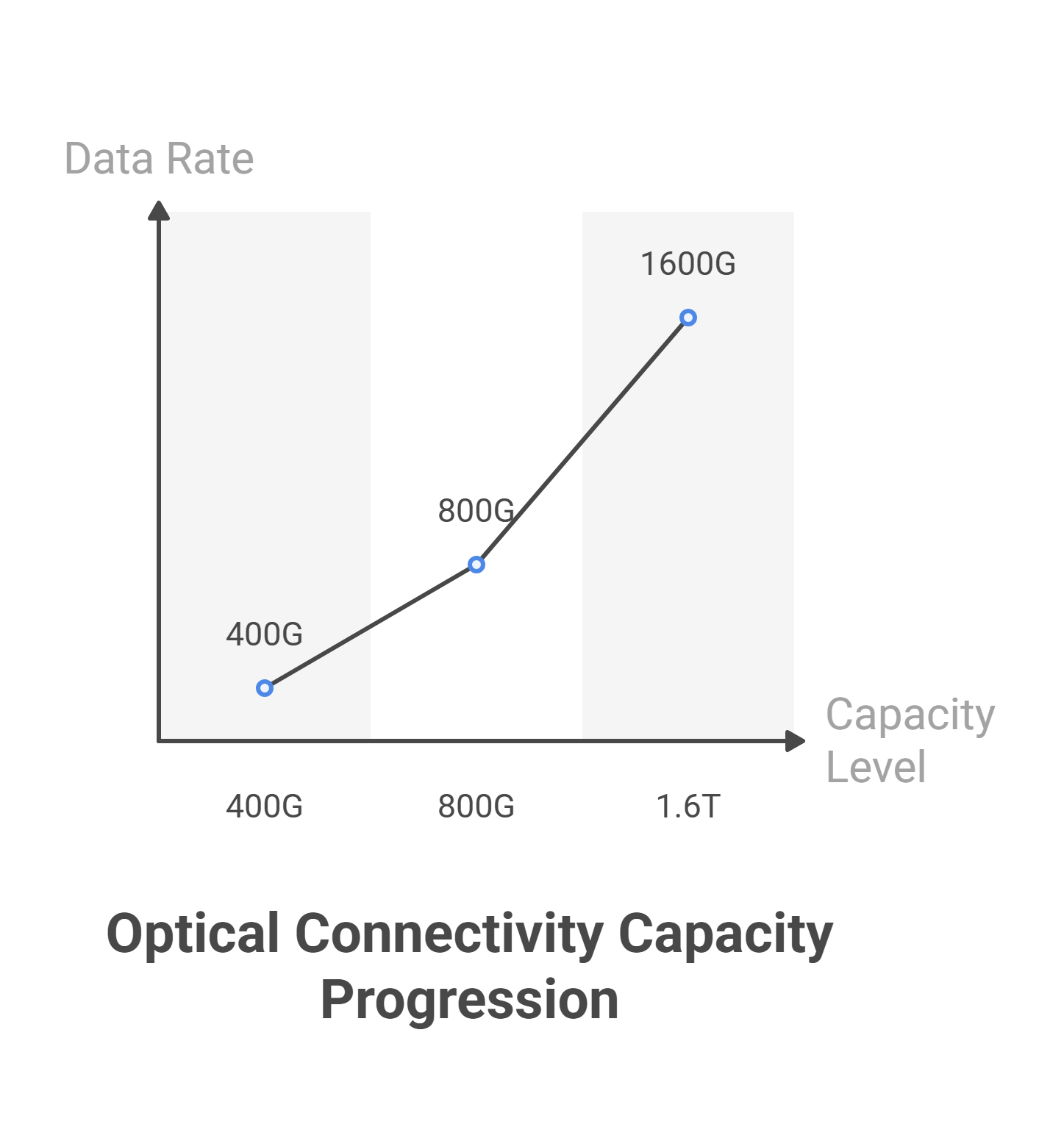
Key Takeaway: Higher optical capacities are extending the data centre connectivity roadmap, with 800G moving into greater deployment maturity and 1.6T advancing as the next generation.
Optical Reach Shaping High Capacity Data Centre Links
The move toward higher optical rates is changing how data centre interconnect networks are designed across different distances. 800G and 1.6T optics must balance throughput with reach, optical loss, power consumption and signal integrity, so the architecture can vary between short campus links and longer metropolitan or regional connections. OIF work on 800ZR has established an interoperable coherent framework for 800G connectivity, while work on 1600ZR is developing a path for the next generation of coherent interfaces. This gives operators options for scaling capacity across different data centre environments.
The shift is also visible in live network activity. NTT Docomo Business demonstrated 800G ZR connectivity between data centres around 40 kilometres apart in Japan, while Vodafone Idea and Ciena demonstrated a 1.6 Tbps optical channel between data centres in India. These examples show how higher capacity can be applied across metropolitan and inter site connections, with selection determined by distance and network requirements. 800G and 1.6T optics are therefore becoming part of a wider transport architecture in which reach and capacity are considered together.
Port Density and Interoperability Becoming More Important
Higher rates are also changing equipment design inside data centre and transport environments. Moving from 800G toward 1.6T can increase traffic carried per optical interface, while higher electrical lane rates place greater demands on signal processing, thermal management and power efficiency. IEEE work around 1.6TbE and 200G per lane signalling illustrates that the transition involves the wider electrical and optical chain, not only the pluggable module.
Interoperability is becoming important as operators combine switches, optical modules, coherent DSPs and transport systems from different suppliers. Ethernet Alliance testing has demonstrated multi vendor 800G interoperability, while OIF and IEEE development work is establishing frameworks for the next generation. These developments matter because 800G and 1.6T optics will need to operate within mixed equipment environments. This creates a direct connection with distributed data centre connectivity, where compute workloads can place additional demands on links between data centre facilities.
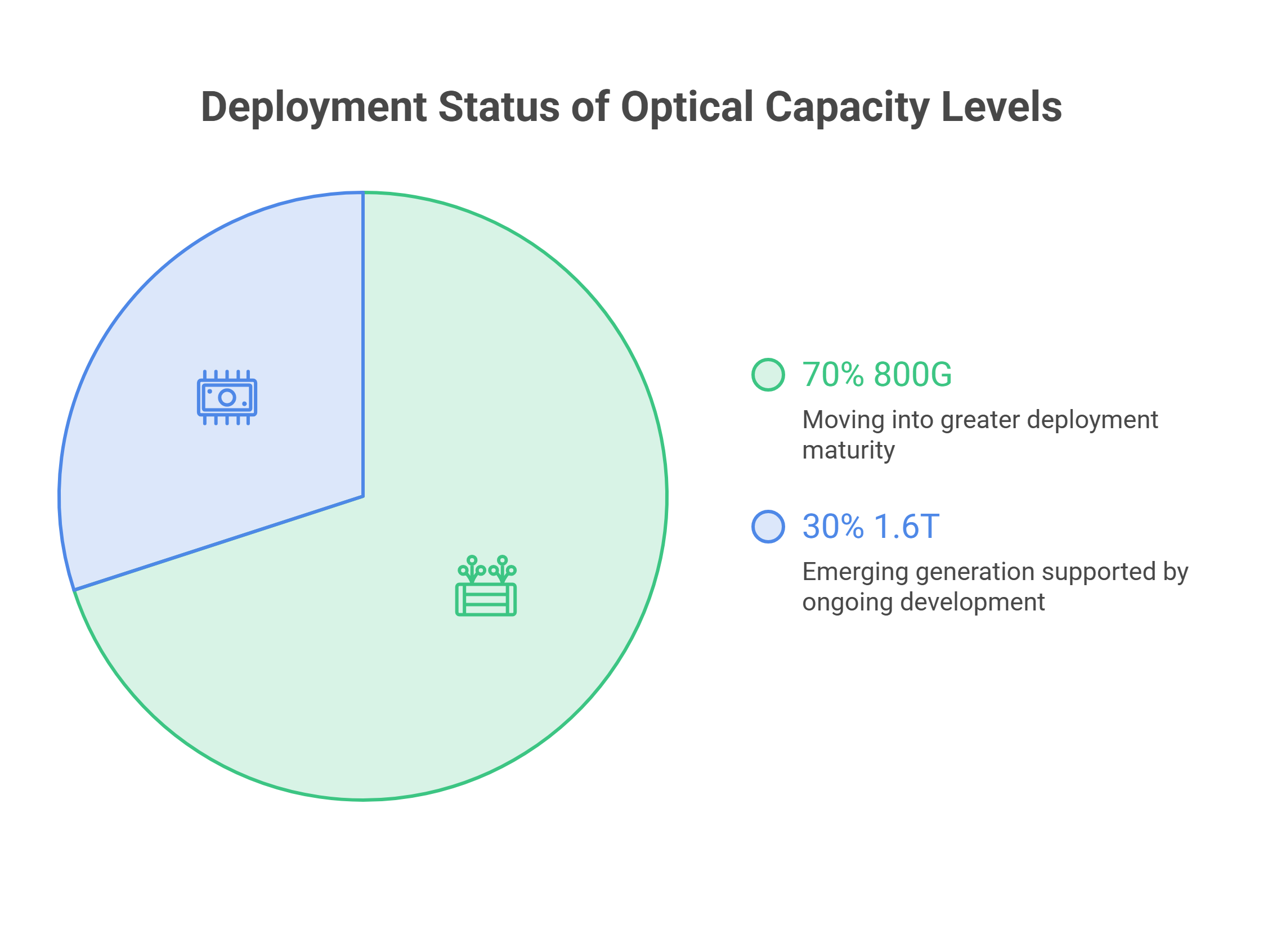
Key Takeaway: Higher optical capacity is increasing traffic per interface while making reach, power, signal integrity and interoperability more important to data centre network design.